
Timber Stairs and Staircases in New Zealand
Architectural timber stair solutions, including engineered timber flooring applied to stair treads, risers, and landings.
Timber stairs are a key architectural feature in many New Zealand homes.
They require careful consideration of structure, finish, detailing, and compliance, particularly when timber flooring is extended onto stair treads and landings.
This page outlines timber stair options in a New Zealand context, including construction methods, material suitability, and performance considerations.
Timber Stairs vs Timber Flooring on Stairs
Timber stairs may be purpose-built as a complete staircase, or finished using timber flooring products applied to stair treads and risers.
These two approaches differ in construction and detailing.
Purpose-built timber staircases are typically constructed from solid timber components.
Timber flooring on stairs uses engineered or solid timber flooring products adapted for stair use, often to achieve continuity between floors and stairs.
When Timber Flooring Is Suitable for Stair Use
Not all timber flooring products are suitable for stair applications.
Before specifying timber flooring on stairs, consider:
– Overall board thickness and core stability
– Edge detailing and stair nosing compatibility
– Finish durability and slip performance
– Substrate preparation and fixing method
Early assessment avoids installation issues and ensures long-term performance.
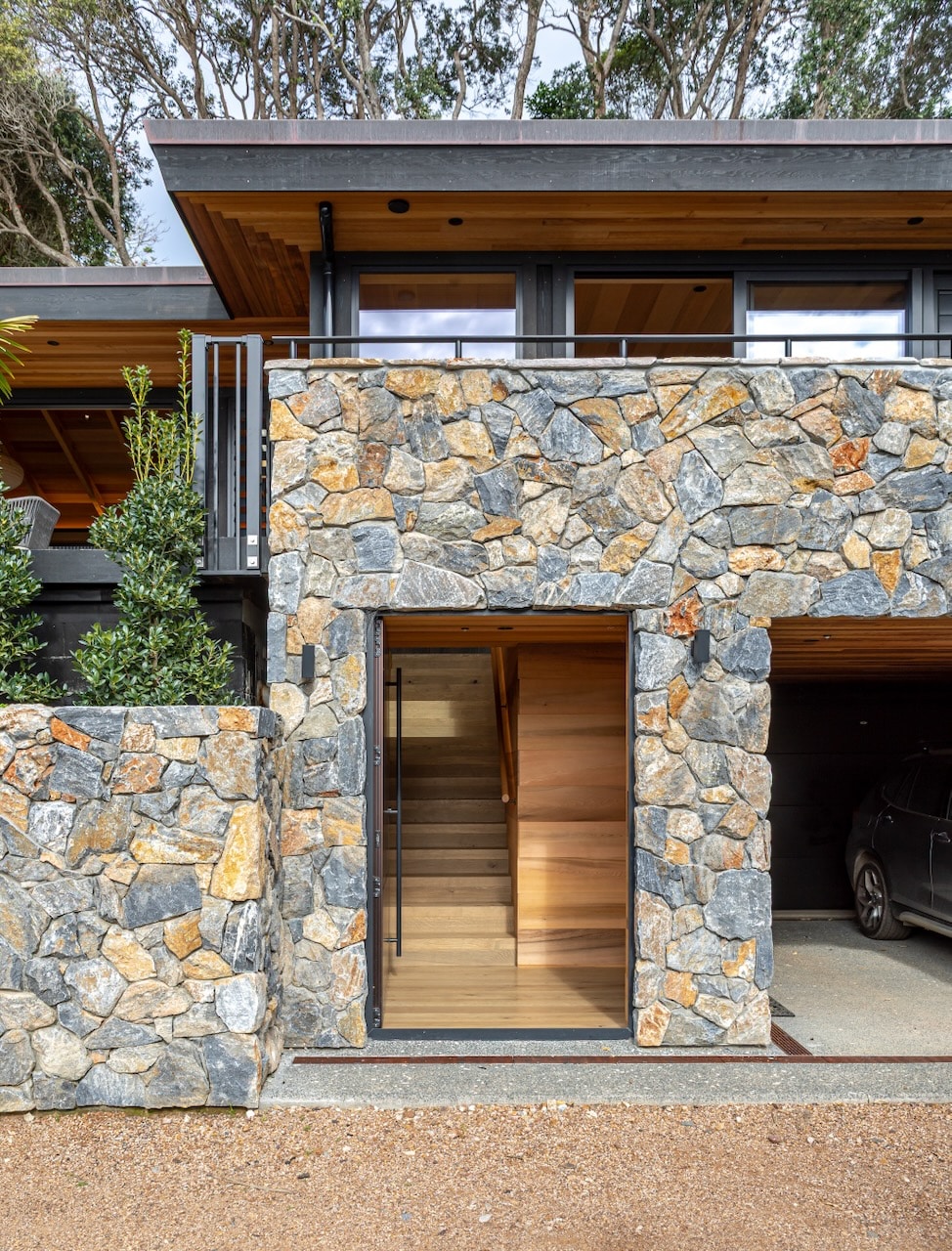
Common Timber Stair Configurations
Timber stairs are used in a range of configurations across residential projects.
Common layouts include:
• Straight staircases
• Quarter-turn stairs
• Half-turn stairs
• Open-riser stairs
• Closed-riser stairs
Each configuration influences material selection, detailing, and compliance requirements.
Material Options for Timber Stairs
Timber stairs can be constructed or finished using a variety of timber materials.
Common options include:
• Solid timber treads
• Engineered timber stair treads
• Timber flooring adapted for stair use
• Veneered stair components
Material choice depends on structural design, desired appearance, and how the stairs integrate with surrounding flooring.
Nosings, Risers, and Stair Detailing
Stair detailing is critical to both appearance and performance.
Key components include:
• Stair nosings
• Risers
• Tread returns
• Mitred or square edges
Proper detailing improves wear resistance and reduces the risk of damage at high-traffic edges. Most of the detailing that you could desire can be achieved using engineered timber flooring.
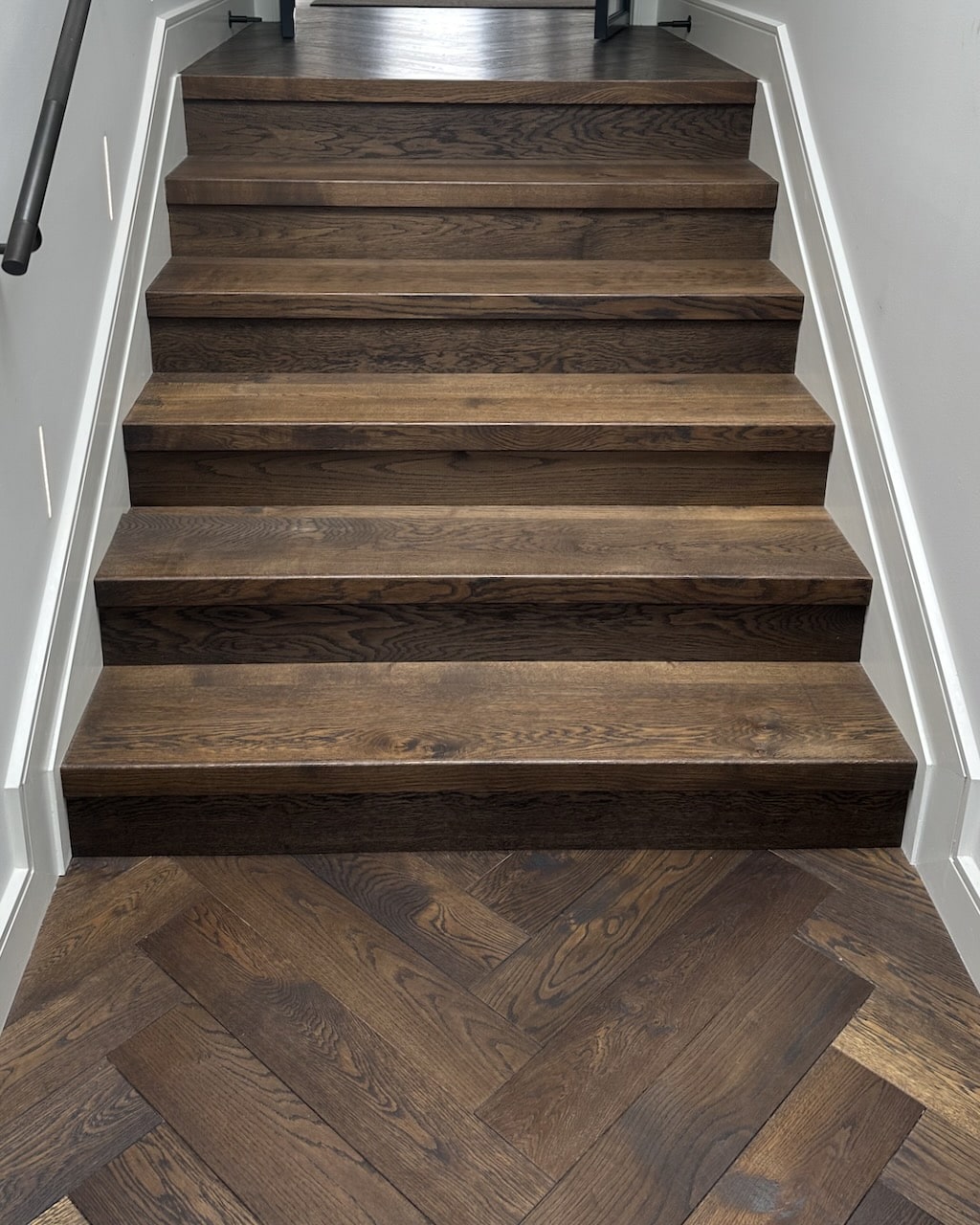
Matching engineered stair planks to complement a herringbone floor.
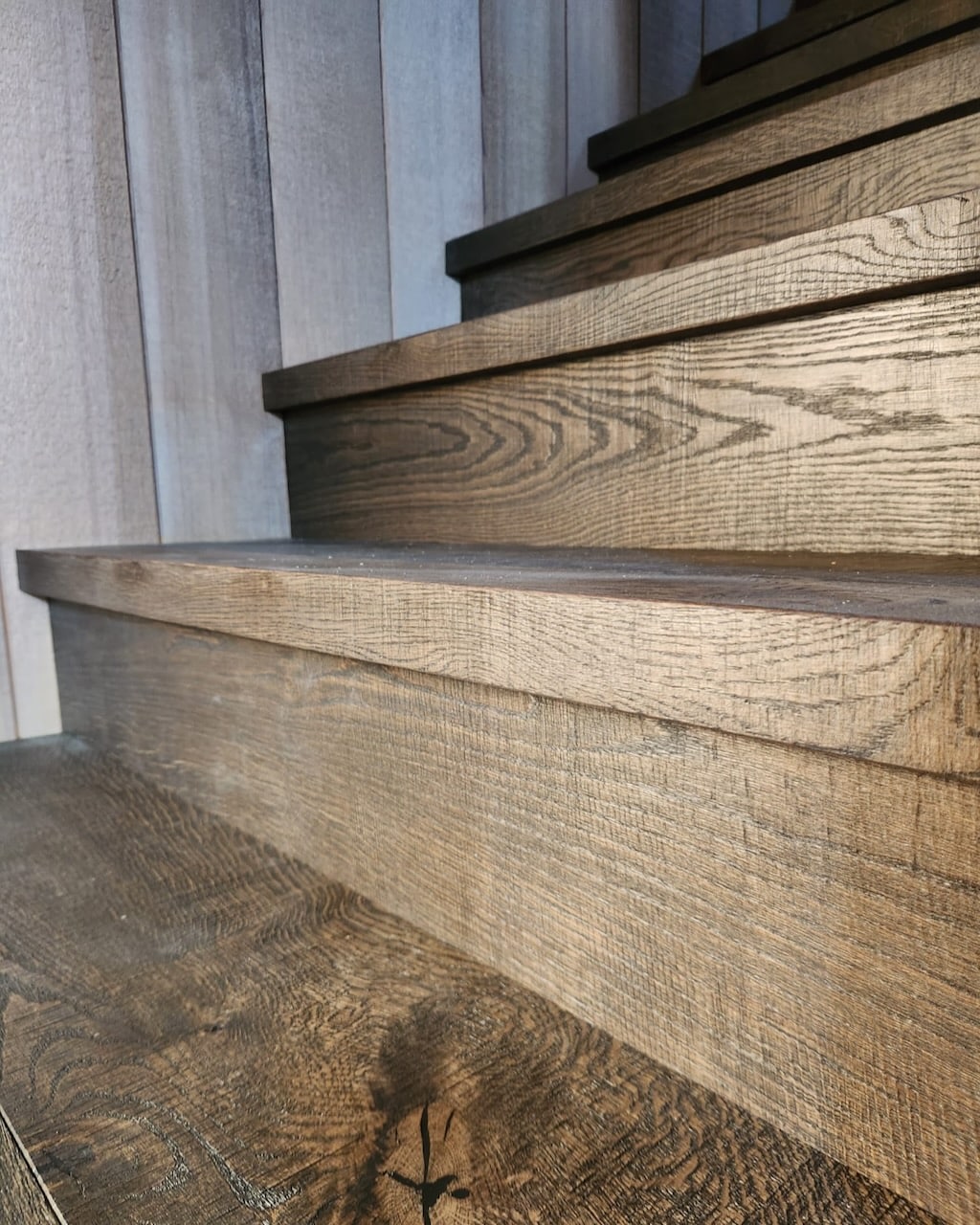
Protruding nose made using textured engineered flooring
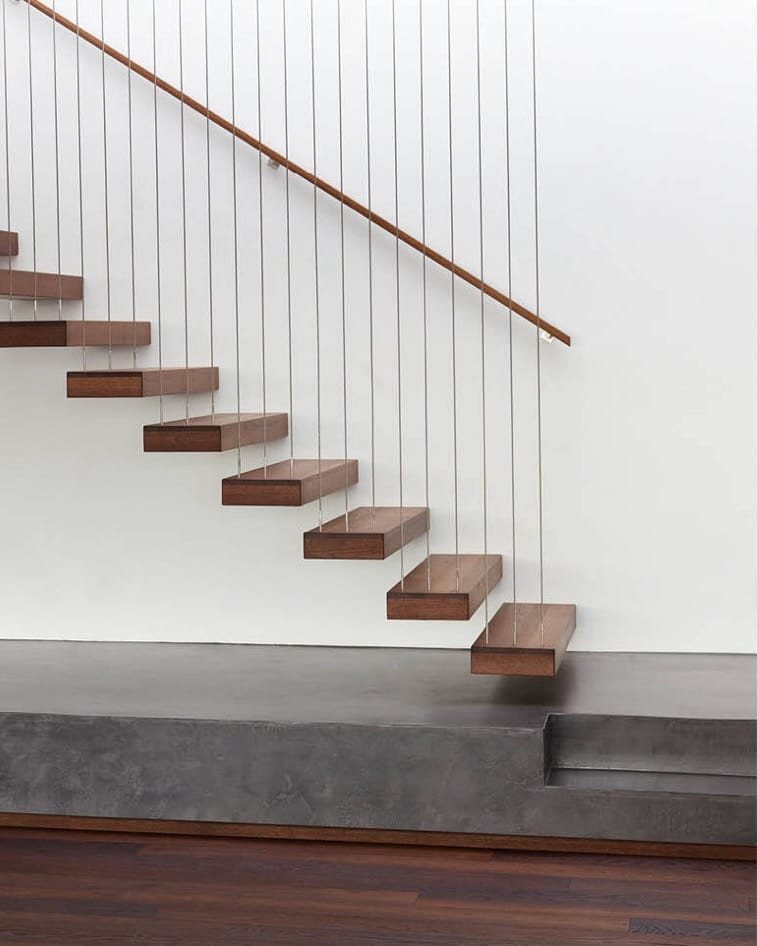
Floating steps can be solid wood or clad with engineered timber to match the floor
Slip Resistance and Safety Considerations
Slip resistance is an important consideration for timber stairs.
Factors influencing slip resistance include:
• Timber species
• Surface texture
• Finish type
• Edge profiling
Finishes used on stairs may differ from flat floor areas to balance appearance with safety requirements.
NZ Building Code Considerations for Timber Stairs
Timber stairs in New Zealand must meet specific Building Code requirements.
These affect design, detailing, and material selection.
When planning timber stairs, consider:
-
Consistent tread depth and riser height across the entire stair run
-
Defined stair nosings for safety and visibility
-
Slip resistance appropriate for residential or commercial use
-
Handrail and balustrade compliance where required
-
Structural stability of the stair substrate before timber installation
Early coordination between designer, builder, and flooring supplier avoids rework and ensures compliance.
Vienna Woods regularly works with architects and builders to ensure timber stair solutions align with NZBC expectations.
Matching Timber Stairs with Timber Flooring
Matching stairs with timber flooring is a common design objective.
This can be achieved by:
• Using the same timber species
• Matching surface treatments
• Coordinating finishes between floors and stairs
Careful planning ensures consistency while allowing for the different performance demands of stair applications.
Using Engineered Timber Flooring on Stairs
Engineered timber flooring can be successfully applied to stair treads and risers when detailed correctly.
Key considerations include:
-
Purpose-made stair nosings matched to the flooring profile
-
Correct substrate preparation to avoid movement or noise
-
Consistent grain direction and colour flow between floors and stairs
-
Allowance for expansion and contraction at junction points
This approach allows visual continuity between floors and stairs while maintaining durability.
Not all engineered floors are suitable for stair applications. Thickness, core stability, and edge detail must be assessed before specification.
When to Consider Specialist Advice
Timber stairs involve more variables than standard floor installations.
Specialist input is often recommended for:
• Feature staircases
• Open-riser designs
• Wide or floating stairs
• Projects using engineered timber on stairs
Early advice can help avoid costly changes later in the project.
Related Timber Flooring Information
Further information related to timber stairs and flooring includes:
• Timber Flooring in New Zealand
• Engineered Timber Flooring
• Engineered Oak Flooring
If you’re still comparing finishes, you can also order engineered oak samples.
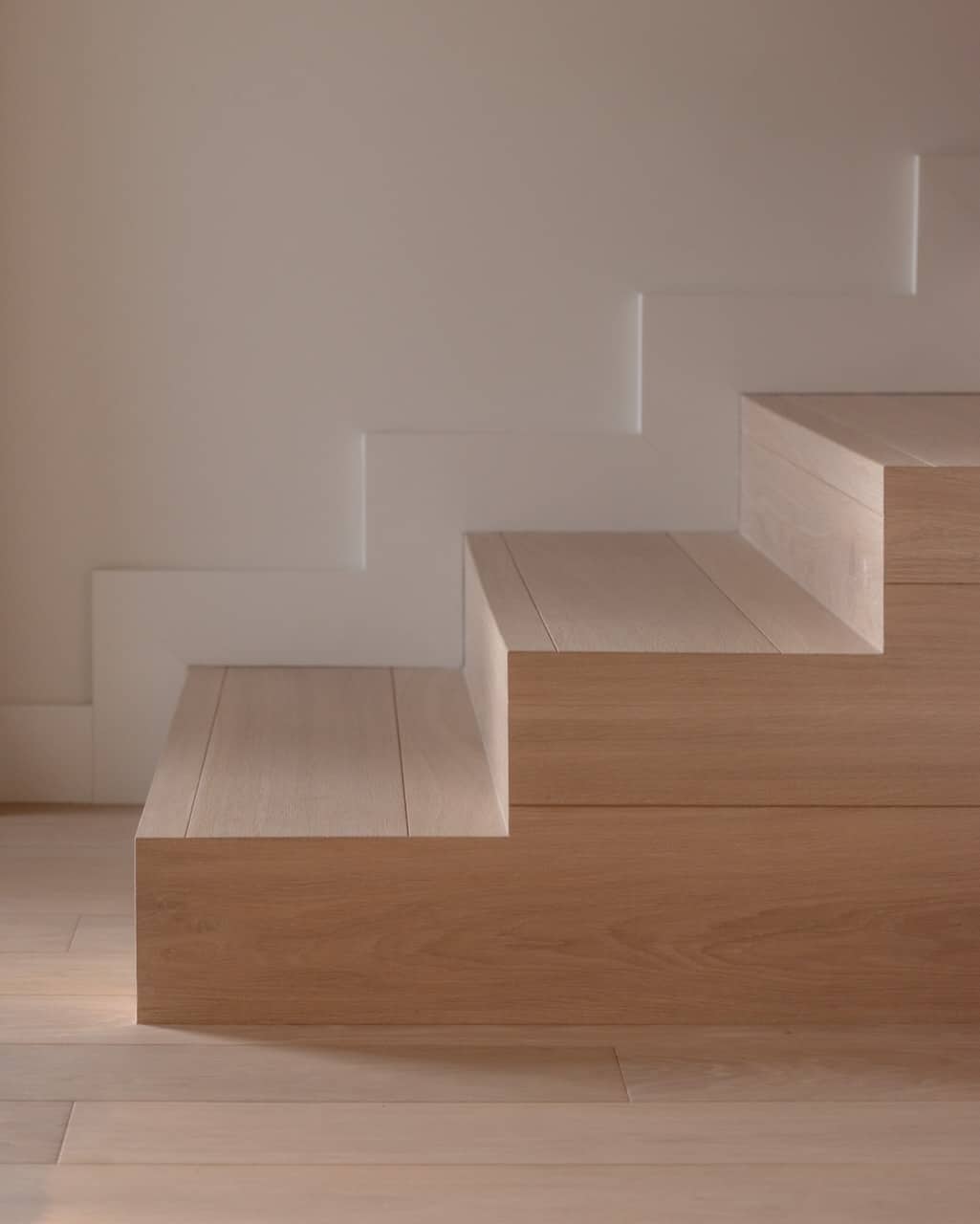
Boxing the stairs with engineered timber flooring
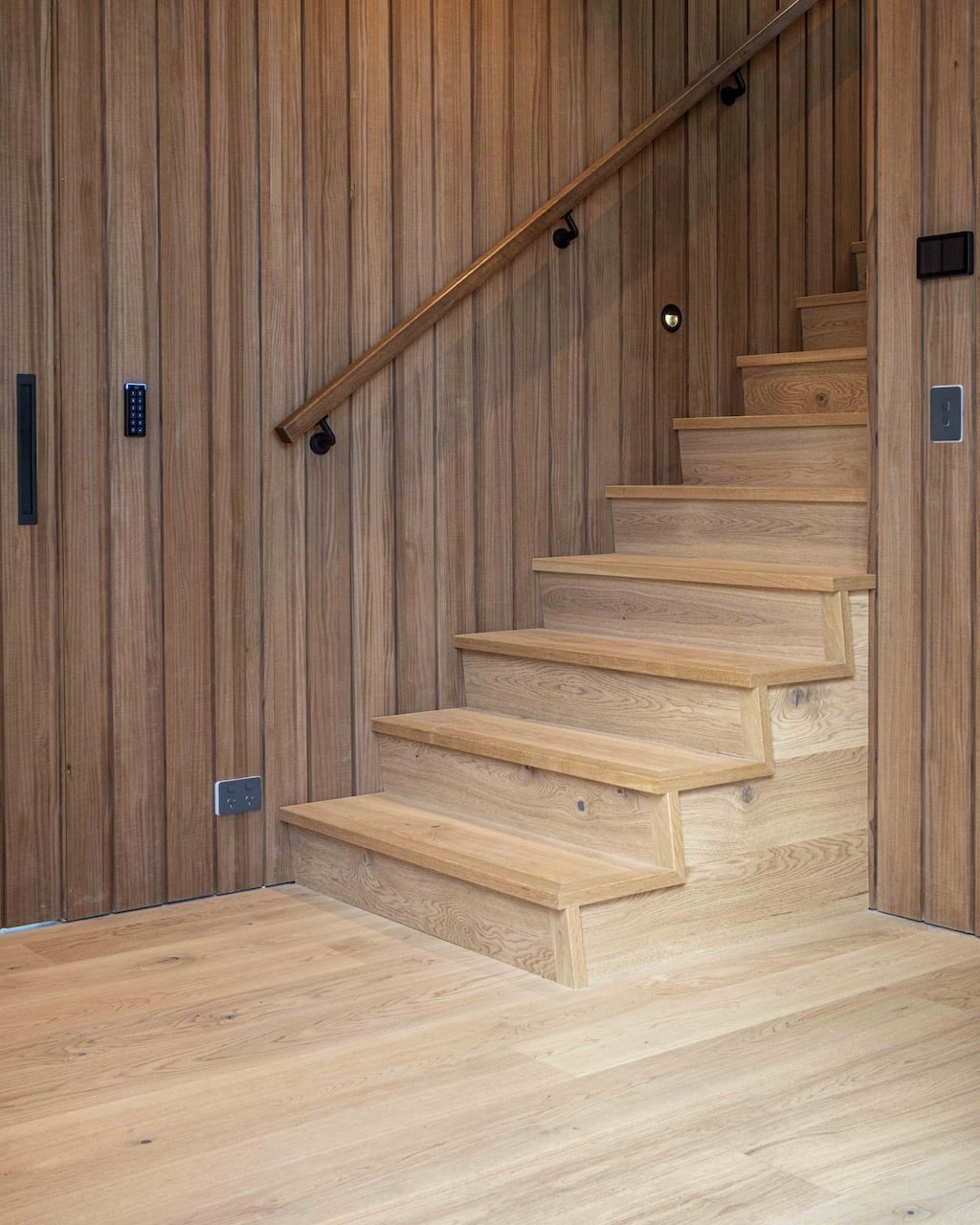
Solid oak detail added to the nosing and edging of timber stairs
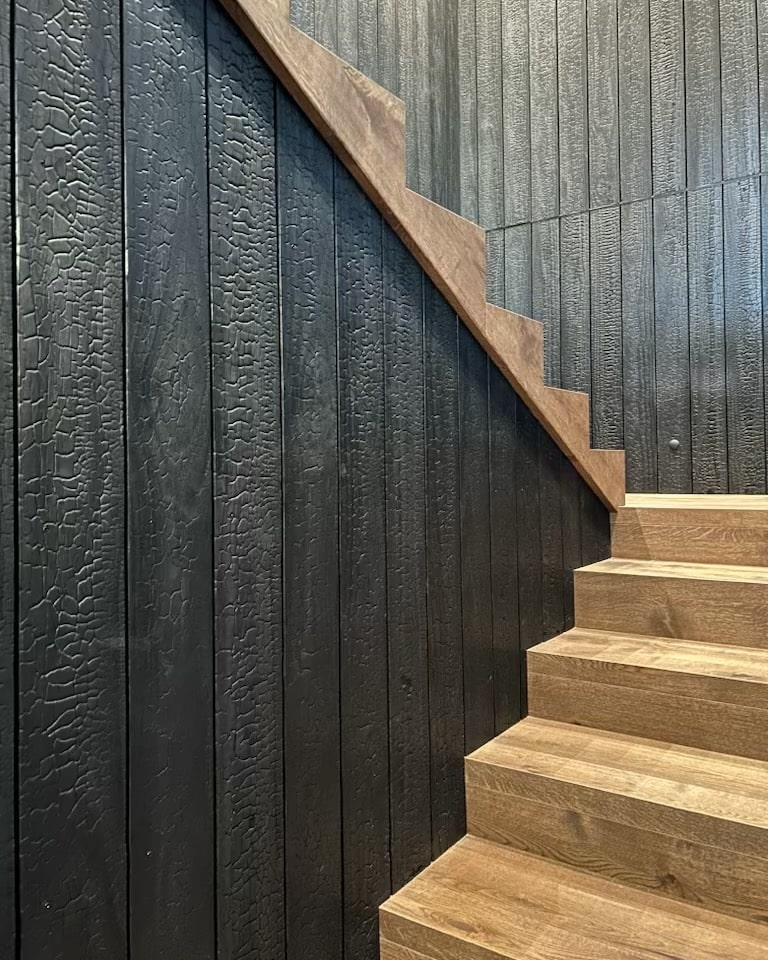
Architectural timber staircase with engineered oak stair treads and feature detailing.
Compliance and Performance Considerations
Timber stairs must meet New Zealand Building Code requirements relating to safety, consistency, and accessibility.
Key considerations include:
– Consistent tread and riser dimensions
– Defined nosings and visible edges
– Suitable slip resistance for the intended use
– Structural stability of the stair substrate
Compliance should be confirmed during design and before installation.
Project Advice for Timber Stairs
Timber stair detailing is best resolved early in the design process.
Vienna Woods works with architects, designers, and builders to assess material suitability, detailing options, and finish performance before specification.
For project-specific advice, contact our team to discuss timber stair solutions.
Timber Stairs – Frequently Asked Questions
Can engineered timber flooring be used on stairs?
Yes, when the product is suitable and detailed correctly with appropriate nosings and substrates.
Can stair finishes match the timber floor?
Yes. Stairs can be colour-matched to the floor for a continuous appearance.
Are timber stairs suitable for high-traffic homes?
Yes, provided the timber species, finish, and construction are specified correctly.
Do timber stairs meet NZ building requirements?
They can, when designed and installed in accordance with New Zealand Building Code requirements.