
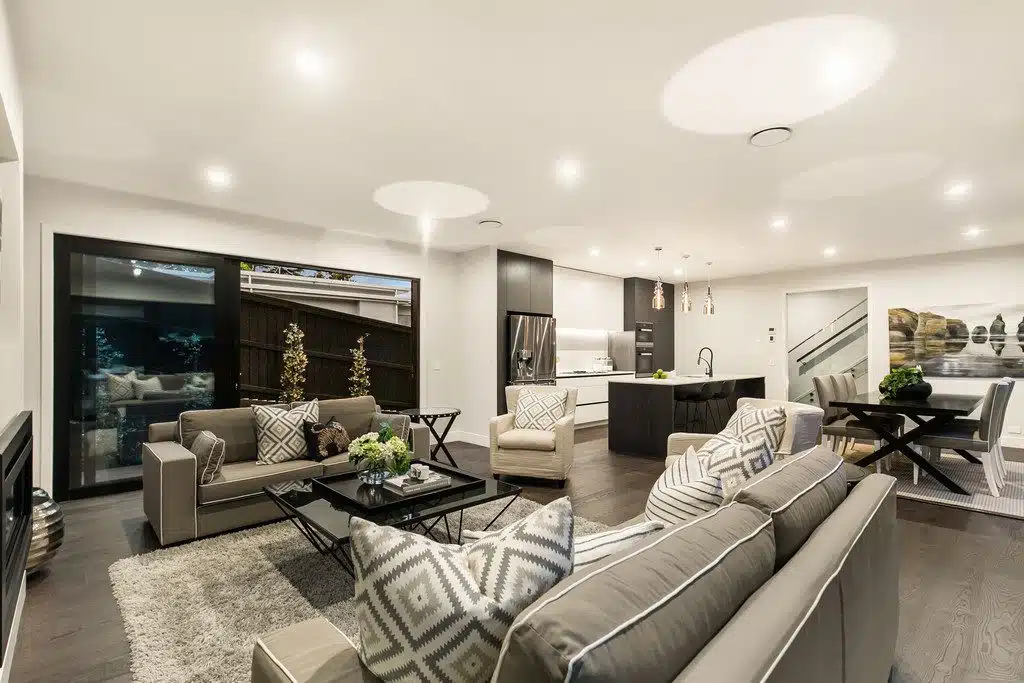
Dark timber flooring in NZ: what to know before you choose one
Two questions come up every time someone stands in the showroom holding a near-black sample. Will it show every mark. Will it make the room feel smaller. We hold no evidence for the first one, and we're not going to pretend to.
Browse
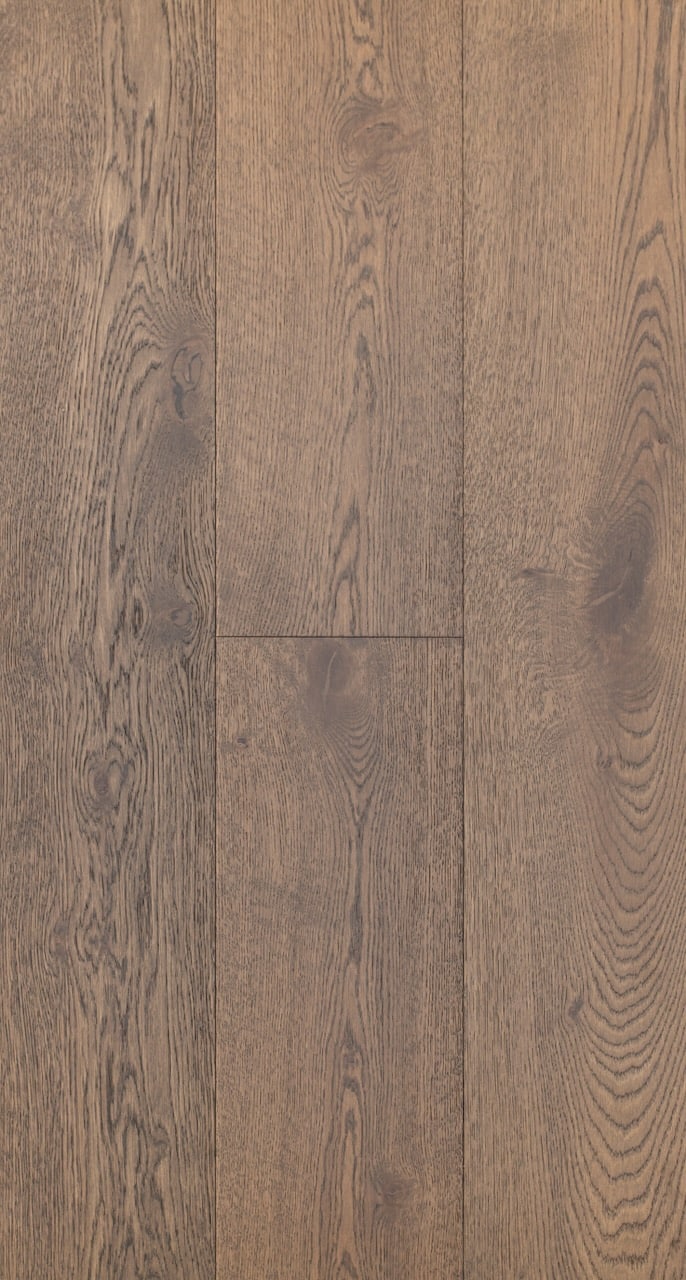
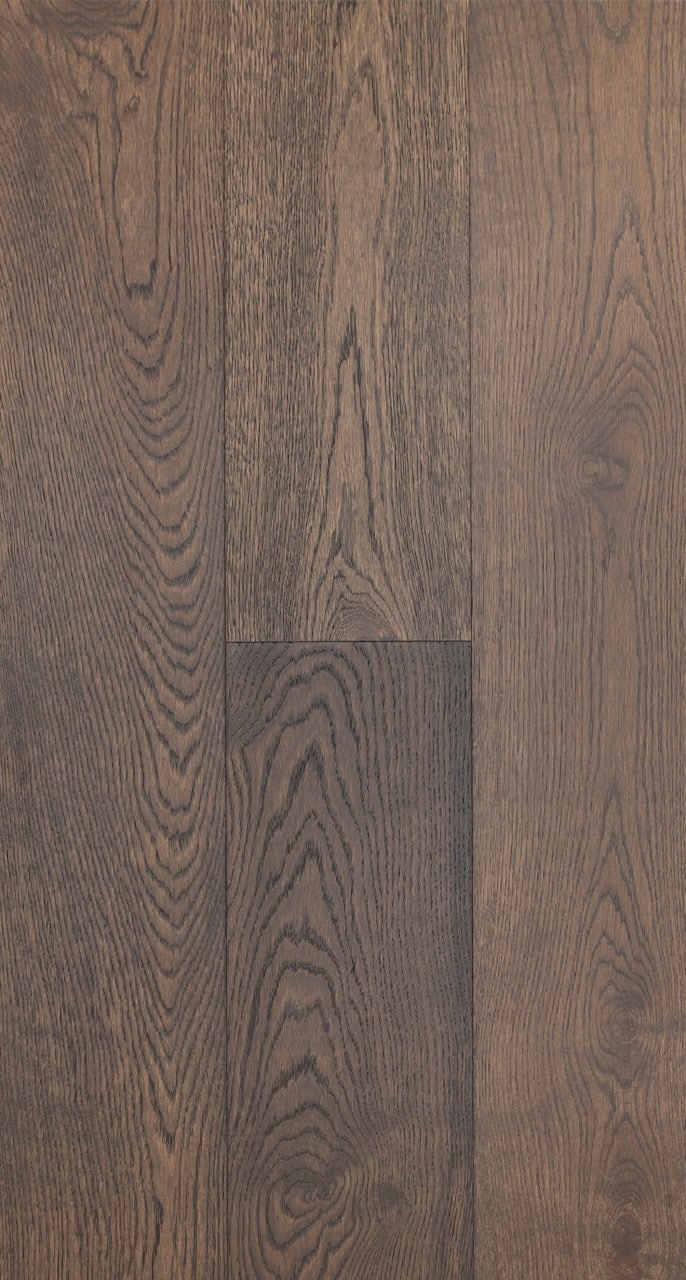
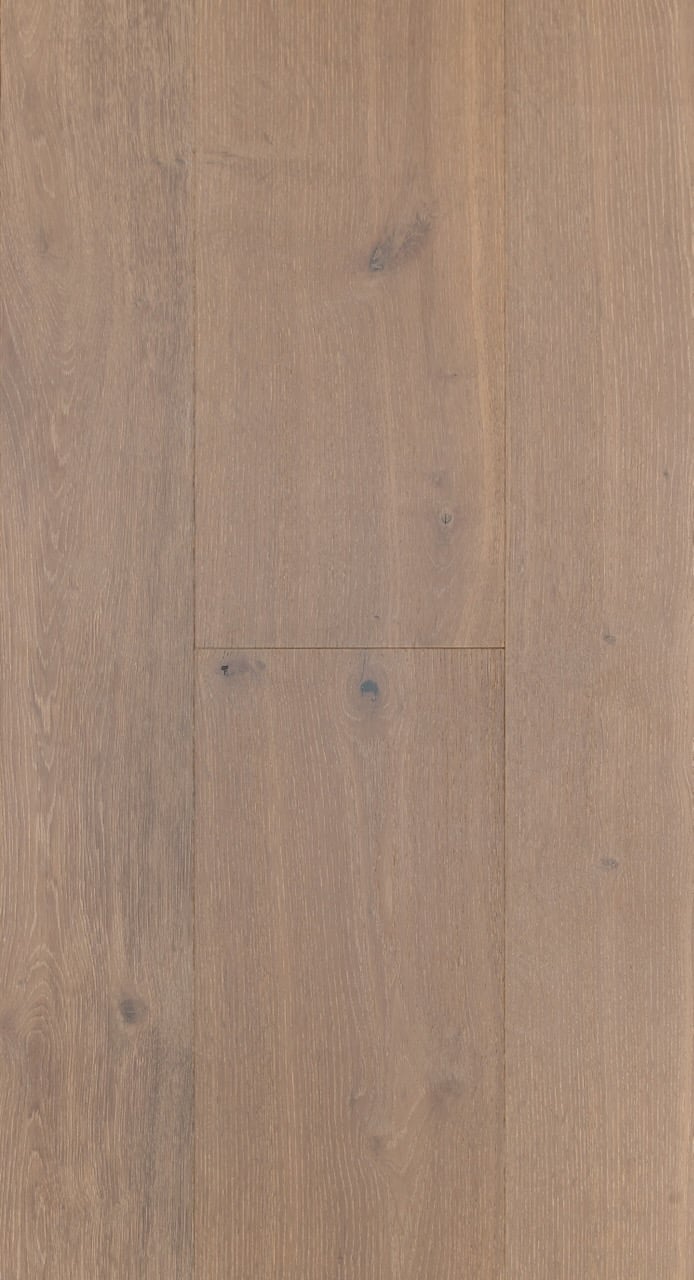
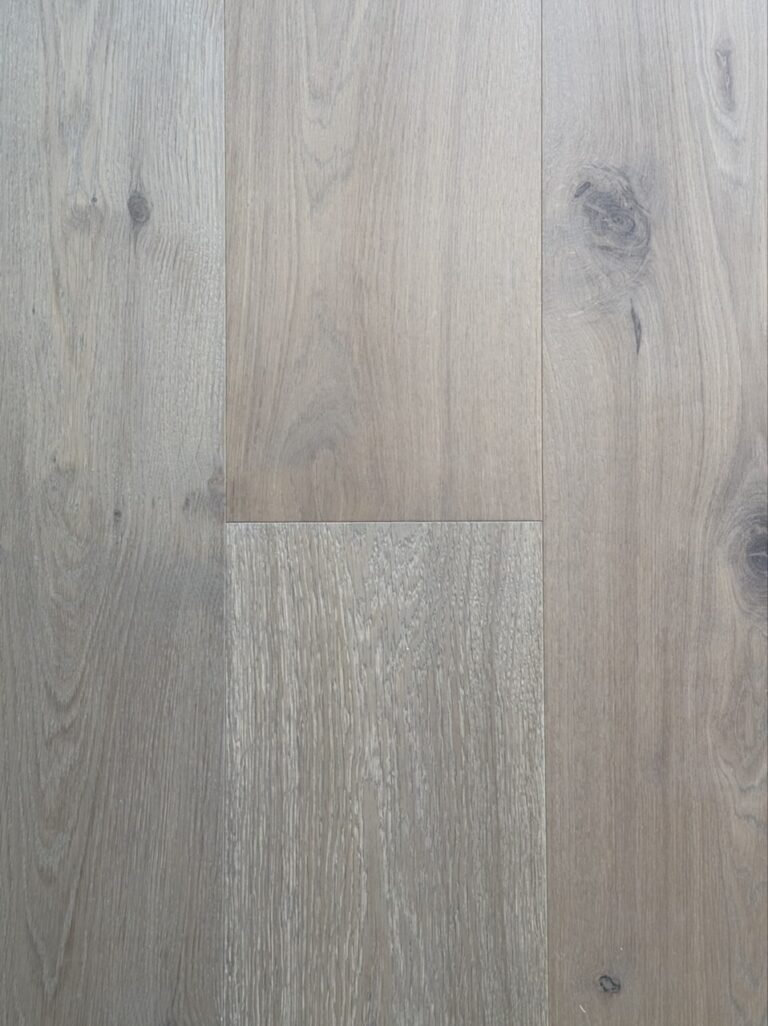
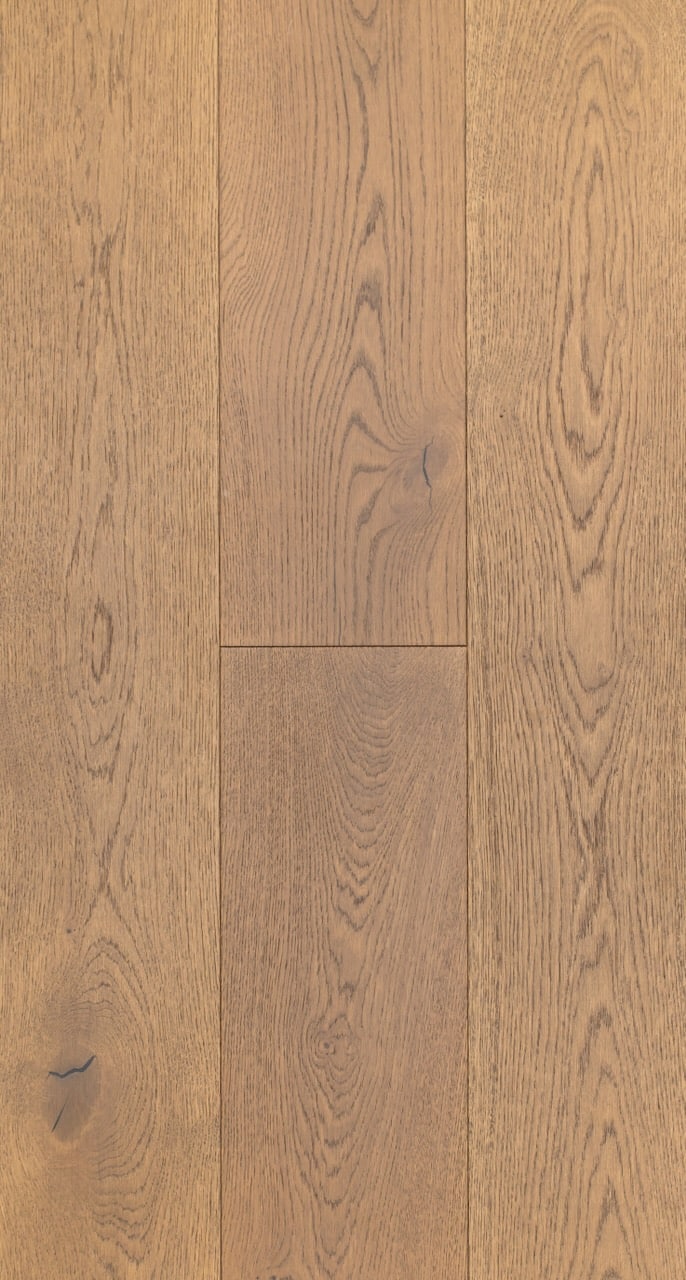
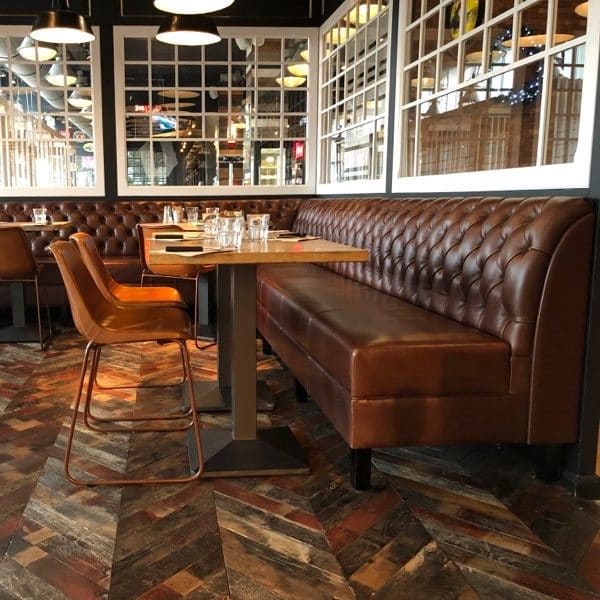
Dark floors across our collections
Every board below sits in the deep, dark end of the range. Filter by collection and tone to narrow it down, then order a sample and see it in your own light.









At a glance
What we can give you is the part that's actually documented: which of our ranges go dark, how a timber floor is properly assessed, what a finish will and won't do on any colour, how a dark floor is cleaned, what repair looks like, and one Building Code consequence that catches dark floors on stairs.
On this page
- Which of our ranges go dark
- How a floor is meant to be looked at
- What a finish will and won't do
- Sheen and texture are the real levers
- Colour change over time
- Rubber is the one that's permanent
- Cleaning a dark, brushed floor
- Repair, and where a dark colour changes the answer
- If the floor runs up a stair, contrast matters
- Common questions
On the spec
Which of our ranges go dark, and what's on the spec
| Range | Finish | Worth knowing |
|---|---|---|
| Petit Château | UV lacquer, extra matt | Brushed. 15 mm board, 4 mm wear layer |
| Château | UV lacquer (the Chambord 190 mm is a UV oil) | 240 mm wide plank, 2200 mm long |
| Patina | UV lacquer, ultra-matt and low-sheen | Heavily brushed. 240 x 2200 x 15 |
| Distilled | No coating system name published. We describe it by feel: a very dry, natural feel, close to bare timber | A denser board with a smokier grain profile. Lightly brushed. Standard 190 x 2200 x 15 plank is stocked |
| Flamingo | Oil finish | Usually a 220 mm plank, with other widths, profiles and parquet available |
| Raftwood | Oil finish | New French oak worked to read as reclaimed. A 3 mm oak top layer that varies up to 4 mm with natural undulations and splits |
| Heritage | Supplied unfinished and raw, finished on site | Genuinely reclaimed timber |
| Antique Floors | Genuinely reclaimed timber |
Two notes on that table, because they're the kind of thing a spec sheet should tell you and usually doesn't.
Distilled's "smokier grain profile" is a description of how the grain reads, not a description of a process. We publish what we can stand behind about how our boards look and how they're built. Where we don't hold the supplier's documentation on how a colour was achieved, we don't invent an explanation for it. If a description of how a floor got its colour doesn't say where it came from, treat it as decoration.
Raftwood isn't reclaimed. It's new French oak worked to read as reclaimed, and we'd rather say so. Our genuinely reclaimed material is Heritage and Antique Floors.
The full range is in the grid above. Everything else we carry: Collections
Start here
How a floor is meant to be looked at
Start here, because most worry about a dark floor is really a worry about a viewing condition.
The Australasian Timber Flooring Association's position on assessing a floor is specific. A floor is assessed from a normal viewing position, at 1.5 m or greater, illuminated by non-critical light, meaning diffused light rather than glancing light. And in ATFA's words, "Slight variations in the colour and finish of materials do not always constitute a defect."
There's a test in the same guidance worth knowing. If you can only see swirl marks with a downlight on, move your head. If the swirls move with you, that's refraction and it's acceptable. If they stay static, they're sanding marks.
Why this matters for a dark floor: low-sheen dark surfaces under raking light from a low sun or a downlight are exactly the condition ATFA is describing. Stand where you'd normally stand, in the light the room normally has, and judge it there. A floor viewed from 300 mm with a torch across it will find something on any colour.
The honest boundary
What a finish will and won't do, on any colour
Our warranty says it plainly: the coating is not scratch, dent, chip or stain proof. No coating on any timber floor is, and it's true at every colour.
We also carry no surface finish warranty, deliberately, and the reason is worth stating rather than leaving as an apparent omission: finish wear is a function of how a floor is lived on. Chairs, grit, pets, sun, and whether shoes come off at the door. Nobody can warrant that from a distance.
So the honest answer on marks is a boundary rather than a promise. A dark floor will mark, a pale floor will mark, and we're not going to tell you one hides it better, because we haven't tested it. If someone tells you otherwise, ask them for the test.
The real levers
Sheen and texture are the real levers
Two things do change how a dark floor reads in a room, and both are physical facts about the board rather than claims about behaviour.
Sheen
Sheen is the amount of light the surface throws back. It's worth understanding that sheen has no standard bands. ISO 2813:2014 specifies a method and a unit, gloss units measured at 20°, 60° and 85° against a black polished glass standard, but it sets no matt, satin or gloss ranges. "Matt" is a descriptor, not a measurement, which is why two suppliers' "matt" floors can look nothing alike. We only use a sheen word where it's confirmed for that board: Petit Château is extra matt, and Patina is ultra-matt, low-sheen.
Texture
Texture is the surface relief. Most of our range is brushed to some degree: lightly brushed on Distilled, heavily brushed on Patina and Hinterland, brushed on Petit Château. On a dark floor texture does more work than it does on a pale one, because the grain is what stops a near-black surface reading as a flat plane. It's the lever we'd point you at first.
Over time
Colour change over time
Three separate things get muddled here constantly. They're not the same and the evidence for each is different.
Light exposure changes a floor's colour, and most of that change happens early. ATFA's practical recommendation for engineered and prefinished floors is that the colour change under rugs can be reduced by not putting the rugs down for the first three or so months after installation. Give the floor that window and it tones evenly, rugs included.
That's the whole of what we'll publish on light and colour. We won't tell you whether a dark floor lightens or a pale one ambers, or give you a rate, or a magnitude. Timber colour movement under UV is a species behaviour, we don't hold a source for it, and explaining it from general knowledge is how flooring copy ends up promising something the floor doesn't do.
Oil-finished floors darken with age as a class. ATFA's coating selection chart rates the penetrating oil, wax and hard wax oil class high for darkening with age. That's normal for the finish class rather than a fault, and it matters at sample stage, because the sample in your hand is the floor at its lightest. It doesn't apply to UV-lacquered floors. If you're comparing across our ranges, check which finish class you're looking at, and ask us if the spec doesn't say.
The permanent one
Rubber is the one that's permanent
This is the best-documented risk to any timber floor and it's got nothing to do with colour, though it shows up sooner on some floors than others.
Rubber in sustained contact with a coated floor leaves permanent marks, progressing from a transparent yellow to solid black, and they cannot be cleaned off. All rubber compounds contain 25% to 35% free oil; the staining agents are aromatic oils and amine antiozonants, and there's a test method for it, ASTM D925.
ATFA is blunt about scope: "More prone are those types of coating that are considered more breathable or of a lower chemical resistance. However, all coatings can experience the effect." Every coating. Ours included, and we hold no test that says otherwise.
What to do:
- Keep rubber off the floor until after the coating maker's full cure time has passed.
- Felt or cork pads under furniture, never rubber feet.
- Rugs without a rubber backing, and rug underlay chosen with the same rule in mind.
- Watch castor wheels, gym mats, appliance feet and the mat inside the back door.
Care
Cleaning a dark, brushed floor
Most of our dark range is brushed, and brushed floors are cleaned differently from smooth ones. ATFA's position on engineered floors is that dry cleaning processes should predominate: an antistatic mop, plus spot cleaning of more stubborn marks. Damp mopping that's too frequent, or done with too much water or the wrong detergent, traps dirt down in the grain, which is the opposite of what you wanted.
So the routine is dry, often, with wet used as the exception rather than the schedule. That advice is about texture, not colour: it'd be the same on a brushed oak in a pale tone.
Care products and method: Floor care
Repair
Repair, and where a dark colour genuinely does change the answer
Here the evidence is good, and it applies to oil-finished floors rather than the UV-lacquered ones.
A coloured hard wax oil behaves differently from a clear one in four measurable ways, and the makers' own documents say so:
- Dry time roughly doubles to triples. Osmo: about 8 to 10 hours clear against about 24 hours coloured. Bona: minimum 8 hours against minimum 12 coloured.
- Different rheology. Osmo specifies its clear by viscosity in mPas (95 to 240) but its tints by flow cup (30 to 45 seconds, DIN EN ISO 2431, 4 mm) and calls the tints thixotropic.
- Different coverage and method. Roller at about 24 m²/l clear; brush at about 30 m²/l coloured.
- One coat only. Osmo: "Important: Apply maximum one coloured coat to flooring." You can't build up colour to correct a mismatch.
Osmo runs a separate repair procedure for colour-coated flooring, and it states that getting exactly the right colour needs "precise work steps and a little experience":
- Sand off the damaged surface.
- Apply a thin coat of the coloured material originally used.
- Leave 24 hours.
- Apply a clear top coat.
Loba states a real limit: where a coloured surface has been flooded, the pigments penetrate deep enough that it's not possible to restore the surface to its original condition. Ciranova's position is that final colour depends on the wood, the sanding and how much is applied, so always test the colour first.
The short version: a localised repair on a pigmented or dark-tinted oiled floor is materially harder than on a clear one, it depends on holding the exact original tint and ratio, and the only manufacturer that documents the job routes it to a professional. If you're choosing a dark oiled floor, choose it knowing that, and keep a record of the exact product used.
We'll be straight about one supply limitation too. There's no manufacturer technical document for a black or tinted maintenance oil in the care range we carry, so we won't promise you a repair route we can't document. Ask us before you need it, not after.
Scratches and dents, generally: Scratches and dents
Building Code
If the floor runs up a stair, contrast matters
This is the one place a dark floor has a Building Code consequence, and almost nobody mentions it.
D1/AS1 clause 4.1.7(b) requires the leading edges of treads or nosings on an accessible stairway to be colour contrasted with the rest of the tread. And the Code's own commentary says:
D1/AS1 clause 4.1.7 COMMENT
“Visibility of the stair tread is essential for stair safety. The difference between two dark colours does not necessarily provide sufficient tonal contrast to allow the edge of the tread to be seen by a person with impaired vision. The lighting levels required by Paragraph 4.5 are essential for stairway safety.”
That last sentence is the other half of the answer if you want the dark floor anyway: lighting is doing work the contrast isn't.
NZBC Acceptable Solution D1/AS1, 2nd edition Amendment 6, effective 1 January 2017, clause 4.1.7 and its COMMENT. Crown copyright © Ministry of Business, Innovation and Employment. Current at 13 August 2026. Check building.govt.nz.
Our stair nosings are colour matched, not contrasted. That's the right detail for a private stair and for a common stair with closed risers, and the wrong one for an accessible stairway, or for a common stairway with open risers, where 4.1.8(b)(ii) also requires contrast. If your project has either in it, that's a conversation to have at design stage.
The full stair position: Timber stairs
Common questions
Do dark timber floors show more dust and scratches?
We hold no evidence either way, and we won't claim it in either direction. What's documented is how a floor should be assessed: from a normal viewing position at 1.5 m or greater, in non-critical diffused light rather than glancing light. ATFA's position is that slight variations in colour and finish don't always constitute a defect. No coating on any colour is scratch, dent, chip or stain proof.
Does a dark timber floor change colour over time?
Light exposure changes a floor's colour and most of that change happens early. ATFA's practical recommendation for engineered and prefinished floors is to leave rugs off for the first three or so months so the floor tones evenly. Oil-finished floors darken with age as a finish class, which ATFA rates high for that class. We don't publish a rate or a direction beyond that.
How do you clean a dark brushed timber floor?
Dry cleaning should predominate: an antistatic mop, with spot cleaning for more stubborn marks. Damp mopping too often, or with too much water or the wrong detergent, traps dirt in the grain. That's about the brushed texture rather than the colour.
Can a dark timber floor be repaired in place?
On an oil-finished floor it's materially harder than on a clear one. Osmo runs a separate procedure for colour-coated flooring and states that exact colour matching needs precise work and experience. Loba states that a flooded coloured surface can't be restored to its original condition, because the pigments penetrate the wood. Keep a record of the exact product used on your floor.
Can I use a dark floor on a stairway?
On a private stairway, yes. On a common stairway, yes unless it has open risers, D1/AS1 clause 4.1.8(b)(ii) requires colour-contrasted nosing leading edges in that case. On an accessible stairway, clause 4.1.7(b) requires nosing leading edges to be colour contrasted with the tread, and the Code's commentary notes that the difference between two dark colours doesn't necessarily give sufficient tonal contrast. Our nosings are colour matched, so that's a design-stage conversation.
Will rubber mats mark a dark floor?
Rubber in sustained contact leaves permanent marks on a timber floor that can't be cleaned off, and ATFA's position is that all coatings can experience it. Use felt or cork pads and rugs without rubber backing.

How to actually choose one
Order samples and live with them for a week. Put them on the floor rather than holding them up, in the room they're going in, and look at them at the times of day you'll be in that room: morning light, overhead light at night, and the low sun that rakes across a floor in winter. That last one is the condition that decides whether you love a dark floor.
Compare the texture as much as the colour. On a dark board, the brushing is what stops it reading flat.
| Vienna Woods · Colours & Tones | Timber is a natural material: variation in colour, tone, grain and texture between boards, and against samples and on-screen images, is normal and to be expected. |
|---|
Customer Reviews
What homeowners, architects and designers say about working with us.


