Blackbutt Flooring: Origins, How Engineered Blackbutt Is Made, and Why It Suits NZ Homes

Blackbutt is one of Australia’s best-known flooring hardwoods, and it has quietly become one of the warmest, most liveable timber looks you can put in a New Zealand home. This is a plain guide to what Blackbutt is, where it comes from, how an engineered Blackbutt board is made, and what it is actually like to live with.

What is Blackbutt?

Blackbutt (Eucalyptus pilularis) is a tall hardwood eucalypt native to the eastern seaboard of Australia, from the New South Wales coast up into southern Queensland. The name comes from the tree itself: after a bushfire the base of the trunk is often left charred and black while the timber above stays sound — a “black butt”. As a flooring timber it is prized for two things: a warm, even colour and genuine hardness underfoot.

What Blackbutt flooring looks like

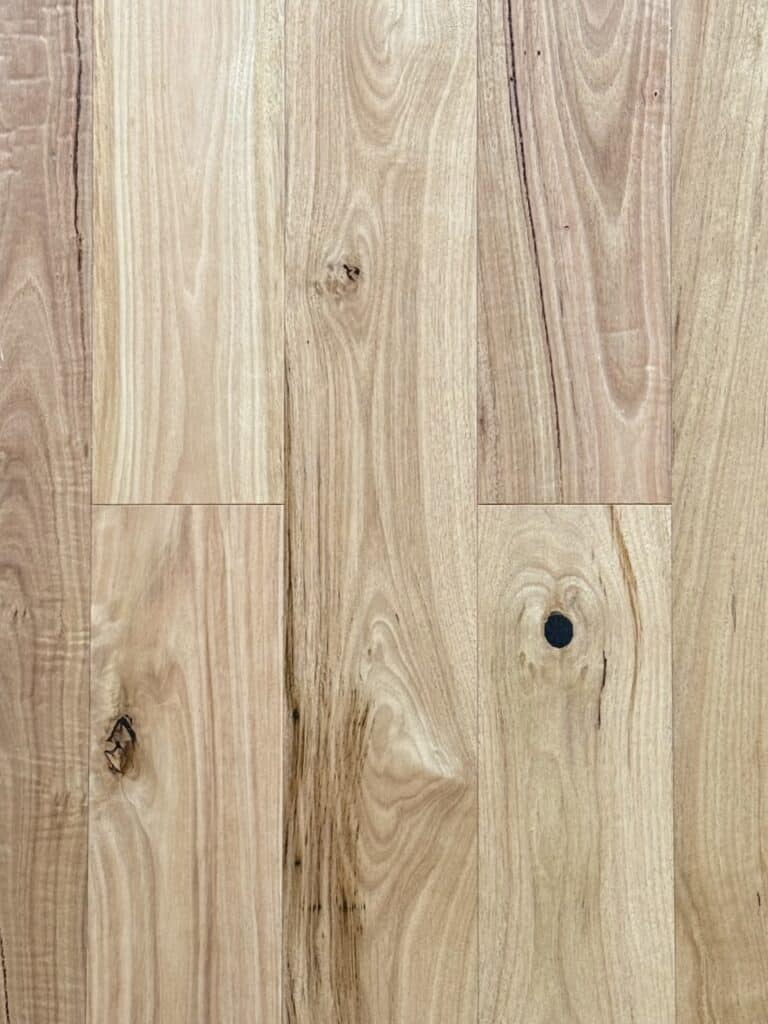
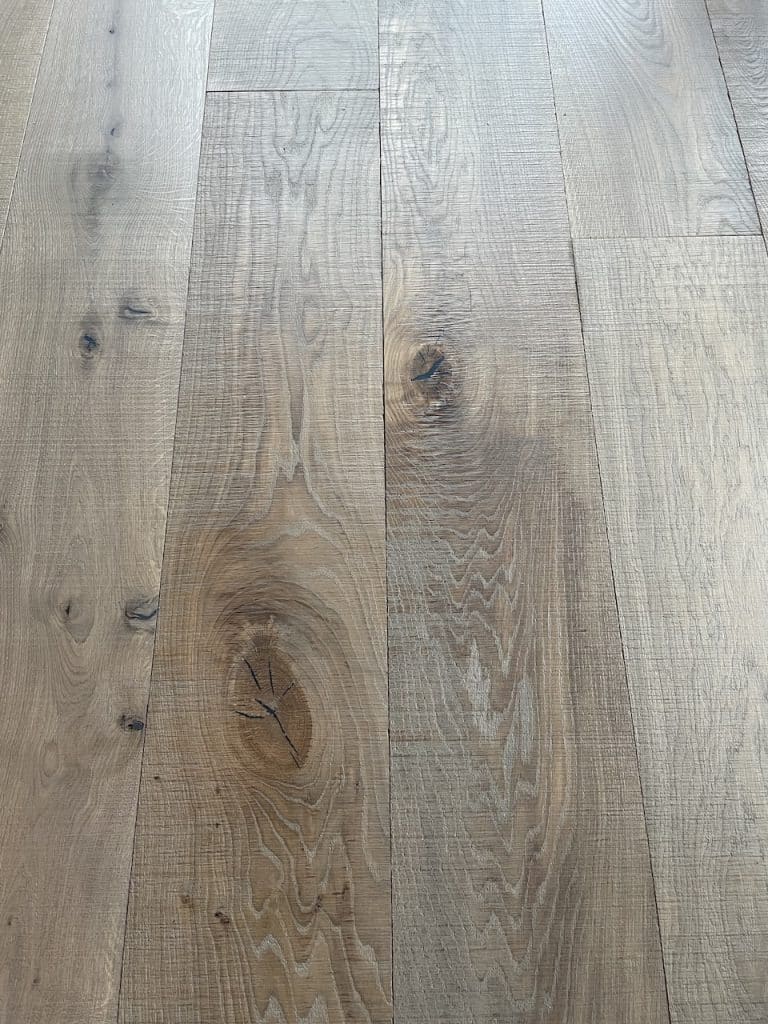
Blackbutt sits in the pale-to-golden range — honey and light straw tones, sometimes with a soft pinkish cast, over a fairly straight, even grain. It is a lighter, brighter floor than most European oaks, which keeps a room feeling open and warm rather than grey.

Our Blackbutt is a feature grade timber, so expect visible knots, gum veins and colour variation from board to board. That character is the point — it is what stops a timber floor looking like a printed laminate. As a natural product, some variation in colour, tone and grain between boards (and against samples or on-screen images) is normal and to be expected.

Solid vs engineered Blackbutt — and why we build ours engineered

You can buy Blackbutt as a solid board or as an engineered board. Solid Blackbutt is a single piece of hardwood all the way through. An engineered board is a genuine Blackbutt hardwood wear layer bonded over a cross-layered plywood core.

We build ours engineered on purpose. The cross-layered core makes the board more dimensionally stable than solid timber, so it copes better with the temperature and humidity swings that make solid boards cup, gap and shrink — and New Zealand homes see plenty of those, from a still summer to a heat-pumped winter living room. Engineered boards can often be laid over a concrete subfloor and with underfloor heating, subject to the manufacturer’s installation requirements, so talk to us about your subfloor and heating before you specify.

How an engineered Blackbutt board is made

Three layers do the work:

  • The wear layer — a genuine 3mm layer of Blackbutt hardwood on top. This is the surface you see, walk on and maintain over the life of the floor.
  • The core — a multi-ply base of thin wood layers glued at right angles to each other. Cross-laying is what gives the board its stability.
  • The finish — ours is a matte natural UV-cured lacquer, cured hard in the factory, that protects the timber while keeping the look soft and natural rather than plastic.

Our boards are engineered overseas to Vienna Woods’ specification, with a 14mm total thickness carrying a 3mm Blackbutt wear layer, in widths of 138mm and 190mm. Most of the pack runs a fixed 1900mm length, with around 17% nested (mixed, shorter) lengths.

The benefits of engineered Blackbutt

  • Hard-wearing. On the Janka scale — the standard test for how well a timber resists denting — Blackbutt sits at roughly 9.1 kN, among the harder Australian flooring hardwoods. Because our board carries a real Blackbutt wear layer, that hardness is the timber’s own and not a surface coating — a big part of why it is a favourite in busy family homes and hallways.
  • Warm, bright, liveable colour that works with almost any palette and does not date the way a strong stain can.
  • Stability from the engineered construction, as above.
  • A real timber surface you can look after and maintain, not a printed picture of wood.
  • Long, mostly fixed-length boards. Most of the pack runs a full 1900mm, which gives a cleaner, more predictable install with fewer end joints across a room.

Is Blackbutt right for your floor?

If you want a lighter, warm-toned floor with real hardwood character and the hardness to take family life, Blackbutt is worth a serious look. Because it is an indent line for us, it is made to order — the best next step is to order a sample so you can see the colour and character in your own light, and talk to us about lead times and quantities for your job.

See our Blackbutt Engineered Timber Flooring →

Bandsawn Oak Flooring at Pohutukawa House

A Coastal Home Shaped by the Coromandel

Perched on the rugged coastline of the Coromandel Peninsula, Pohutukawa House is a modern coastal retreat designed to sit in quiet dialogue with its weather-worn surroundings. The brief called for something that could hold its own against salt-laden winds and the shifting moods of sea and sky — yet still feel warm, tactile, and unmistakably refined inside. Every material choice, from the cedar cladding to the oak underfoot, had to carry both presence and patina.

Coastal architectural home exterior in Coromandel with timber cladding and ocean view setting

Custom Distilled Bandsawn Oak Underfoot

At the heart of the interior is Vienna Woods’ Custom Distilled Bandsawn Oak — a bespoke finish developed specifically for this home. Each board carries a visible bandsawn texture and a deep, distilled tone that echoes pohutukawa-stained rock and wind-tempered timber. Underfoot, it reads as solid and grounded; up close, the grain tells you how every plank has been hand-worked. It’s part of our Distilled Collection, built for homes where the floor is expected to do more than simply sit quietly in the background.

Dark engineered oak timber flooring in architectural hallway with timber ceiling lining and vertical wall battens

Where Luxury Meets Ruggedness

The Coromandel is never polite about weather, and the floor needed to reflect that. The bandsawn texture means the surface doesn’t reveal every scuff from sandy feet or wet boots, while the distilled finish lets the oak age gracefully rather than fight its environment. What results is flooring that feels luxurious without asking to be treated preciously — a material equally at home during a bare-footed morning and a boots-off-after-the-beach evening. For a house built to weather decades of salt and sun, that easy duality was the whole point.

Dark engineered oak timber flooring in modern bedroom with indoor outdoor connection and sliding glass door

A Collaboration with Sumich Chaplin

Pohutukawa House was brought to life by Sumich Chaplin, a New Zealand architecture studio known for rigorous, site-specific work. Their detailing pushed our team to develop a floor finish that could hold its own alongside concrete, stone and vertical cedar. Small touches — stair treads that flow seamlessly from the main floor, thresholds that disappear at indoor-outdoor transitions — are the result of close collaboration between architect, builder and flooring consultant. It’s the kind of project that reminds us why custom work matters: the best floors are shaped as much by their context as by their craft.

Featured Flooring: Custom Distilled Bandsawn Oak

Architect: Sumich Chaplin

Flooring Consultant: Miguel Uribe

Images: Thomas Cannings

Interiors: Peta Davy (Yellow Fox)

Flooring Installation: Finesse Floors

Location: Coromandel Peninsula, New Zealand

Case Study: Oak Metz Flooring at Mindful Adventures, Waiheke Island

Project: Waiheke Horizons Retreat

Location: Waiheke Island, New Zealand

Product: Oak Metz – Smoked European Oak Flooring

Client: Lisa Markwick, Founder of Mindful Adventures

Perched on a coastal ridge overlooking the Hauraki Gulf, Waiheke Horizons is a serene loft-style retreat designed to offer rest and renewal. The space, curated by leadership coach and facilitator Lisa Markwick, embodies simplicity and elegance, providing guests with a tranquil environment to unwind and reconnect.

Why Oak Metz Was Chosen

The selection of Oak Metz flooring was integral to achieving the retreat’s calming ambiance. This smoked European oak, finished with natural oil, offers a smooth, tactile surface that complements the retreat’s minimalist aesthetic. Its subtle smokey tones and natural grain harmonise with the organic materials and textures found throughout the space, from the linen bedding to the sheepskin accents.

The flooring’s durability ensures it withstands the varying conditions of an off-grid setting, while its sustainable European craftsmanship aligns with the retreat’s commitment to environmental mindfulness.

Enhancing the Retreat Experience

Guests at Waiheke Horizons are invited to slow down and immerse themselves in the natural beauty of Waiheke Island. The Oak Metz flooring contributes to this experience by providing a warm, grounding presence underfoot, enhancing the overall sense of comfort and relaxation.

Lisa’s thoughtful integration of materials and design elements, including the choice of Oak Metz, reflects her dedication to creating spaces that support personal growth and well-being.

For more information about the retreat and its offerings, visit Mindful Adventures.

Why Size Counts in Timber Flooring

Vienna Woods: Prioritising Quality and Aesthetics

At Vienna Woods, we uphold a strict standard: none of our engineered timber flooring products contain more than 17% short boards. Many of our collections, such as the Foundation Collection and Distilled Collection, feature fixed lengths, ensuring no short boards at all.

This commitment contrasts with the industry norm, where short board content is usually 25% or even 33% (and sometimes more). Excessive short boards can disrupt the visual harmony of a floor, especially in open-plan spaces.

The Rationale Behind Short Boards

Manufacturers include short boards for several reasons:

  • Maximising Timber Yield: Utilising shorter lengths reduces waste during production.

  • Cost Efficiency: Short boards are less expensive to produce and transport.

  • Installation Flexibility: Shorter boards can be useful in smaller spaces or for starting rows.

However, overuse of short boards can compromise the floor’s aesthetics and integrity. 

The Impact of Excessive Short Boards

Aesthetic Disruption

A high percentage of short boards can lead to a fragmented appearance, breaking the continuity of the wood grain and making spaces feel cluttered.

Increased Head Joints

More short boards mean more joints, which can be visually distracting and may affect the floor’s stability over time.

Installation Challenges

Incorporating numerous short boards can complicate the installation process, potentially leading to increased labour costs and material wastage.

The Advantage of Longer Boards

Longer boards offer several benefits:

  • Enhanced Visual Flow: They create a seamless look, ideal for open-plan designs.

  • Reduced Joint Visibility: Fewer joints mean a cleaner appearance.

  • Reduced Waste/ Cost: Long boards can provide more efficient consumption of material without compromising on aesthetics.

Vienna Woods’ Commitment to Excellence

Our dedication to quality is evident in our product offerings:

  • Foundation Collection: Features fixed-length boards for a uniform look.

  • Distilled Collection: Offers premium, European-made, long-length boards with distinctive finishes.

  • Icons Collection: Showcases unique designs with longer lengths and strictly controlled short board content.

  • Petit Chateau:  Shows that even cost-effective solutions can still offer quality where it counts (not more than 17% shorts).
  • Chateau Collection:  Extra wide and long planks with interesting stain options and no more than 17% shorts.
  • Admonter:  One of the best engineered flooring manufacturers in the world, Admonter offers strictly fixed lengths only.

Key Considerations When Selecting Timber Flooring

When evaluating timber flooring options, consider the following:

  1. Short Board Percentage: Aim for products with less than 17% short boards.

  2. Board Lengths: Consider appropriate plank size for the length of your space.

  3. Fixed-Length Options: If it fits with your budget, pt for collections offering fixed-length boards for consistency.

  4. Manufacturer Standards: Choose suppliers adhering to recognised quality standards.

Board length isn’t just a technical detail—it’s a design decision that affects the feel, flow, and finish of every space. Whether you’re specifying for a high-end residential project or curating textures for a commercial interior, understanding how short boards impact the outcome gives you a sharper edge. At Vienna Woods, we’re always happy to talk shop. If you’re navigating flooring choices for a project, or just want to understand the finer details of what sets premium engineered timber apart, we’d love to hear from you.

Case Study: Modern Architectural Design at Westmere House

A Modern Architect’s Approach to Transformation

Westmere House, designed by Matt Robinson of HMOA Architects, stands as a striking example of modern architectural design. Originally a modest 75m² state house, the property has been transformed into a refined, contemporary home. Through a carefully considered renovation, the design balances heritage elements with bold modern interventions, seamlessly integrating the existing structure with a striking new extension.

The Role of European Oak Flooring in Modern Architecture

Central to the renovation is the use of high-quality European oak flooring from Vienna Woods’ Foundation Collection. Selected for its warmth, texture, and timeless appeal, this flooring enhances the home’s refined material palette. The natural oak tones contrast beautifully with the crisp, modern detailing, grounding the space with an inviting warmth.

Throughout the home, precise negative detailing and clean architectural lines complement the soft, organic beauty of timber flooring. In this modern architectural design, the flooring plays a pivotal role in connecting different spaces, unifying the home’s contemporary and traditional elements.

Explore more of our Auckland timber flooring in architect-designed homes.

Seamless Indoor-Outdoor Connection

A key feature of Westmere House is its strong connection to the surrounding landscape. Expansive glass sliders blur the boundaries between interior and exterior, a hallmark of modern architecture. The warmth of the engineered oak flooring extends throughout these open-plan spaces, reinforcing the sense of continuity between the indoors and the natural environment.

Thoughtful Design Enhancements

The renovation introduced carefully considered interior refinements, including ceiling-height doors and an elegant material selection that reinforces the home’s contemporary yet welcoming aesthetic. The kitchen serves as a key transitional space, its clean lines and sculptural elements reflecting the overall design philosophy. Each detail—down to the choice of flooring—was meticulously planned to enhance both form and function.

Capturing the Essence of Modern Architecture

Photographer Jackie Meiring expertly captured the home’s architectural details, showcasing the synergy between modern design principles and natural materials. The play of light, texture, and contrast highlights how the European oak flooring enhances the spatial experience, adding depth and character to the interiors.

A Testament to Modern Architectural Design

Westmere House exemplifies the power of modern architecture to transform a space while retaining warmth and livability. The integration of Vienna Woods’ European oak flooring is a defining element, bringing both aesthetic refinement and long-term durability to this architecturally significant home. 

Explore More

At Vienna Woods, we specialise in premium engineered timber flooring designed to elevate architectural spaces. If you’re looking to integrate high-quality oak flooring into your next project, contact us today or visit our showroom.

Photography by Jackie Meiring
Architect: Matt Robinson, HMOA Architects
Builder: Justin Langdon, Carpintero Builders

Timber Floor Maintenance Cost NZ — Oiled vs Lacquered Flooring Over Time

BARREL Oak oiled timber floor in a light natural finish, close up

Vienna Woods · Articles

What Does It Cost to Maintain a Timber Floor in NZ?

Oiled vs lacquered, over the life of the floor

Day to day, a timber floor costs almost nothing to keep: the right cleaner and a microfibre mop. The real cost is periodic. Oiled floors take a low-cost refresh every few years and can be spot-fixed; lacquered floors need a full sand and re-coat once the surface wears. Here is the indicative NZ picture.

Everyday cost

Routine cleaning is close to free

The biggest saving is that timber asks for very little day to day. Sweep or vacuum, then a lightly damp microfibre mop with a pH-neutral timber cleaner. Skip steam mops, wet mopping and generic supermarket sprays, which strip finishes and cause most of the damage that leads to early refinishing. Budget roughly $30 to $60 a year in the right product. Our timber floor maintenance and cleaning guide covers the routine.

Periodic cost

Where the two finishes differ: re-oil vs re-coat

This is where lifetime cost is really decided. The finish on the floor sets how you restore it, and how much that costs. For the full performance and appearance picture, read our oiled vs lacquered timber flooring comparison.

Oiled floors

Refresh, generally without sanding

Oil sits in the timber rather than as a film on top, so upkeep is a top-up, not a strip-back.

  • Topped up with a maintenance oil, not a surface film
  • Wear and dry patches can generally be spot-treated
  • Often done room by room, with less disruption
  • Lower cost per event, done more often
Lacquered floors

One bigger cost, later

Lacquer is a surface coating that wears as a single layer across the whole floor.

  • A protective film that wears as one layer
  • Once it wears through, a scuff cannot be spot-blended
  • Restoration generally means a full sand and re-coat
  • Minimal early cost, one larger cost down the track
The numbers

Indicative NZ maintenance costs

Every floor and every quote is different, so treat these as general market ranges, not Vienna Woods prices. Actual cost varies by floor area, foot traffic, finish, region and contractor. Always get a written quote for your own floor.

Task How often (indicative) Indicative NZ cost
Routine cleaning (both finishes) Weekly, plus as needed Around $30 to $60 a year in product
Re-oil refresh (oiled floors) Periodic; high-traffic areas sooner DIY from the cost of the oil; professional roughly $15 to $30 per m²
Full sand and refinish (worn lacquer, or a full oiled reset) Once every many years Roughly $45 to $90 per m², depending on spec and coats

Indicative market ranges only. GST, floor condition and site access all move the figure. Get a quote for a firm price.

Graph comparing the maintenance lifecycle cost of oiled timber floors versus sanding and refinishing lacquered floors over time
Full refinish

What a full sand and refinish costs

When a lacquered floor wears through, or an oiled floor needs a complete reset, the job is a full sand and refinish: sand back, then two or three coats of finish. As a guide only, NZ contractors often work to roughly $45 to $90 per square metre, so a typical living area tends to land in the low to mid thousands, more for larger floors, premium finishes or staining. It is disruptive too, furniture out and a few days off the floor, which is exactly why the finish you pick at purchase matters. Weigh it against the cost of the floor itself when you buy.

Lifetime cost

Which works out cheaper over time?

There is no single winner. Oiled floors spread cost into smaller, more frequent refreshes you can stage and often do yourself. Lacquered floors cost almost nothing for years, then land one larger refinishing bill. Over a long life, the totals often end up closer than they first look.

Two things cut lifetime cost more than the oiled-versus-lacquered debate itself: a sound install and matching the finish to how you live. A floor that is acclimatised, laid flat and sealed at the edges tends to wear more evenly and refinish cleanly. And putting your easiest-to-refresh finish where wear is heaviest, an oil in the hallway and where kids or pets live, means fewer full sands over the years. Order free timber flooring samples to see the finishes in your own light, or request a quote and we will talk through the finish that keeps your upkeep low.

Oiled vs lacquered

Performance, appearance and upkeep, side by side, so you can pick the finish that suits your home.

Compare the two finishes →

Care and cleaning

The simple routine that keeps a timber floor looking new and delays any refinishing.

See the maintenance guide →

What a floor costs to buy

Indicative supply and install pricing for engineered European oak flooring in NZ.

View flooring cost guide →

Good to know

Common questions

How much does it cost to sand and refinish a timber floor in NZ?

As an indicative market guide, sanding and refinishing often runs around $45 to $90 per square metre, depending on the floor, the finish and the number of coats. That is a general range, not a Vienna Woods price, so get a written quote for your own floor.

Is it cheaper to have an oiled or a lacquered floor?

It depends on how you use the floor. Oiled floors cost less per refresh but need refreshing more often; lacquered floors cost little for years, then need a full sand and re-coat. Over a long life the totals often end up closer than expected.

Can you re-oil a floor without sanding it?

In most cases, yes. Oiled floors are generally topped up with a maintenance oil and can be spot-treated in worn areas, so a full sand is usually only needed for a complete restoration.

Does routine cleaning really cost almost nothing?

Yes. Ongoing upkeep is mostly a pH-neutral timber cleaner and a microfibre mop, roughly $30 to $60 a year. Avoiding steam, excess water and harsh sprays is what prevents the far larger cost of early refinishing.

Still weighing it up? Read the full Vienna Woods FAQ, or order samples to compare finishes in person.

Choose the finish that keeps upkeep low

See how our engineered European oak looks and feels in your own light, then let us help you match the finish to how you live.

Petit Chateau Collection: Quality Timber Flooring at a Reasonable Price

When it comes to quality timber flooring, nothing beats the natural elegance of European oak. Our Petit Chateau Collection is where timeless beauty meets modern craftsmanship, offering the best of oak flooring to elevate any space.

We designed Petit Chateau to offer New Zealanders timber flooring that embodies both fantastic quality and exceptional value. As wood flooring specialists, we’ve created a product that not only looks stunning but also meets the highest European standards. This range provides real value for money, allowing you to enjoy the beauty and durability of European oak without compromising on quality or our commitment to excellence.

Why Choose the Petit Chateau Collection?

The Petit Chateau range is crafted from premium European oak, known for its durability and striking grain patterns. We’ve meticulously designed this collection to provide luxury without the hefty price tag. Here’s what makes it stand out:

  • Thick, High-Quality Planks: Each plank is 15mm thick with a 4mm wear layer, ensuring longevity. This thickness allows for multiple refinishes, extending the life of your floor.
  • UV Lacquer Finish: The seven layers of German-made UV lacquer give a durable, smooth finish, which not only protects the floor but also brings out the natural beauty of the oak.
  • Value Without Compromise: We believe luxury doesn’t need to break the bank. By avoiding unnecessary processing, and focusing on quality over excessive grades, we deliver elegance and practicality.
  • European Charm: Each product is named after charming French towns, adding a touch of Europe to your home. Ever wondered why Lyon was chosen? It’s not just about the French aesthetic; it’s inspired by the town’s timeless elegance! 

Benefits of the Petit Chateau Collection

  1. Unmatched Durability: The robust 15mm thickness combined with the UV lacquer finish makes these floors built to last.
  2. Effortless Maintenance: Thanks to the lacquered surface, cleaning is simple. It’s perfect for busy homes and commercial spaces.
  3. Versatile Design: Whether you want a modern minimalist look or classic warmth, the natural grain patterns of European oak complement any style.
  4. Environmentally Conscious: The collection focuses on maximising the use of every piece of timber, reducing waste and making it a sustainable choice.
  5. Refinishable: With a 4mm wear layer, you can sand and refinish your floor several times, giving it a refreshed look whenever you desire.


Why You’ll Love It

Here’s a little-known fact: the Petit Chateau Collection’s name was inspired by the graceful architecture of French countryside estates. So, when you choose this range, you’re not just getting a floor; you’re adding a touch of European charm to your space!

Looking For Quality Timber Flooring at a Reasonable Price?

The Petit Chateau Collection offers the beauty of European oak, real quality timber flooring, and unmatched value. Explore the range today and bring a slice of French elegance into your home.  Contact the team at Vienna Woods for samples and pricing information.

How to Identify High-Quality Timber Flooring

Close-up of Havane European oak engineered timber floorboard showing wear layer and grain

Vienna Woods · Articles

How to Identify High-Quality Timber Flooring

Read a spec sheet like a buyer, not a brochure.

How thick should a timber floorboard be? For engineered timber, look for a 14mm to 15mm board over a solid multi-ply or birch core, with a real hardwood wear layer of 3mm or more on top. Board thickness, wear-layer thickness, timber grade and finish are the four things that separate a quality floor from a cheap one.

Start here

Floorboard thickness: the two numbers that matter

Engineered timber flooring has two thickness figures, and they are not the same thing. The overall board thickness is the whole plank, core included. The wear layer (the lamella) is the solid hardwood on top, the part you actually see, walk on and sand. A cheap floor can look identical on day one and give itself away on both numbers.

As a general benchmark for a residential floor, a total board thickness of 14mm to 15mm with a wear layer of 3mm or more is a solid quality mark. Thin-lamella boards can start around 0.6mm to 2mm, which limits what you can do with the floor later. If a supplier quotes one thickness only, ask which number it is: the overall board, or the hardwood wear layer on top.

For the full construction picture, see our guide to engineered timber flooring.

Cross-section diagram of engineered timber floor types showing wear layer, core and backing
The checklist

What to check on any timber floor

Run any floor you are shortlisting past these five checks. Ask for each figure in writing so you can compare like for like across suppliers.

What to check What good looks like Why it matters
Board thickness 14mm to 15mm total for engineered timber A thicker board is generally regarded as more solid underfoot and more forgiving over a subfloor. Indicative, not a performance guarantee.
Wear layer (lamella) 3mm or more of real hardwood, not a printed or paper-thin veneer More hardwood on top gives more material to sand back and refinish later in the floor’s life. How many sandings you get depends on wear, finish and the installer.
Construction A stable multi-ply or birch core under the hardwood The core is what holds the plank flat across temperature and humidity change. A quality core is generally more dimensionally stable than a cheap one.
Grade A named grade (prime, feature, character) with a clear definition Grade sets how much knot, sap and colour variation to expect. It is about look, not right or wrong. Match it to the room you want.
Finish A defined finish: UV-cured lacquer or a hardwax oil, applied in controlled conditions The finish decides day-to-day wear resistance and how you maintain and repair the floor. Oil spot-repairs in place, lacquer resists marks harder.
Provenance A named species (for example European oak) and a supplier who builds to a written specification Knowing the species and the spec means you know what you are buying and can compare it honestly against the next quote.

Vienna Woods has not put its boards through independent durability testing yet, so treat any comment above about longevity, stability or wear as general industry guidance, not a tested or guaranteed claim.

How to read a quote

Where quality shows up, and where it hides

The wear layer is the price

Two boards at the same overall thickness can carry very different wear layers. The one with more hardwood on top usually costs more, and gives you more floor to work with down the track.

Wider and longer costs more

Wider planks (180mm to 300mm) and longer lengths read as calmer and more premium, but need better milling to stay flat. Expect to pay for it.

Grade is taste, not tier

Prime is not automatically better than character. It is a different look. Choose the amount of movement and knot you actually want to live with.

Finish sets the upkeep

Oiled floors are easy to spot-repair and re-oil in place. Lacquered floors tend to resist surface knocks and scuffs better. Our guide to maintaining and cleaning a timber floor covers both.

Once you have the specs lined up, weigh them against what timber flooring costs in New Zealand so you are comparing value, not just headline price.

Our spec

How Vienna Woods engineered oak is built

Our floors are European oak, engineered overseas to Vienna Woods’ specification. That means a named species and a written build, not a mystery board. Across the ranges, boards run 14mm to 15mm total thickness with a 3mm to 4mm European oak wear layer over a stable multi-ply or birch core, finished in UV-cured oil or lacquer.

The Icons collection carries a 4mm oak wear layer on a 15mm board in wide, long formats. The Petit Château collection runs a 3mm oak wear layer on a 14mm board with a solid birch core. Both put real hardwood where it counts, on top.

European oak is chosen for its tight, even grain and the way it takes colour, which is why it sits behind so many premium floors. As a general guide, a thicker hardwood wear layer gives more material to sand back and refinish over a floor’s life, though the number of sandings depends on the finish, the wear and the installer, and Vienna Woods does not guarantee a specific figure.

Oiled European oak herringbone timber floor in an open-plan kitchen and dining room
Good to know

Common questions

How thick should a timber floorboard be?

For engineered timber flooring, a total board thickness of 14mm to 15mm is a common quality benchmark and suits most New Zealand homes. Vienna Woods boards run 14mm or 15mm engineered European oak over a multi-ply or birch core.

How thick should the wear layer be?

Look for a real hardwood wear layer of 3mm or more, not a thin printed or paper veneer. Vienna Woods boards carry a 3mm to 4mm European oak wear layer depending on the collection.

Does a thicker wear layer mean the floor lasts longer?

As a general guide, a thicker wear layer gives more hardwood to sand back and refinish, which can extend a floor’s usable life. This is indicative, not a guarantee, and depends on wear, the finish and the installer. We have not independently tested lifespan.

What board thickness is best for the New Zealand climate?

A 14mm to 15mm engineered board over a stable core is generally regarded as a good fit for New Zealand conditions, because the core helps the plank hold flat through temperature and humidity change. Treat this as general guidance rather than a guarantee for any specific home.

Is engineered timber flooring as good as solid?

A quality engineered European oak board with a thick hardwood wear layer gives you a real timber floor, and the multi-ply core is generally regarded as more dimensionally stable than solid timber. See our comparison of engineered versus solid timber flooring to weigh it up for your project.

See and feel the wear layer

Order free timber samples and check the board thickness, grade and finish in your own light before you commit.

Order free samples →

What it costs

Understand how thickness, wear layer, width and finish move the price of a timber floor in New Zealand.

Timber flooring cost →

The engineered range

See how our European oak boards are built, from the wear layer down to the core.

Engineered timber flooring →

Check the spec in your own hands

Order free European oak samples and see the wear layer, grade and finish for yourself. Or send us your plans and we will spec a floor to suit.

How to Know When It’s Time to Oil Your Timber Floor: A Guide to Maintaining Oiled Wood Floors

Oiled European oak floor in a light chalk oil, close up showing the natural matte sheen

Vienna Woods · Articles

When to Oil Your Timber Floor: The Signs It Is Time

The tell-tale signs, a simple test, and how often to re-oil

An oiled timber floor is ready for a maintenance coat when it looks dull through the walkways, feels dry or rough underfoot, or water stops beading and starts soaking in. High-traffic areas wear first. Below are the tell-tale signs, a simple water-drop test, and how often to re-oil by traffic.

Read the floor

Six signs an oiled floor is ready for re-oiling

You do not need to strip an oiled floor back to bare timber to keep it looking good. Unlike a lacquer, oil is topped up in place, so the trick is catching the wear early while a light maintenance coat is all it takes. Watch for these six signs, and check the busiest paths first.

The lustre has gone flat

The soft, natural sheen of a freshly oiled floor dulls first in the walking paths. If the timber looks tired and grey next to the untrodden edges of the room, the surface oil is wearing thin.

It feels dry or rough underfoot

Run a bare hand across a busy area. A well-oiled floor feels smooth and slightly fed. If it feels dry, papery or like raw wood, it is asking for a coat.

Water soaks in instead of beading

Spills that once sat on top now darken the timber and soak in. That is the clearest sign the oil barrier has worn down. The water-drop test below confirms it in a minute.

Scratches and scuffs show more

Every floor picks up marks, but on a worn oiled surface they stand out and trap dirt. More visible scuffing than usual means the protective oil has thinned.

Colour looks faded or patchy

Sunlit stretches and daily traffic can lighten the tone over time. A maintenance coat, or a tinted oil applied by a professional, helps even it back up.

It is getting harder to keep clean

As the oil thins, dust and grime cling to the surface and mopping stops lifting them cleanly. Cleaning more often for less result points to a floor that needs feeding.

Natural oiled European oak floor with a matching timber wall feature in an open living space
The 60-second check

How to test whether it needs oil: the water-drop test

Not sure? Let the floor tell you. Drip a few drops of clean water onto the boards in a spot that gets plenty of use, then watch what happens.

Oil is still working

Water beads and sits

If the drops hold their shape and sit on the surface for a couple of minutes, the oil is still doing its job. Wipe them up. No coat needed yet.

Time to re-oil

Water soaks in and darkens

If the water spreads, soaks in and leaves a dark patch within a minute or two, the surface oil has worn thin. That area is ready for a maintenance coat.

Test a few spots: a doorway or hallway, the middle of the living room, and somewhere protected like under a rug. The busy areas almost always fail first, and that tells you exactly where to start.

How often

How often should you re-oil an oiled floor?

There is no single number, because it depends on how hard the floor works. Traffic, direct sun, pets and how you clean all move the timeline. The honest answer: re-oil when the signs above show up, not on a fixed calendar.

Most maintenance-oil makers suggest a refresh somewhere between one and three years, but that is a wide window. A busy kitchen or entry can need a touch-up sooner, while a spare bedroom may go far longer. Always follow the recommendation for your specific maintenance oil, and check the product spec that came with your floor.

Where it is What tends to happen Where to start
Entries, hallways, kitchens Wear shows here first; grit and spills are constant Run the water-drop test regularly and coat these first
Living and dining rooms Walking paths and sunlit patches dull ahead of the edges Watch the main routes and any sun-facing boards
Bedrooms and studies Lightest use, longest between coats A light refresh when the sheen finally drops
Once it is time

What to do next

Confirmed it is due? Good news: you rarely need to sand the whole floor. A maintenance coat over a clean, dry surface is usually all it takes, and it is a job many owners do themselves.

Our step-by-step Ciranova maintenance-oil DIY guide walks through prepping and applying the coat. If yours is an Admonter floor, follow the Admonter oiled-floor care routine for the maker’s method. For everything else on keeping timber floors right, start at our maintenance and cleaning hub.

Dark brown oiled herringbone timber floor in a kitchen, a high-traffic area that wears first
Make it last

Stretch the time between coats

A little routine care buys months between maintenance coats and keeps the floor looking fresh in the meantime.

Stop grit at the door

Most wear is grit walked in from outside. Mats at every entry, and a no-shoes habit in busy homes, do more than any product.

Clean dry, not wet

Skip the sopping mop. Standing water is an oiled floor’s enemy. Sweep or vacuum, then damp-mop with a cleaner made for oiled timber.

Wipe spills straight away

The longer a spill sits, the more it can soak in as the oil ages. Blot it up quickly, especially in kitchens and near sinks.

Pad the furniture

Felt pads under chairs and table legs stop the scratches that thin the oil in the first place.

Keep going

Handy next steps

Order free samples

See and feel our oiled European oak in your own light before you commit.

Order samples →

The maintenance guide

Every care and cleaning article for timber floors, gathered in one place.

Open the hub →

Apply the oil yourself

The step-by-step DIY method for laying down a maintenance coat.

Read the guide →

Good to know

Common questions

How do I know when my oiled floor needs re-oiling?

Watch for a dull, flat look in the walking paths, a dry or rough feel underfoot, water soaking in instead of beading, and more visible scuffs. The water-drop test is the quickest confirmation: if water soaks in and darkens the timber within a minute or two, that area is ready for a coat.

How often should you oil a timber floor?

It depends on traffic, sunlight and how the floor is cleaned, so there is no fixed number. Maintenance-oil makers commonly suggest somewhere between one and three years, but a busy kitchen may need it sooner and a quiet bedroom far later. Re-oil when the signs appear, and follow your product’s recommendation.

What is the water-drop test?

Drip a few drops of clean water onto a well-used part of the floor. If it beads and sits, the oil is still protecting the timber. If it spreads, soaks in and leaves a dark mark, the surface oil has worn thin and it is time for a maintenance coat.

Can I re-oil just the worn areas?

Often, yes. Oil blends in place, so you can top up the busy paths and doorways without doing the whole room. For an even finish across an open space, many owners coat the full area. Our DIY oil guide covers both.

Do I need to sand before re-oiling?

Usually not. A maintenance coat goes over a clean, dry floor. Light sanding is only needed for deep scratches or a rough patch. Full sanding back to bare timber is a recoat or restoration job, not routine maintenance.

Where can I get help?

For product advice or a floor recommendation, request a quote or talk to our team. For care questions, our maintenance and cleaning hub has the full set of guides, and common queries are answered on our FAQ page.

Keep your oiled floor looking its best

New floor on the way, or planning one? Order free samples to see our oiled European oak in your own space, or talk to us about the right care.

How Long Does Timber Flooring Last?

When investing in timber flooring, understanding its longevity is crucial. The lifespan of your wood flooring, whether it’s solid timber, engineered flooring, or any other variety, can be influenced by a range of factors. Here, we’ll explore how long timber flooring can last and what you can do to maximise its durability.

Factors Affecting the Lifespan of Timber Flooring

1. Type of Timber Flooring

  • Solid Timber Flooring: Made from a single piece of wood, solid timber flooring is known for its exceptional durability. With proper care, it can last anywhere from 50 to 100 years, or even longer.
  • Engineered Timber Flooring: Engineered flooring, crafted from multiple layers of wood, is designed for stability and resilience. It typically lasts between 25 and 30 years but can extend to 40 years with excellent maintenance.

2. Installation Quality

  • Proper installation is key to the longevity of any timber flooring. Poorly installed floors can lead to issues like warping, gaps, and uneven wear, significantly reducing their lifespan. Ensure your flooring is installed by professionals who understand the intricacies of timber and wood flooring.

3. Maintenance Routine

  • Regular maintenance is essential for keeping your timber flooring in top condition. This includes sweeping or vacuuming to remove dirt and grit, using appropriate cleaners, and avoiding excessive moisture. Re-oiling or refinishing your floors every few years can also prolong their life, particularly for engineered flooring.

4. Environmental Factors

  • The environment where your timber flooring is installed plays a significant role in its durability. High humidity, excessive dryness, or fluctuating temperatures can cause wood to expand, contract, or warp. Maintaining a stable environment within your home will help preserve the integrity of your wood flooring.

Extending the Life of Your Timber Flooring

To ensure your timber flooring stands the test of time, follow these tips:

  • Use Protective Measures: Place mats at entrances to catch dirt and debris before it reaches your floors. Felt pads under furniture can prevent scratches.
  • Regular Cleaning: Dust and dirt can act like sandpaper on your floors, leading to scratches and wear. Regular cleaning is vital.
  • Immediate Spill Management: Wipe up spills immediately to prevent moisture damage, especially on engineered flooring.
  • Professional Maintenance: Periodically, hire professionals to refinish or re-oil your floors. This not only restores their appearance but also adds a protective layer against wear and tear.

The Lifespan of Different Timber Flooring Types

  • Solid Timber Flooring: With the potential to last over a century, solid timber is a long-term investment. It can be sanded and refinished multiple times, which can restore its original beauty even after decades of use.
  • Engineered Timber Flooring: While engineered wood flooring doesn’t last as long as solid timber, its design makes it more resistant to changes in humidity and temperature, which is ideal for areas prone to such fluctuations. It offers a great balance between longevity and practicality.

Timber flooring is a timeless choice that, with proper care, can serve you well for decades. Whether you opt for solid timber or engineered flooring, the key to extending the life of your wood flooring lies in proper installation, routine maintenance, and a stable environment. By following these guidelines, you can ensure your floors remain beautiful and durable for years to come.

If you’re considering timber flooring for your home, or if you need advice on maintaining your existing floors, feel free to contact us at Vienna Woods. We specialise in providing high-quality wood flooring solutions tailored to your needs.