
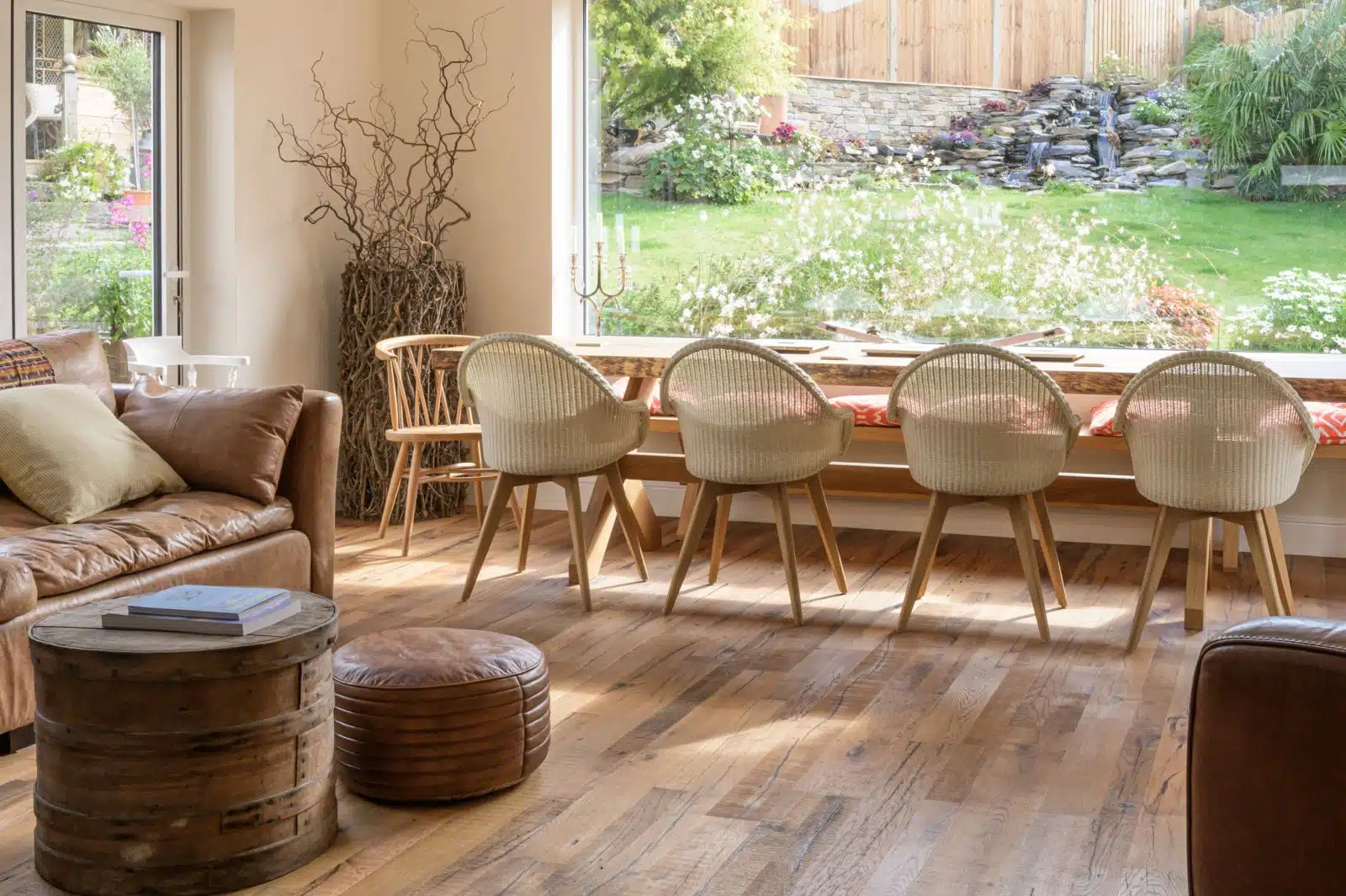
Aged & Reclaimed Wood FlooringGenuinely reclaimed oak, and new oak aged to read the same way
“Every grain a living pattern; every groove its own story.”
Aged and reclaimed flooring covers two honestly different things, and we think it is worth being clear about which is which.
Heritage is 100% reclaimed oak. Antique Floors is mostly reclaimed French oak. Admonter carries a genuinely reclaimed range. Raftwood and our aged finishes are new European oak, worked to carry the same time-worn character. Both routes give you the look. Only some of them are old timber, and we will always tell you which one you are standing on.
Whichever route you take, the board underneath is engineered oak in a 3-ply or multi-ply construction. That is the part that helps a floor hold its shape through an Auckland summer, over concrete, and over underfloor heating where the product allows.
Reclaimed, or reclaimed-look. Told straight.
Same worn character, two different materials. Here is the line we draw, on every board.
Genuinely reclaimed
Real old oak, a second time round Heritage boards are 100% reclaimed oak. Antique Floors is mostly reclaimed French oak, much of it lifted from old wagons and beams. Admonter carries a reclaimed range too. Every board wears real age, so no two are ever the same.
Aged to read reclaimed
New oak, worked to look old Raftwood and our aged finishes are new European oak, worked to read like a floor that has been down for years. You get the rustic, textured surface on a fresh, stable engineered board, without waiting on what a salvage yard happens to turn up.
Before you choose
A few things worth knowing about aged and reclaimed floors.
Engineered underneath
Every board sits on a 3-ply or multi-ply engineered core, which helps it hold its shape over concrete and, where the product allows, over underfloor heating.
Made to order
Most of these ranges are made to order in Europe, so allow a lead time. We confirm it on your quote.
See it first
Order a sample and put a reclaimed board next to an aged one. We will tell you honestly which is which.
Genuinely reclaimed
Real old European oak, given a second life. Heritage is 100% reclaimed oak; Antique Floors is mostly reclaimed French oak. Select a product for grades, dimensions and formats, or order a sample.
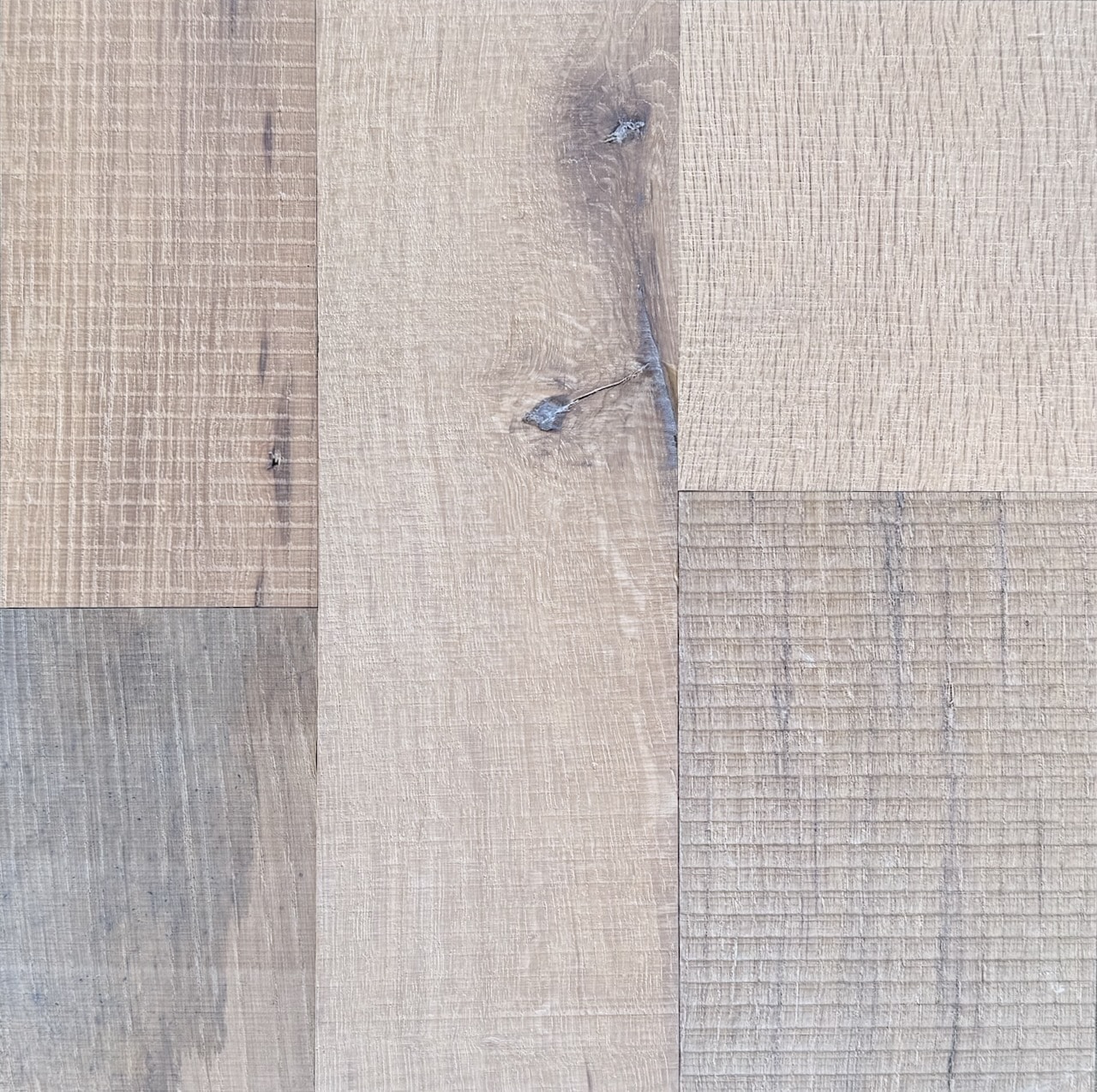
Beamhill
100% reclaimed oak · Plank · Reclaimed European oak in a warm, even tone, carrying the soft dents of a floor that has already had a life.
Order a sample →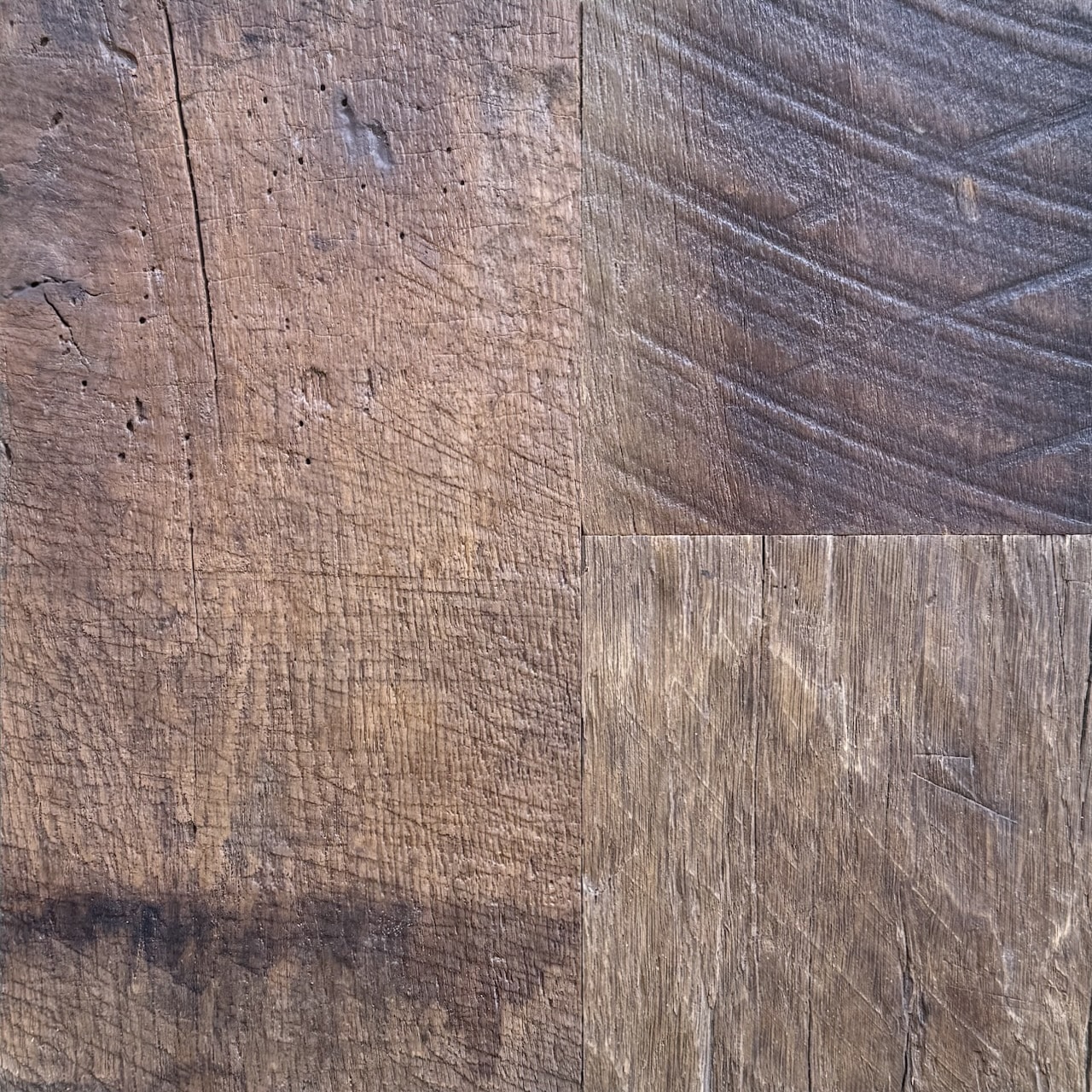
Stoneleigh
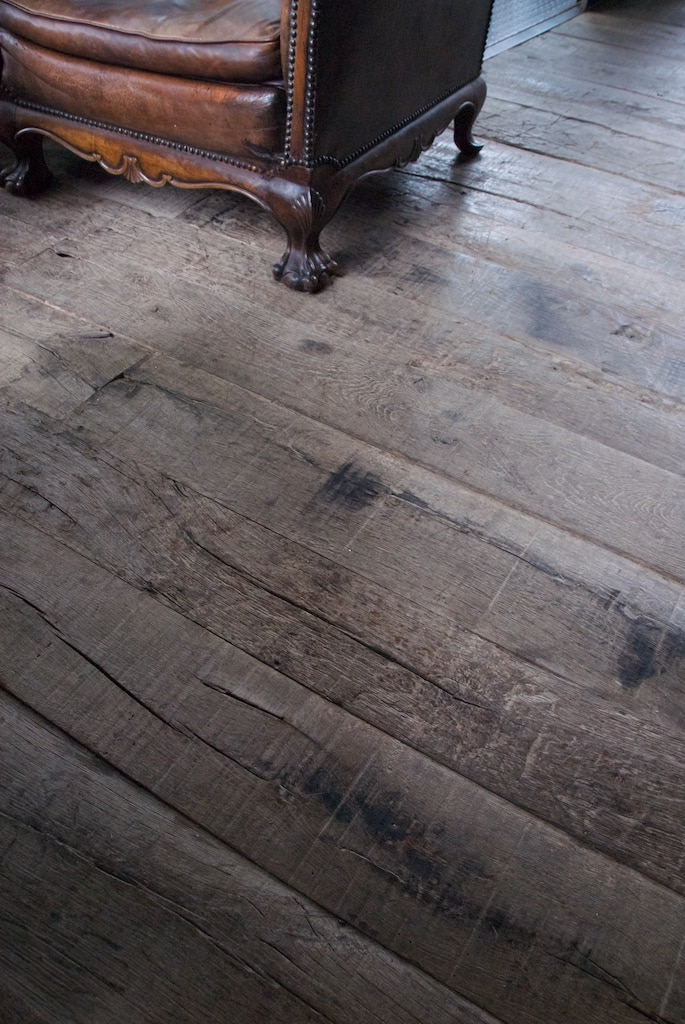
100% reclaimed oak · Plank · Cooler, greyed reclaimed oak. Heavier character, with real grain movement from board to board.
Order a sample →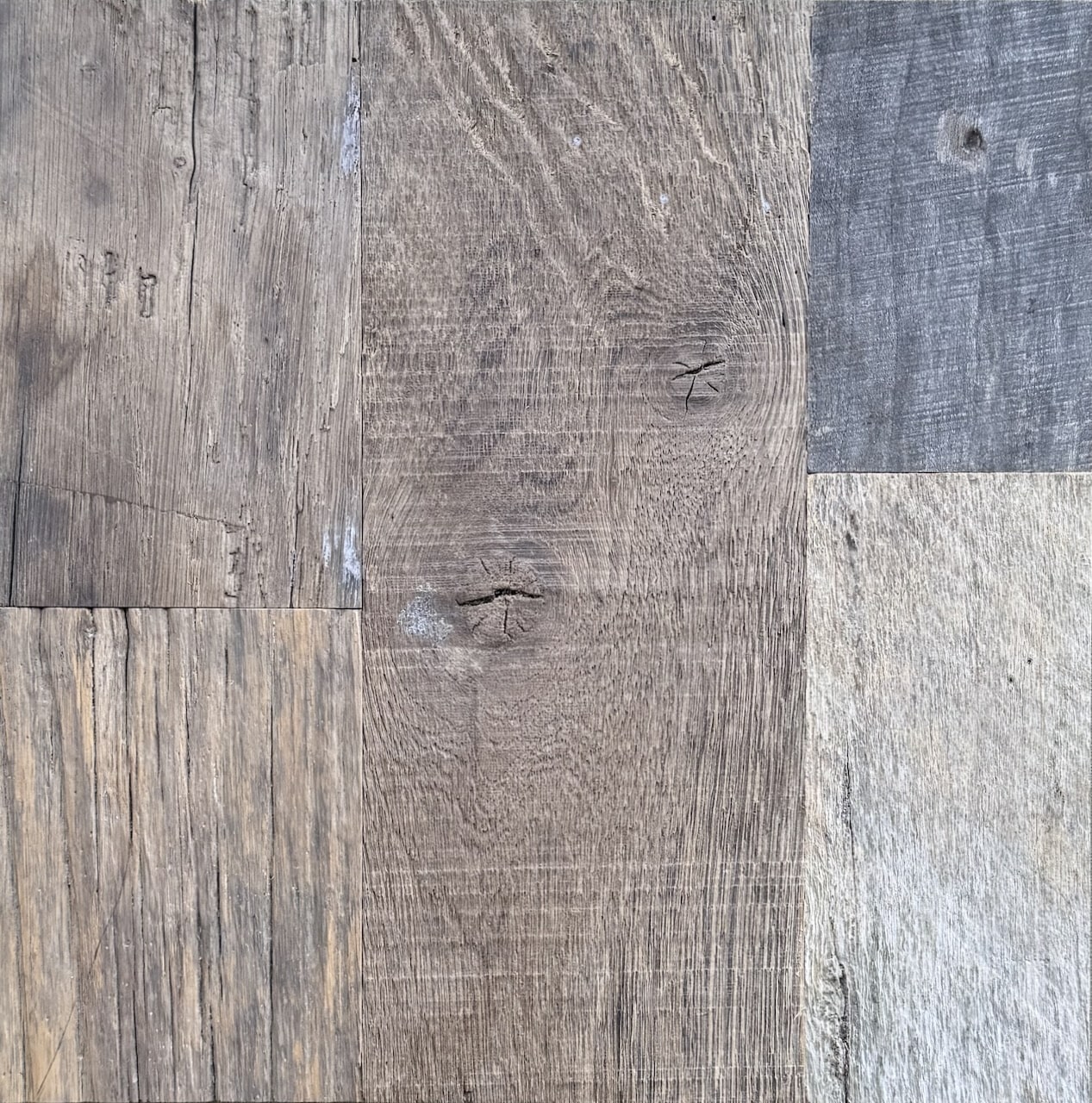
Ashwick
100% reclaimed oak · Plank · Mid-brown reclaimed oak with knots and old saw marks left in. Rustic without going dark.
Order a sample →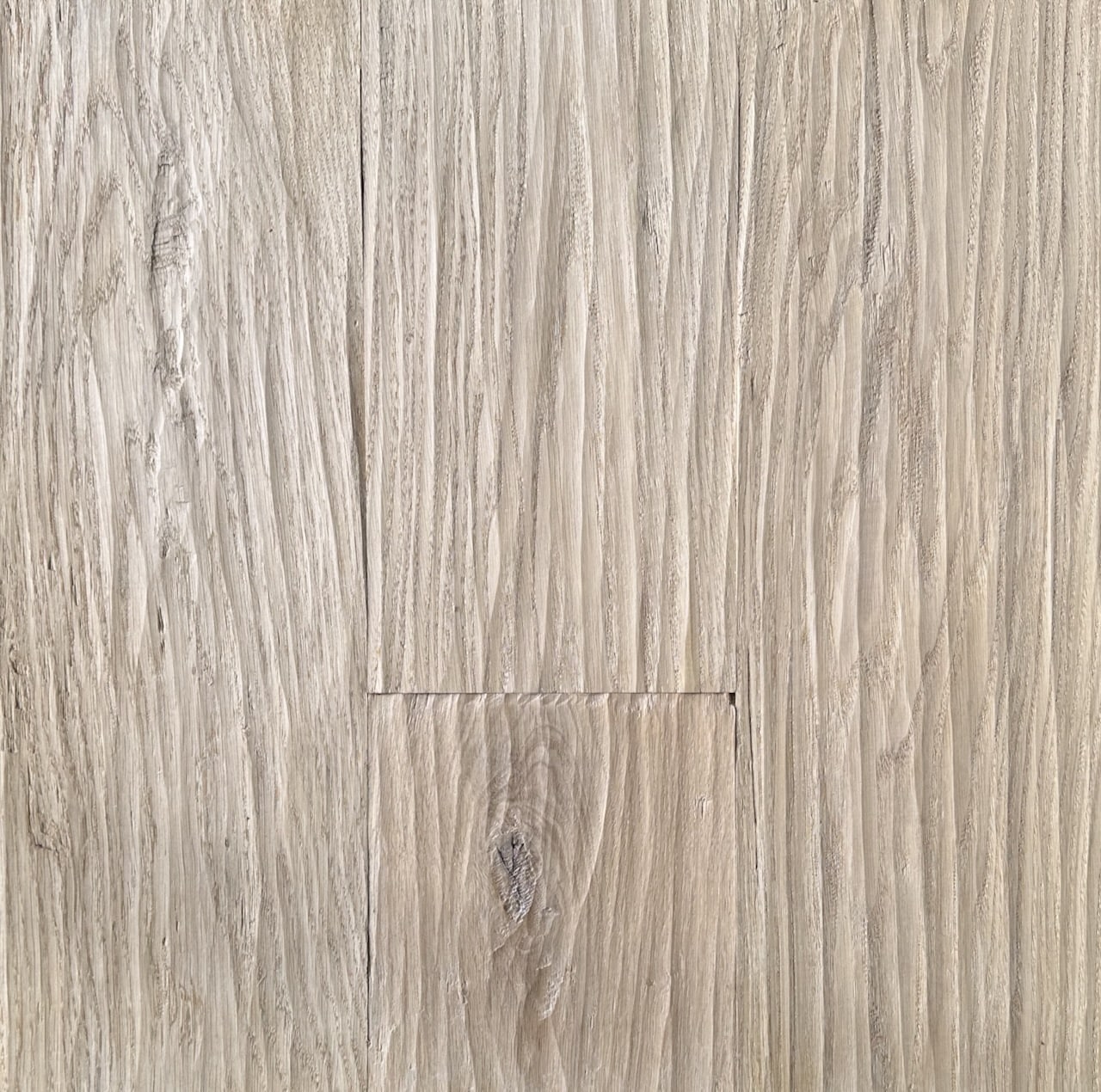
Le Bois Gouge
Reclaimed French oak · Plank · Reclaimed French oak with a worked, gouged surface you can feel underfoot.
Order a sample →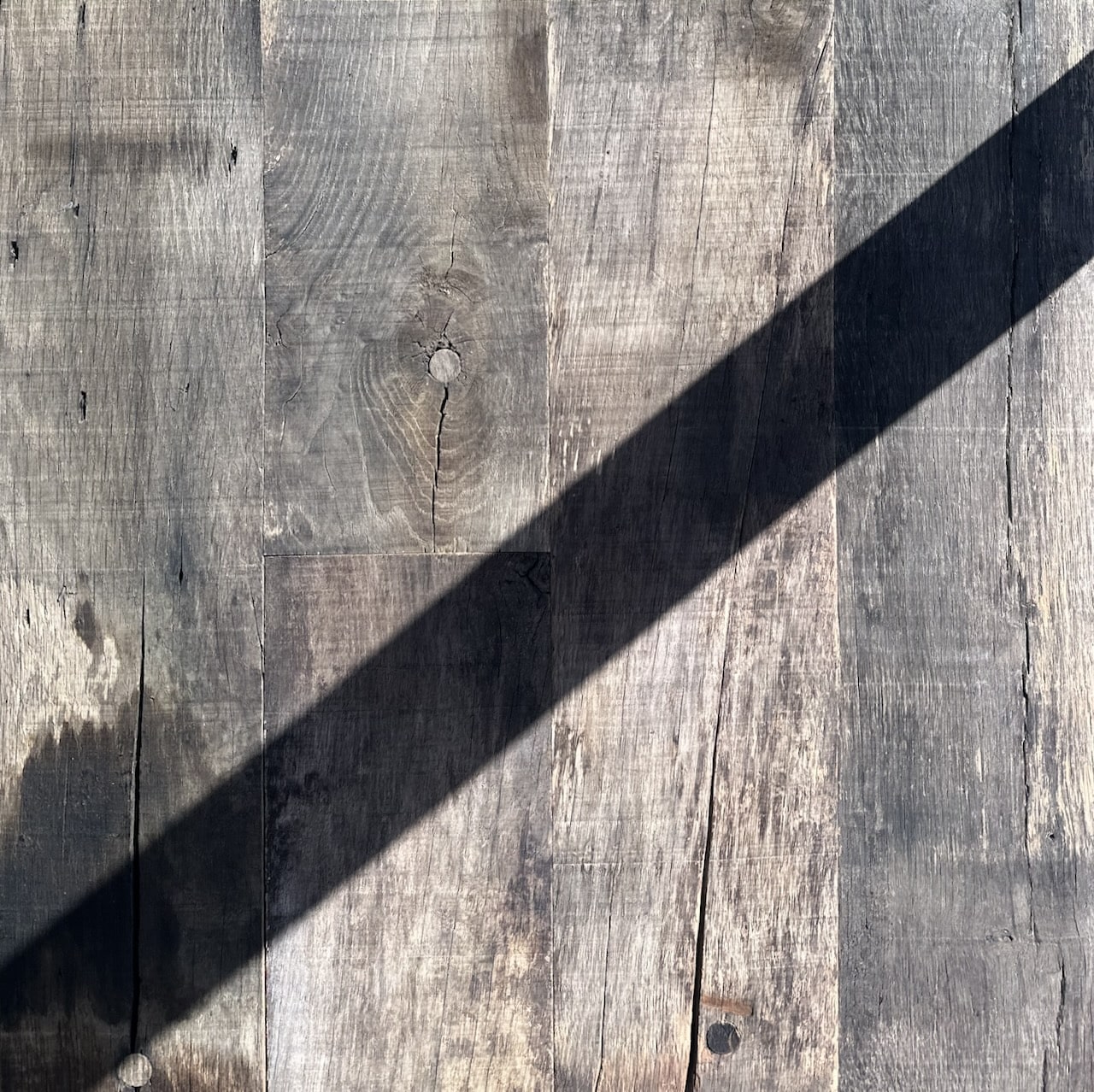
Wagon Back Boards
Reclaimed French oak · Plank · Oak reclaimed from old wagon boards. Deep texture, strong grain, no two boards alike.
Order a sample →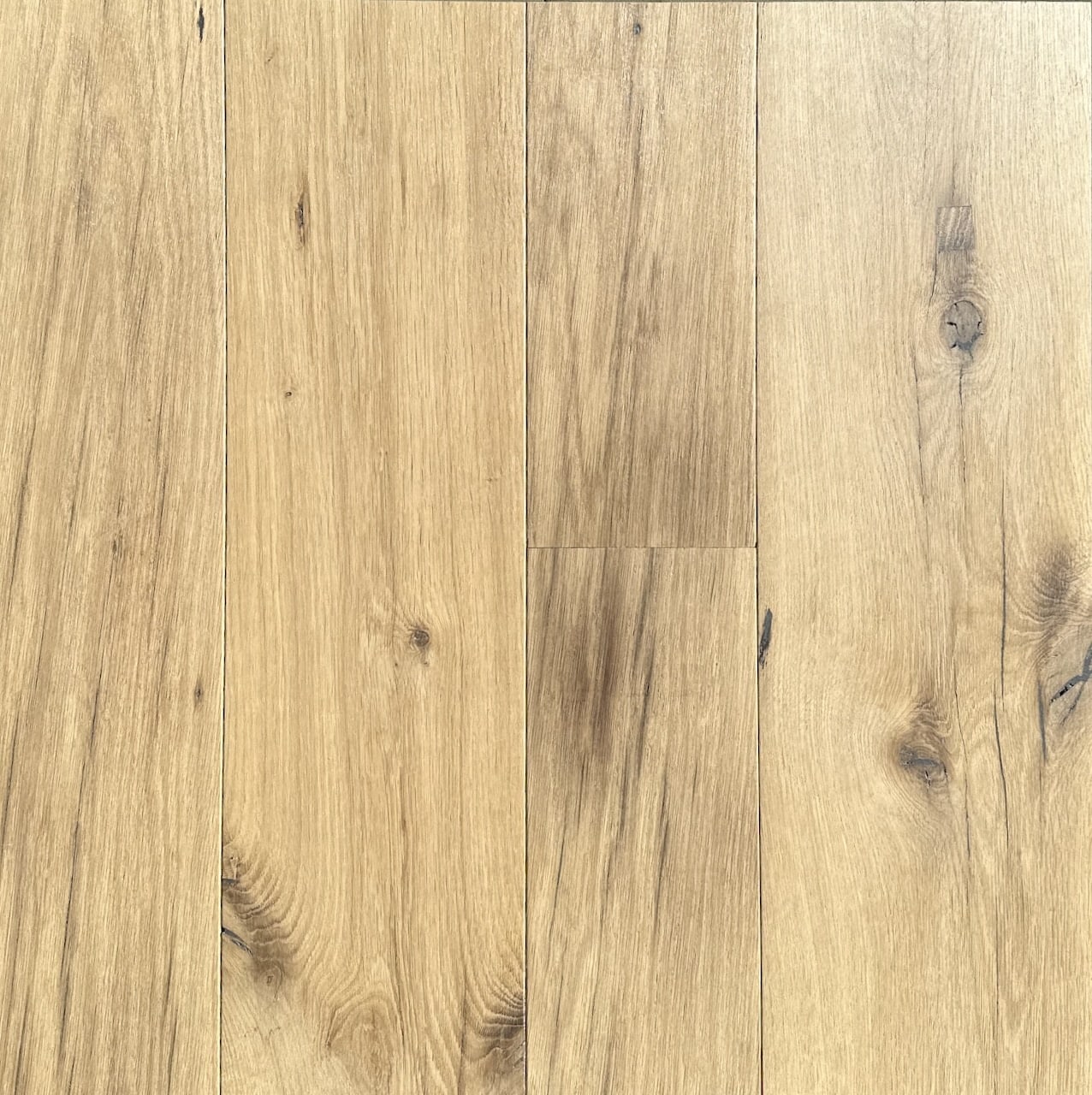
Sawn Beams
Reclaimed French oak · Plank · Oak reclaimed from old structural beams and resawn into flooring. About as characterful as it gets.
Order a sample →Aged to read reclaimed
New European engineered oak, worked to carry the character of a reclaimed floor on a stable, made-to-order board. Reclaimed-look, not reclaimed.
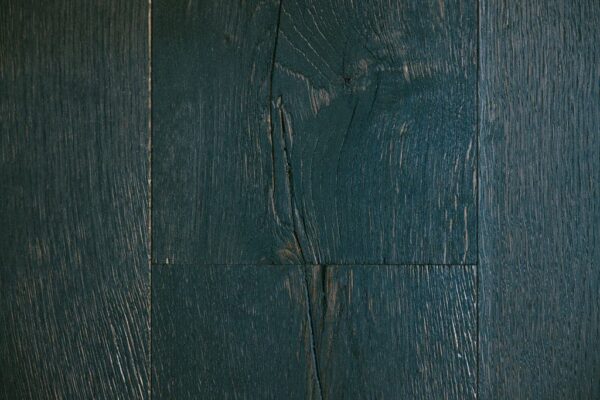
Yukon
New oak, aged · Plank · New European oak in a dark, charcoal-worn tone. Heavy rustic texture, made to read reclaimed.
Order a sample →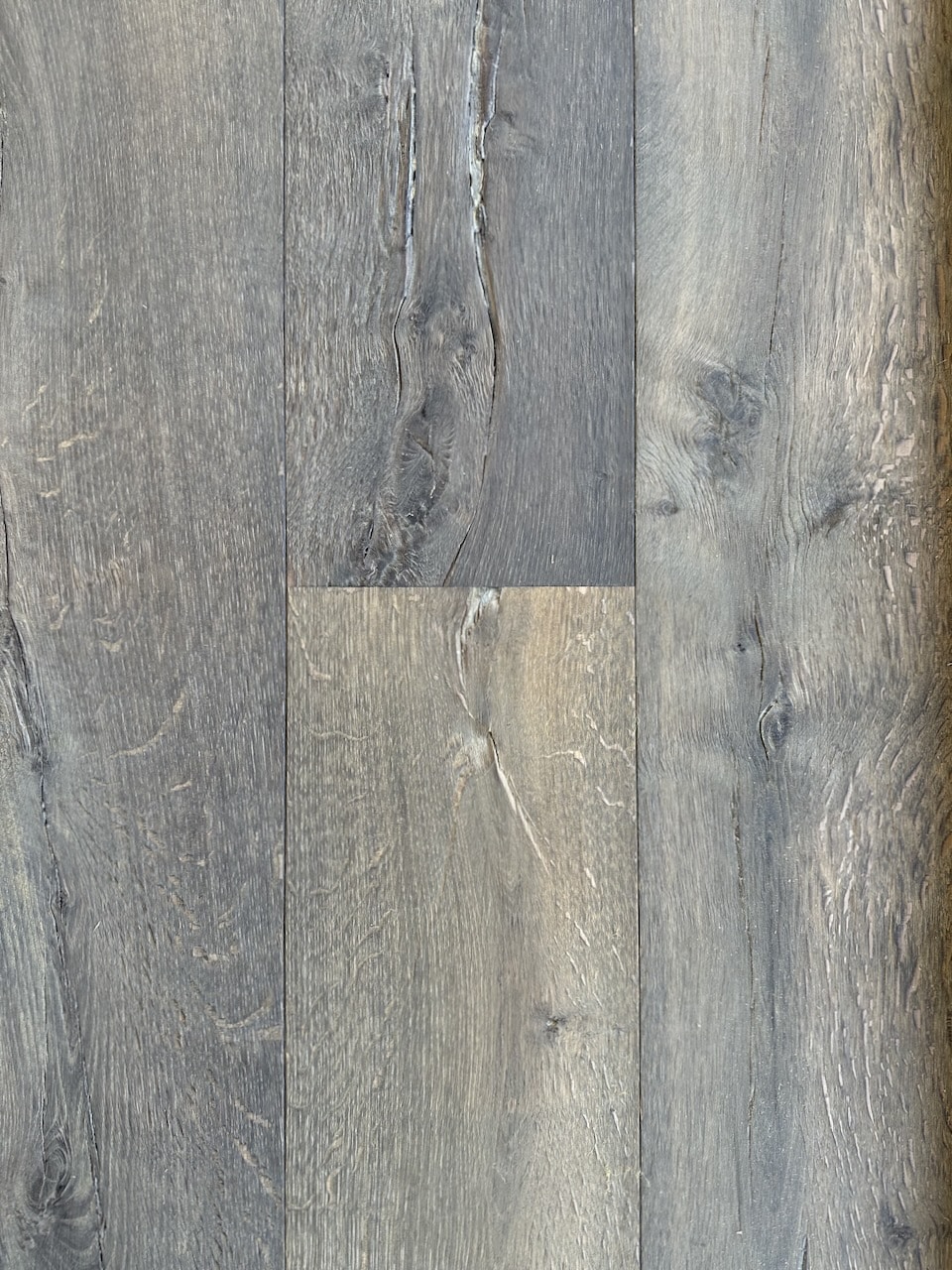
Old Barn
New oak, aged · Plank · New oak worked to the weathered, silvered look of old barn timber, on a stable engineered board.
Order a sample →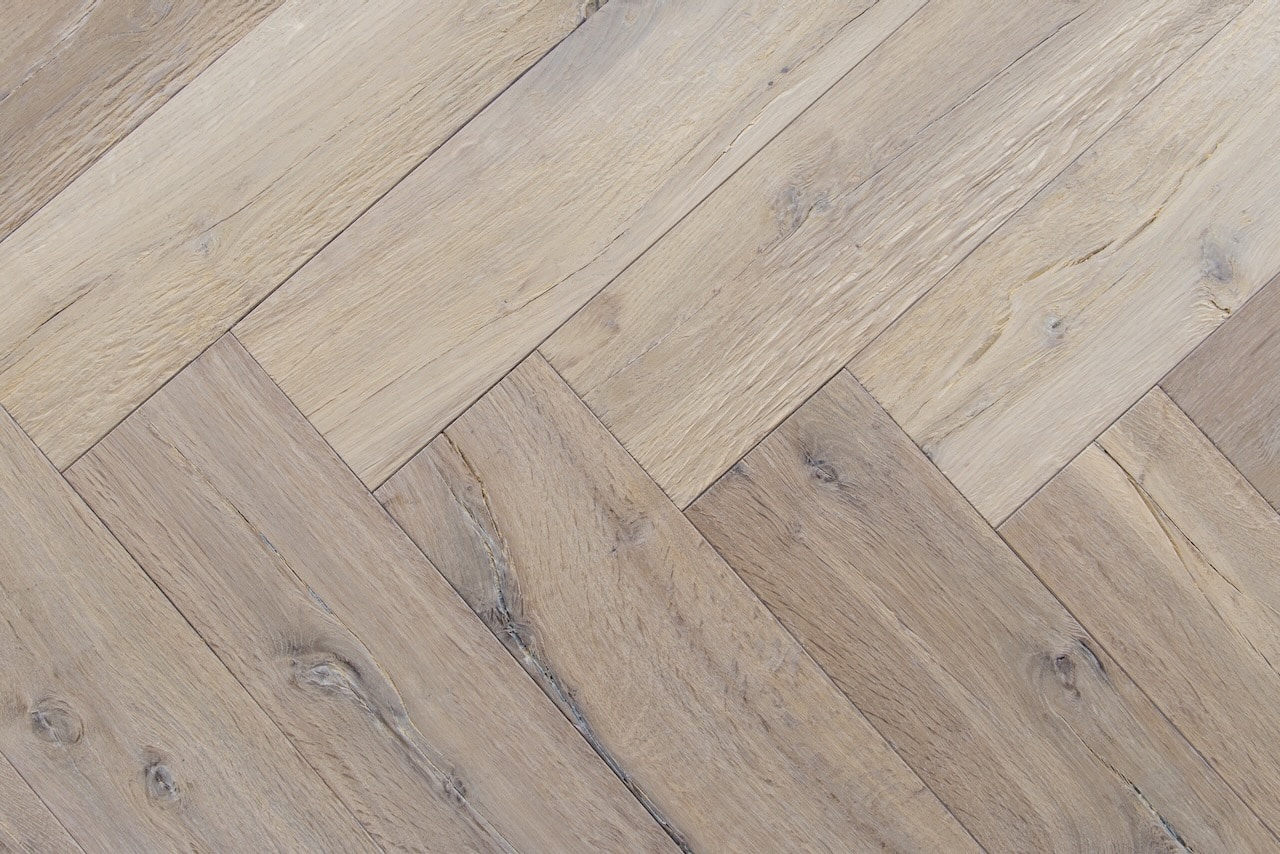
Amazone Herringbone
New oak, aged · Herringbone · The rustic Raftwood surface laid in a herringbone block. New oak, reclaimed-look, pattern floor.
Order a sample →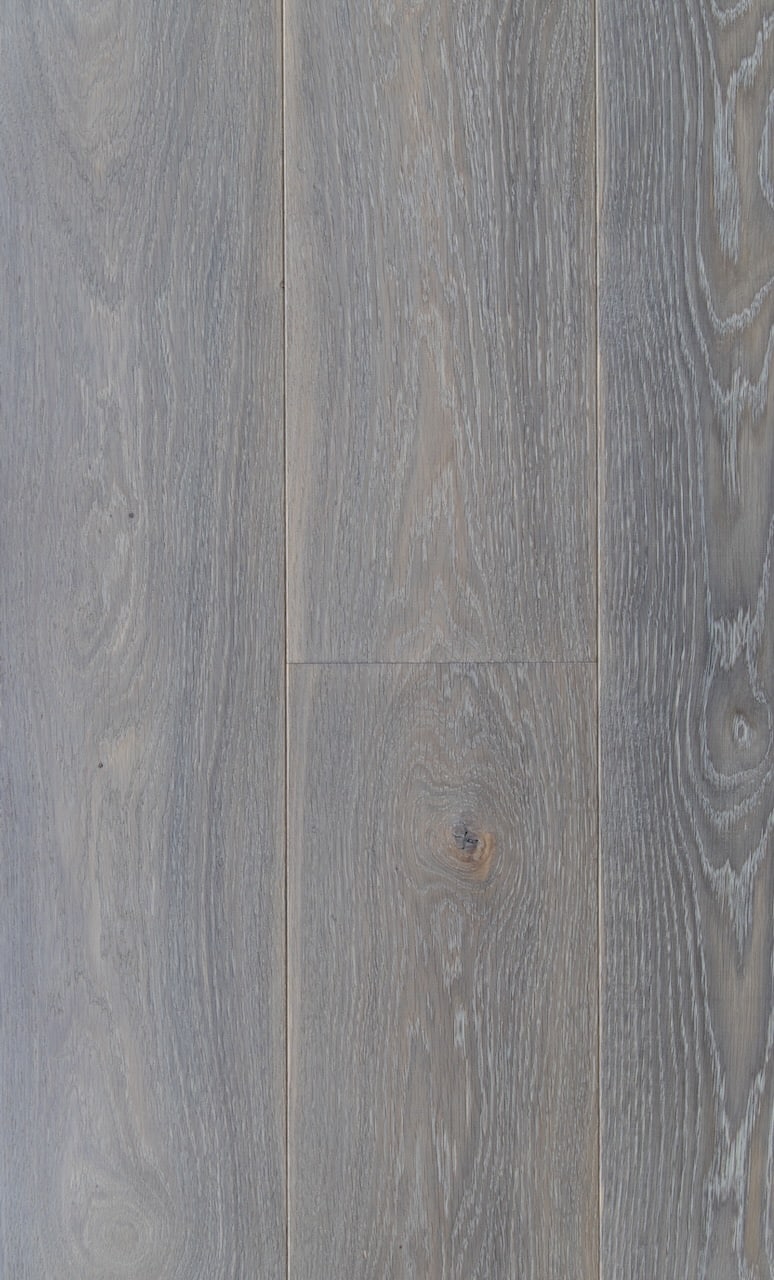
Old Timer
New oak, aged · Plank · A gently aged finish on new European oak. Worn character without the heavy rustic texture.
Order a sample →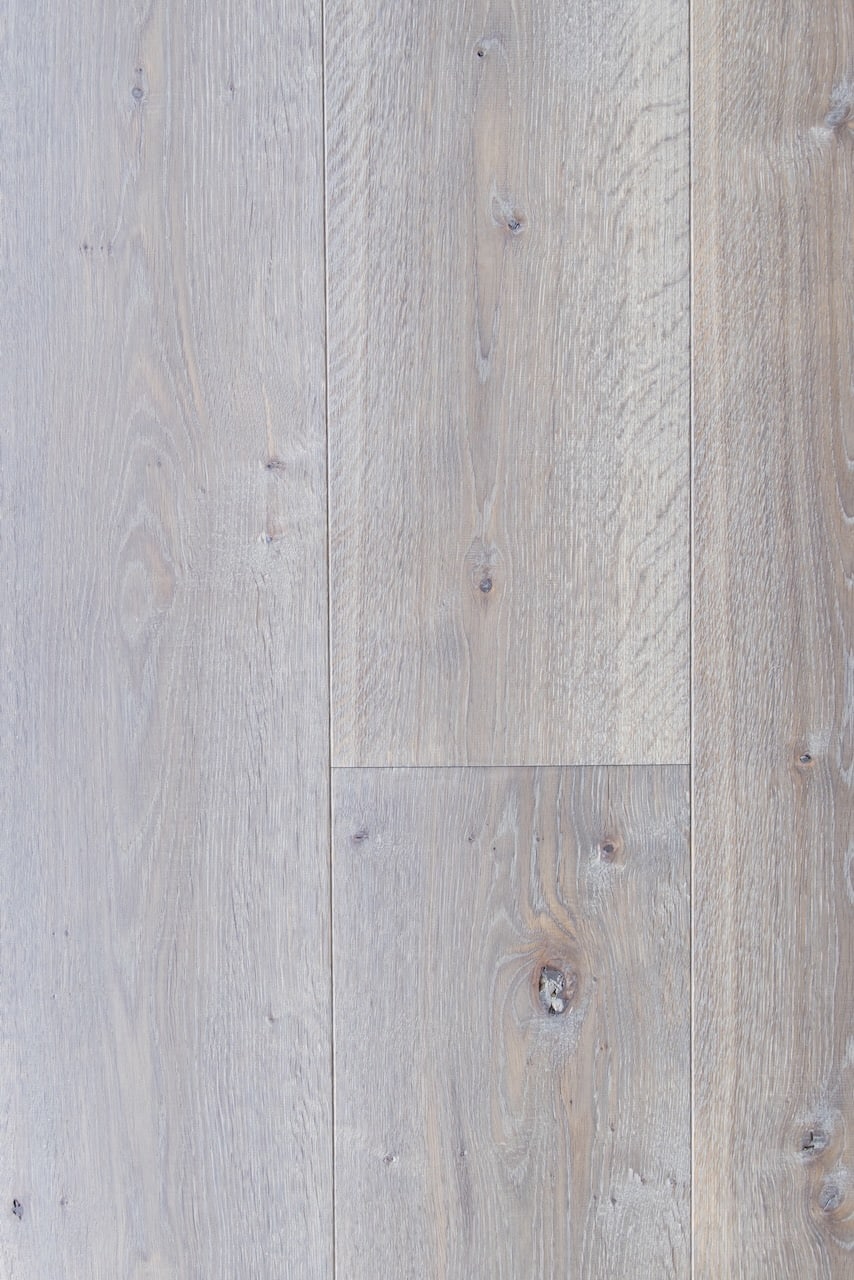
Antique Farm
New oak, aged · Plank · New oak given a farmhouse-worn look. A softer tone, aged but still calm.
Order a sample →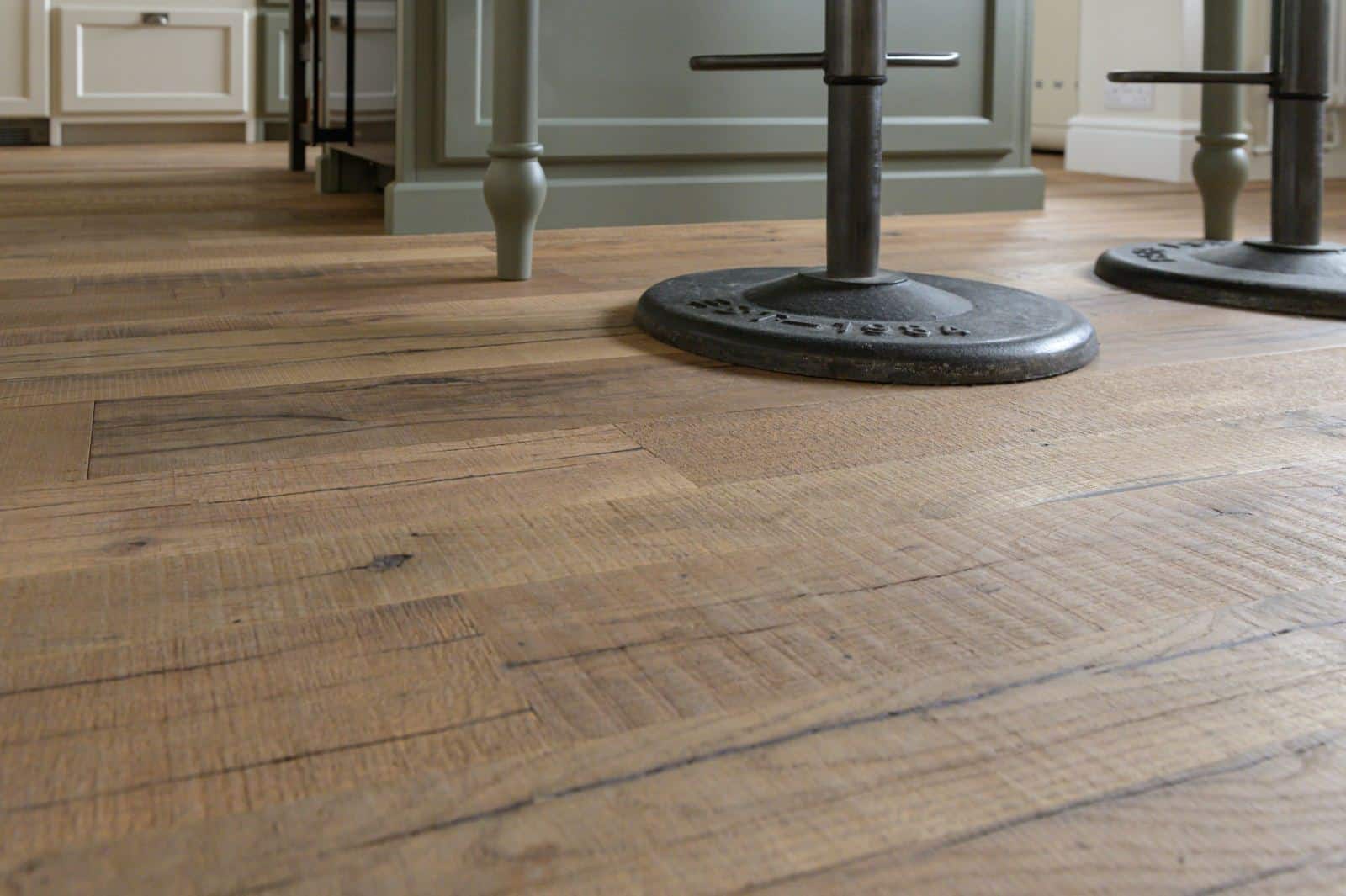

Aged and reclaimed oak flooring in New Zealand
Aged and reclaimed floors have become one of the most asked-for looks in New Zealand homes, and for good reason. A worn, characterful oak floor gives a room age and warmth that a brand-new board cannot fake on day one. The catch is that two very different products both sell under the same word, so it pays to know what you are buying.
Genuinely reclaimed timber is old oak that has already served as something else, then been remilled into flooring. Our Heritage range is 100% reclaimed oak. Antique Floors is mostly reclaimed French oak, a good deal of it recovered from old wagons and structural beams. Admonter also offers a reclaimed range. These boards carry real age, real marks and real variation, so every floor is one of a kind.
Reclaimed-look timber is new oak, worked to read like an old floor. Raftwood and our aged finishes take fresh European oak and give it a rustic, textured, time-worn surface on a stable engineered core. If you want a subtle age rather than a heavy rustic floor, the Château range and Admonter's aged texture sit at the gentler end. Either way you get the look, and you get it on a board built for a New Zealand climate.
Reclaimed or reclaimed-look: how to decide
Choose genuinely reclaimed if the story matters to you and you want real old timber underfoot, and you are comfortable with strong board-to-board variation and a made-to-order lead time.
Choose reclaimed-look if you want the rustic character with more consistency, a wider choice of tone, and the reassurance of a new, engineered board.
Engineered stability
These ranges are built as engineered oak on a multi-layer core, which is more dimensionally stable through changes in humidity than a solid plank, which is what you want over concrete slabs and over underfloor heating, subject to each product's specification. Ask us for the spec sheet on any range and we will confirm what it is rated for.
Browse the ranges above, or read Wood Floor Finishes Explained to see how the surface is built up.
Common questions
Is Raftwood reclaimed timber?
No. Raftwood is new European oak, worked to read like a reclaimed floor. If you want genuinely old timber, look at Heritage (100% reclaimed oak) or Antique Floors (mostly reclaimed French oak).
What is the difference between reclaimed and reclaimed-look?
Reclaimed is old oak given a second life. Reclaimed-look is new oak finished to carry the same worn character. Both give you the aged floor. Only reclaimed is actually old timber, and we label every range so you know which is which.
Can I lay it over underfloor heating?
Engineered construction generally suits underfloor heating, subject to the individual product's specification. Tell us your setup and we will confirm the range against its spec sheet before you order.
Will the boards vary a lot?
Yes, and that is the point. Aged and reclaimed floors are meant to vary in colour, grain and texture from board to board. Reclaimed ranges vary the most; the aged-new ranges are a little more consistent.
How long do they take?
Most of these ranges are made to order in Europe, so allow a lead time. We confirm the exact timing on your quote.
See the character in your own light
Order a sample and put a reclaimed board next to an aged one, in the actual room. We will tell you which is which.
Vienna Woods · Styles, Finishes & Textures
Timber is a natural material: variation in colour, tone, grain and texture between boards, and against samples and on-screen images, is normal and to be expected.