
Wood Types & Grades
A guide to the timber we use and the three grades we supply
Grade is the single biggest decision behind how your floor will look. It sets how many knots you see, how much the colour moves from board to board, and how busy the floor feels underfoot. This guide explains what each grade means at Vienna Woods, and how to work out which one suits your room.
The timber we use
Most Vienna Woods floors are European oak, in an engineered construction. Oak is the mainstay because it is dimensionally stable, takes stain and brushing well, and holds a fine, consistent grain that suits both a quiet contemporary interior and a period villa.
A small number of ranges use other timbers or reclaimed stock, and those are described on their own collection pages. If a specific species matters to your project, ask us and we will confirm it for the exact range before you commit.
Related reading: European oak flooring in NZ · engineered vs solid timber flooring
What grade actually means
Grade describes appearance, not strength. It is a sorting decision made at the mill about how much natural character each board is allowed to show, knots, colour variation, grain movement and mineral streaking.
A rustic-grade board is not a weaker or lesser board than a prime-grade one. Both are the same species, the same construction and the same thickness within a given range, and both carry the same warranty. What changes is how much of the tree's history you can see on the surface.
That matters because grade is the choice people most often get wrong from a small sample. A busy, characterful board can look wonderful in a 300mm offcut and overwhelming across an open-plan living area, and a very clean board can look calm in the hand and flat across a large floor. It is worth seeing a grade at the scale you will actually live with.
The three grades we supply
Vienna Woods sorts its ranges into three appearance grades. The names below are the ones you will see on our product pages.
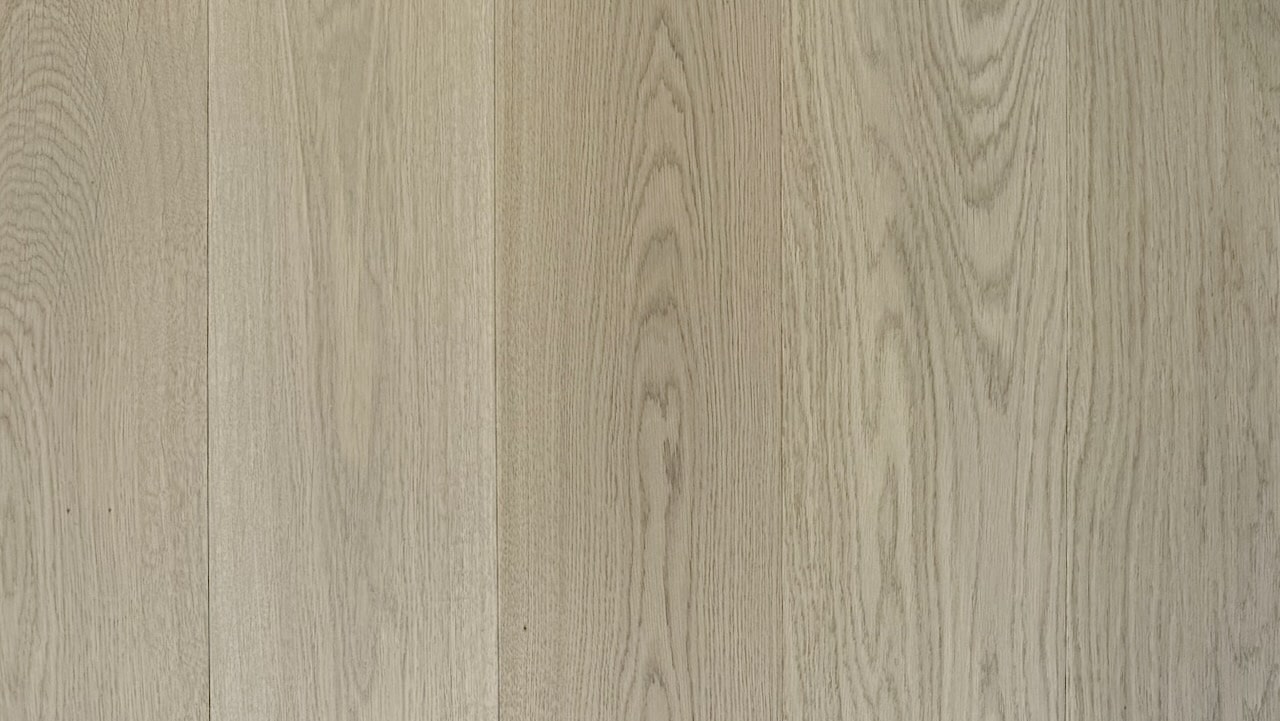
Prime: minimal knots, even tone
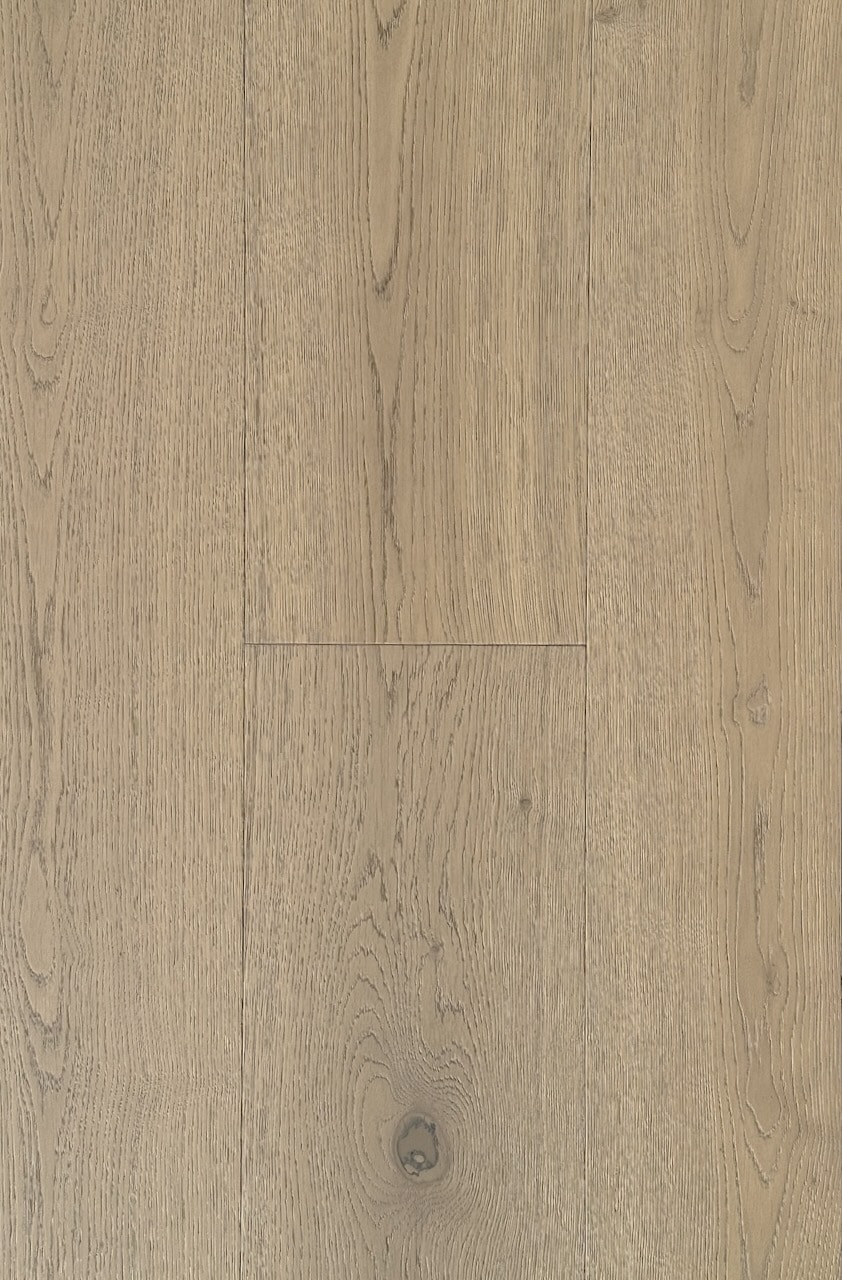
Feature: gentle movement, small knots
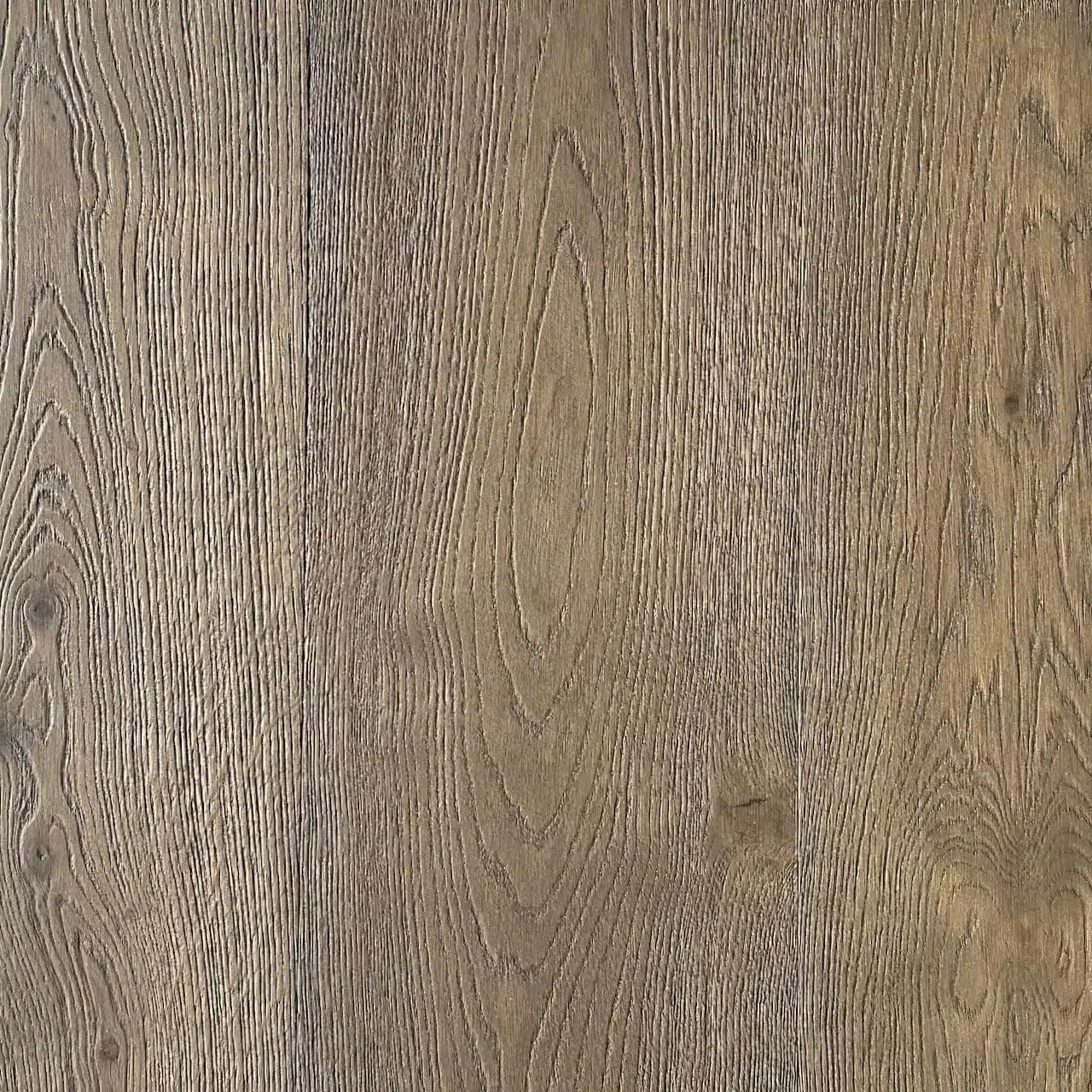
Rustic: open knots, strong texture
Prime grade
The cleanest sort we supply. Prime selection means minimal knots, limited colour variation and a refined, controlled grain profile. The natural oak character is still visible, but without the heavy marking associated with rustic grades.
Prime suits interiors where the floor is meant to sit quietly underneath the architecture, galleries, minimal joinery, large uninterrupted spans. In the Petit Château range the prime sort is sold under the name Noble, so if you see "Noble" on a product page, that is a prime-grade board.
Feature grade
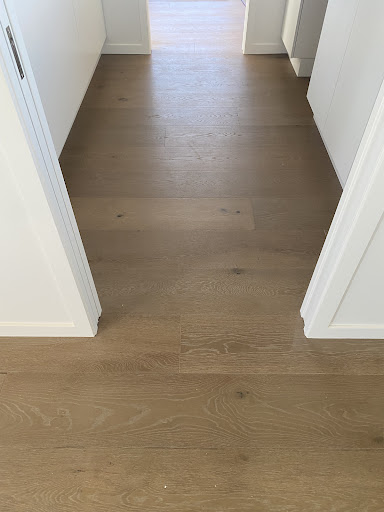
The middle sort, and the one most of our ranges are built around. A feature grade introduces gentle movement, soft grain and subtle knots without overwhelming the overall visual calm. Knots are generally small and infrequent, and are carefully filled to keep the surface refined and cohesive.
Some colours are described as Light Feature, which is the same idea with the character dialled back a little further. Much of the Icons collection sits in this band.
Rustic grade
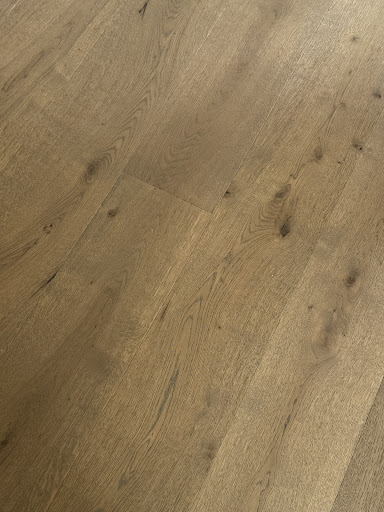
The most characterful sort. A rustic grade allows natural variation in grain, colour and knot structure, with visible knots, texture and natural feature detail. Knot level is described per product as medium, medium-to-large or medium-to-high, so you can gauge how busy a particular floor will be before you order.
The Patina collection is described as character grade and heavily brushed, which is the same end of the range. Several Château colours and our aged and reclaimed ranges also sit here.
Comparing the grades
| Prime (Noble) | Feature | Rustic (character) | |
|---|---|---|---|
| Knots | Minimal | Small, infrequent, filled | Visible, medium to large |
| Colour variation | Limited | Gentle movement | Strong natural variation |
| Overall feel | Clean and controlled | Calm with interest | Characterful and tactile |
| Often chosen for | Minimal, architectural interiors | Most homes, the middle ground | Villas, barns, relaxed interiors |
| Hides marks and wear | Least | Moderate | Most |
Grade affects appearance only. Species, construction, thickness and warranty are set by the range, not by the grade.
Grade is set per colour, not per collection
This is the part that catches people out. Grade is specified for each individual colour and format, not for a collection as a whole. Two colours in the same collection can be different grades, and the same colour can be a different grade in a different format.
Westwood is the clearest example: as a wide plank it is a Light Feature grade, and as a herringbone it is a Prime grade. Same colour, same collection, different sort.
So when you have narrowed down to a specific floor, check the grade on that product page rather than assuming it from the collection. If it is not clear, ask us and we will confirm it in writing before you order.
Which grade suits your project
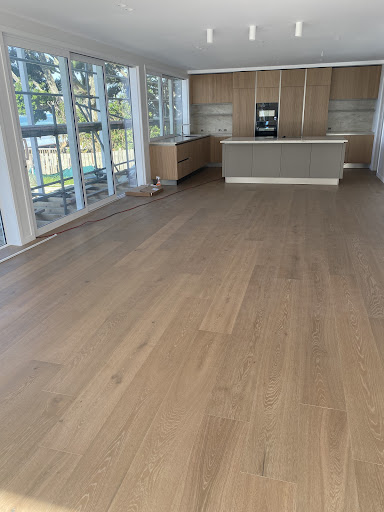
Start with the size of the space. The larger and more open the floor, the more a busy grade will read as busy. In a big open-plan living area a rustic grade becomes the dominant element in the room. In a smaller space or a hallway it reads as warmth and texture.
Then look at your light. Strong natural light exaggerates grain and knot contrast. A south-facing room flattens it. The same board can look quite different at either end of the same house.
Then think about how the room gets used. A characterful grade is far more forgiving of everyday marks, sand, pets and children, because there is already a lot going on. A very clean prime floor shows its life sooner, which some people like and some do not.
Then match it to the rest of the room. If your joinery, stone and textiles are doing a lot of work, a calmer grade gives them room. If the room is quite plain, the floor can be where the character comes from.
Still deciding on the look overall? Style ideas and trends covers colour, plank width and lay pattern, and floor finishes explained covers oiled, lacquered and brushed surfaces.
Sourcing and certification
We buy European oak and ask every manufacturing partner for current forest-certification and product-conformity documents. Several of our ranges are made by mills that hold current FSC or PEFC Chain-of-Custody certification, and we can supply the certificate on request, scoped to that range.
Any of our mills can supply FSC-certified timber to order, so if your project needs it, ask when you order and we will price it. Either way, the mill's current certificate goes into your project file.
Full detail, by range: sustainability and certifications.
What our customers say

Common questions
What timber grades does Vienna Woods supply?
Three appearance grades: Prime (sold as Noble in the Petit Château range), Feature (some colours are described as Light Feature), and Rustic (described as character grade in the Patina collection). Grade describes how much natural knot, grain and colour variation a board is allowed to show.
Is a rustic grade floor lower quality than a prime grade floor?
No. Grade is an appearance sort, not a quality or strength rating. Within a given range the species, construction, thickness and warranty are the same across grades. The difference is how much natural character you see on the surface.
How do I find out which grade a particular floor is?
It is stated on the individual product page, because grade is specified per colour and per format rather than per collection. The same colour can be one grade as a wide plank and another as a herringbone. If it is not clear on the page, ask us and we will confirm it before you order.
What timber do you use?
Most Vienna Woods floors are European oak in an engineered construction. A small number of ranges use other timbers or reclaimed stock, and those are described on their own collection pages.
Can I see the grades before I choose?
Yes. We send free samples, and we recommend viewing them in the actual room at different times of day, because natural light changes how much the grain and knots read. You are also welcome to visit the Newmarket showroom to see the grades laid at scale.
See the grades in your own light
Order a free sample pack and lay them in the room they are destined for. It is the only reliable way to judge how much character you actually want underfoot.
- All Vienna Woods collections, the full range, by collection
- Style ideas and trends, colour, plank width and lay pattern
- Floor finishes explained, oiled, lacquered, brushed and ultra-matt
- Engineered vs solid timber flooring. How the board is built
- What timber flooring costs in NZ, budgeting your floor
- Architects and specifiers, technical documentation and samples
- Articles and guides, the full library