
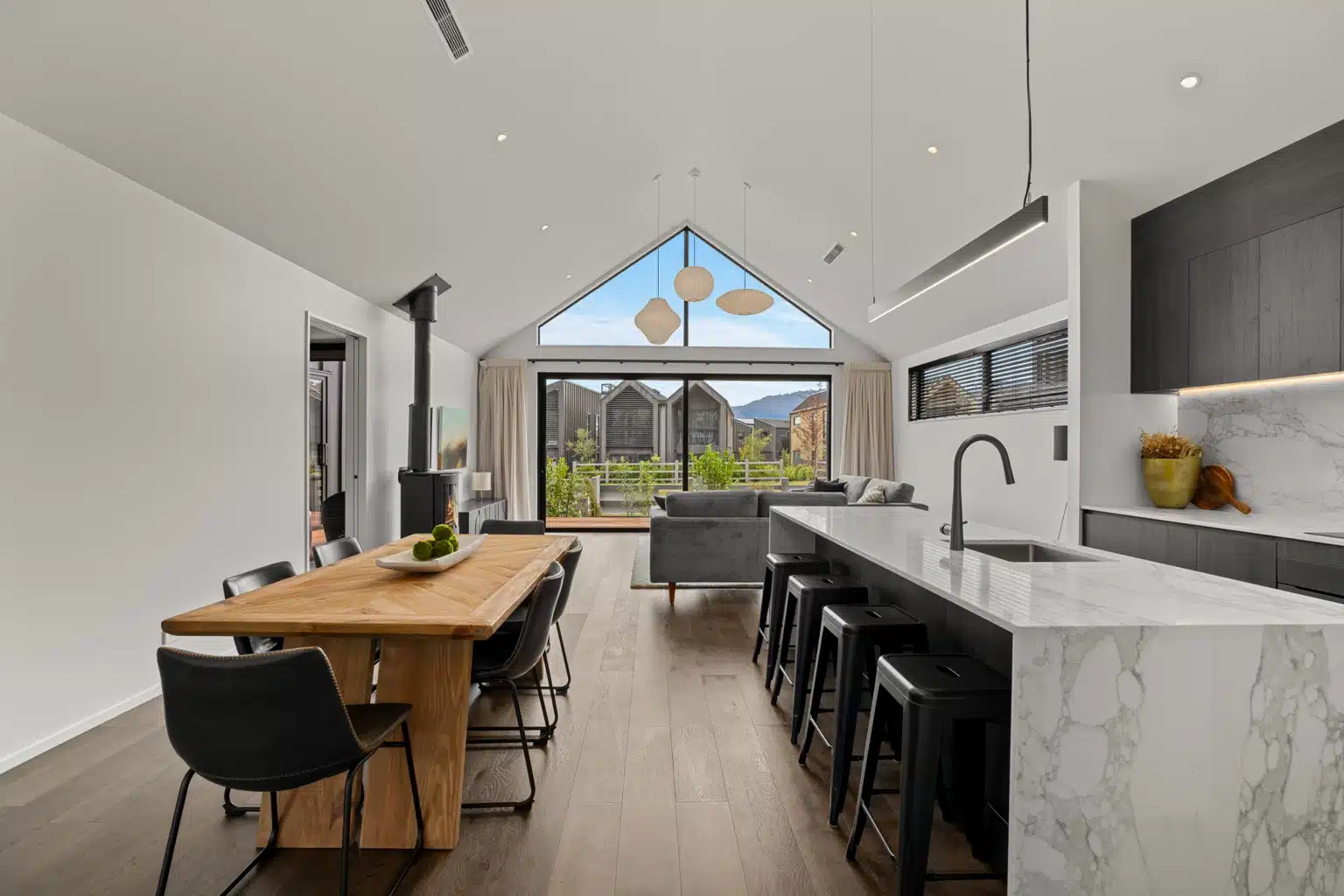
Engineered vs Solid Timber Flooring NZ
For most New Zealand projects, engineered European oak is the right call. A 19mm solid board moves with humidity, and indoor humidity in NZ homes swings widely across the year, so solid floors tend to cup or gap. Engineered construction moves substantially less, sits cleanly over concrete, and runs over underfloor heating without complaint. Solid timber still has a place, just a narrower one. We supply and install engineered European oak flooring from our Newmarket, Auckland showroom.
At a Glance: Engineered vs Solid Timber
The headline differences come down to construction, stability, and how each one handles NZ conditions. The table below is the short version; the rest of the page goes deeper on each row.
| Engineered European Oak | Solid Oak | |
|---|---|---|
| Construction | Real European oak top layer (4 mm on most ranges, 6 mm on the Distilled 20 mm board) bonded to a multi-ply or HDF core | Single piece of solid oak, typically 19–22 mm thick |
| Stability in NZ humidity | Excellent. The cross-laminated core restrains seasonal movement | Moderate. Prone to cupping or gapping in damp Auckland conditions |
| Underfloor heating | Compatible (most engineered constructions) | Only within ATFA’s limits: 19mm boards, cover width to 130mm, 8 to 9% MC |
| Concrete subfloors | Glues down directly; click-profile boards can also float | Usually requires a battened or plywood overlay |
| Refinishing | At least two sand-and-recoat cycles; more with a thicker wear layer | More cycles again, from the thicker section of usable wood |
| Plank widths available | 180 mm to 260 mm (260 mm made to order) | Typically capped at ~150 mm to control movement |
| Supply cost | $99–$320+/m² across entry, mid and premium tiers | $200–$400+/m² where available in NZ |
| Best for | Most NZ homes and commercial fit-out, especially over concrete or with UFH | Heritage restoration, dry rooms, very long-term refinishing strategy |
Supply pricing only. Installation and wastage are additional. See our timber flooring cost guide for installation rates and full project totals.
Side-by-Side Comparison Matrix
| Attribute | Engineered European Oak | Solid Oak (NZ context) |
|---|---|---|
| Supply cost | $99–$320/m² incl GST | $180–$400/m² incl GST |
| Install cost (glue-down, nationwide) | $85–$110/m² +GST direct to slab, including adhesive and consumables | $130–$170/m² +GST (typically requires plywood overlay) |
| Stability in NZ humidity | Cross-laminated core restrains seasonal movement | Movement visible at joints; needs careful acclimatisation and humidity control |
| Concrete subfloor compatibility | Glue-down directly to slab | Requires battens or plywood overlay (+$40–$90/m² and 25mm floor height) |
| Underfloor heating | Yes (max 27°C surface, glue-down preferred) | Only within ATFA’s limits: 19mm boards, cover width to 130mm, 8 to 9% MC |
| Refinishing capacity | At least twice with proper installation; more with a thicker wear layer | More again (19mm board can be sanded back further) |
| Plank width range | 120–260mm (180–220mm typical for wide plank) | Generally limited to 80–180mm to manage movement |
| Pattern formats | Straight, herringbone, chevron, Versailles all available | Mostly straight plank; herringbone available but with higher installation premium |
| Refinishing headroom | Governed by wear-layer depth; ATFA says at least two sand-and-recoat cycles | Refinishable while usable wood remains above the tongue |
| Best fit | New-build residential, commercial fit-out, UFH, slab-on-grade, Auckland coastal homes | Heritage restoration, character villas with existing solid floors being replaced, very long-term ownership |
Pricing references our 2026 NZ market rates. Solid timber pricing assumes oak supplied through specialist NZ importers. We no longer carry it ourselves.
Construction: What’s Actually Inside Each Board
Solid timber flooring is exactly what it sounds like, one species, one piece, milled from a single board. A typical solid oak floor is 19–22 mm thick, tongue-and-groove, the same wood top to bottom. It looks honest because it is.
Engineered timber flooring is also real timber, the top wear layer is a slice of European oak, the same species you’d get in a solid board. The difference sits underneath. The wear layer (4 mm of oak on most of our ranges, 6 mm on the Distilled 20 mm board) is bonded to a multi-ply core, usually with the grain of each ply running across the one above. That cross-laminated structure is the same engineering principle that makes plywood far more dimensionally stable than the tree it came from. The result is a board that looks identical to solid oak from above but moves substantially less when humidity changes.
A common misconception is that engineered means “not real wood”. It’s the opposite, the visible surface is the same European oak as a solid board, often from the same forests. The engineering is purely about how it’s built underneath, not what you walk on.
Wear layer thickness matters
The single number that separates a budget engineered floor from a premium one is wear-layer thickness. EN 13489:2017 Table 5 sets the minimum top layer for engineered flooring at 2.5 mm. Petit Chateau, Icons, Chateau, Patina and Excess run a 4 mm European oak wear layer, and Foundation runs 3 mm. Our Distilled Collection runs a 4 mm wear layer on the 15 mm board and a 6 mm wear layer on the 20 mm board. That difference governs how many times the floor can be sanded and recoated over its life, covered in the refinishing section below.
Cost Compared
Engineered European oak comes at multiple supply tiers from accessible entry-level through to premium specifications. Solid hardwood is harder to source in NZ, most local supply is engineered, and typically sits at a step up on like-for-like quality.
| Tier (supply only) | Engineered European Oak | Solid Oak (where available) |
|---|---|---|
| Entry-level | $99–$150/m² | $200–$260/m² |
| Mid-range | $150–$220/m² | $260–$340/m² |
| Premium European | $220–$320+/m² | $340–$400+/m² |
Supply prices include GST. Installation, underlay and wastage are not included in the figures above. For installation rates (glue-down, herringbone/chevron) and full project totals, see our timber flooring cost guide.
Where the costs sit differently
- Supply. Engineered has a wider range, entry-level through premium, because the construction allows manufacturers to offer accessible options without compromising stability. Solid is more expensive per square metre at like-for-like quality, partly because it uses more usable hardwood per board.
- Installation. Engineered glues down directly to a moisture-tested concrete slab; click-profile boards can also float. Solid usually needs a plywood overlay or battened sleeper system over concrete, which adds 18–25 mm of build-up and meaningful additional labour. Per-m² installation rates sit in our cost guide.
- Wastage. Different layouts waste different amounts of material during installation. Budget for roughly 10% on straight-lay plank, 15% on herringbone, and 20% on chevron. That’s real money on a 100 m² floor and it’s separate from the supply and installation rates.
- Refinishing headroom. ATFA’s position is that an engineered floor can be re-sanded at least twice where it has been installed properly, and a thicker wear layer gives more. Our ranges run a 4 mm European oak wear layer, and the Distilled 20 mm board runs 6 mm.
- All-up installed total. A typical engineered oak project lands at roughly $250–$415/m² installed, depending on grade, format, subfloor, and layout. That figure includes supply, glue-down installation, and wastage at the relevant allowance for the chosen format.
Stability and Movement: Why It Matters in NZ Homes
Wood is hygroscopic. It takes on and gives off moisture from the air around it. As the moisture content of a board rises, it expands; as it falls, it shrinks. A solid 19 mm oak board can change dimension by around 2–3% across the year in an unconditioned NZ home. Across a 6 m room that’s enough to open or close visible gaps at the joints.
Indoor humidity in New Zealand swings widely. How far it swings depends on the house: heating dries the air, and a closed-up, unheated house can run damp. That swing is harder on a floor than a constant high or low.
Engineered construction handles it better for one structural reason: the cross-laminated core resists movement in multiple directions at once. Where a solid board can only resist movement along its grain, an engineered board’s plies pull against each other. Net dimensional change is substantially less than an equivalent solid board would do in the same room.
What this looks like in practice
A solid oak floor that wasn’t acclimatised correctly, or that’s installed in a damp coastal Auckland home without dehumidification, can develop:
- Cupping. Board edges rise above the centre, giving a corrugated feel underfoot
- Gapping. Boards shrink in summer and visible gaps open at the joints
- Crowning. Opposite of cupping, the centre of the board sits proud after the floor has dried out unevenly
None of this is a flaw in the timber, it’s physics. Engineered oak doesn’t make the physics go away; it just reduces the magnitude. On a properly acclimatised engineered floor, seasonal movement is usually small: fine gaps in dry months that close again when it’s humid.
Underfloor Heating, Concrete Subfloors, and Where Each One Wins
Two specific NZ build conditions push the decision firmly toward engineered: underfloor heating and concrete slab subfloors. Both are common in modern NZ homes and commercial fit-out.
Underfloor heating
Hydronic underfloor heating holds the slab at a sustained, elevated temperature. That’s not extreme, but it’s a sustained dimensional load on whatever sits on top. ATFA allows a solid floor over UFH only within narrow limits (19mm boards, cover width no more than 130mm (80 to 85mm preferred) and 8 to 9% moisture content), because the differential moisture gradient (drier at the heated underside, wetter at the room-air side) drives the board to cup over time.
Engineered European oak with a stable multi-ply core handles this cleanly. The Distilled Collection specification sets a maximum floor surface temperature of 27°C, which aligns with the way most NZ hydronic systems are run. Confirm the figure for your range in the installation guide supplied with it. The board is designed to dry and re-wet without dimensional stress as long as the system is operated within spec.
Concrete slabs
A lot of NZ homes are slab-on-grade, especially anything built since 2000. Solid hardwood doesn’t sit on concrete easily. It usually needs a plywood overlay or a battened sleeper system, both of which add 18–25 mm of build-up and meaningful additional cost. Engineered timber glues down directly to a moisture-tested concrete slab; click-profile boards can also float.
For commercial projects, glue-down over concrete with an acoustic underlay is a common system. It feels solid underfoot, and in our experience avoids the hollow sound a floating floor can have. In apartments the acoustic target is set by NZBC clause G6, and a timber floor gets there as an Alternative Solution designed by an acoustic engineer.
Refinishing and Wear Layers: What a 4 mm and a 6 mm Wear Layer Actually Buy You
The most-quoted advantage of solid timber over engineered is refinishability, the idea that a solid floor lasts a hundred years because you can sand it back endlessly. Like most marketing claims, it’s partly true.
A solid 19 mm oak floor has roughly 6 mm of usable wood above the tongue-and-groove joint, and is sanded back while usable timber remains above the tongue. ATFA publishes no cycle count for a solid floor, so we do not quote one.
An engineered floor’s refinishability comes down to wear-layer thickness, and here ATFA does give a position:
- The ATFA position, The Australasian Timber Flooring Association’s position is that an engineered floor can be re-sanded at least twice where it has been installed properly, with one exception: a 0.6mm lamella generally cannot be sanded back to raw.
- A thicker wear layer gives more. It is a minimum, not a cap, and no upper limit is published.
- Our 4 mm ranges, Petit Chateau, Icons, Chateau, Patina and Excess run a 4 mm European oak wear layer, well clear of ATFA’s 0.6 mm exception.
- Our 6 mm wear layer, the Distilled Collection runs a 4 mm wear layer on the 15 mm board and a 6 mm wear layer on the 20 mm board, the deepest we supply.
Most of our ranges run a 4 mm wear layer. The Distilled Collection runs 4 mm on the 15 mm board and 6 mm on the 20 mm board. In practical terms, that is a floor you refinish rather than replace.
The other piece is the finish. Lacquered floors are sanded back to bare wood for a full refinish. Oiled floors can be spot-repaired without sanding the whole room, a scuff or scratch in one plank can be addressed with a hand recoat in 20 minutes. That’s a meaningful difference for households with kids or pets.
Format Range: Wide Plank, Herringbone, Chevron
Engineered construction unlocks formats that solid timber physically can’t deliver. The key one is wide plank.
Solid oak boards above ~150 mm wide become unstable, the wider the board, the more dimensional change you see across its width with seasonal humidity. Most solid suppliers cap their range at 130–150 mm for this reason. Engineered oak has no such limit. Standard wide plank is 180–220 mm, and premium specifications go to 260 mm. The Distilled Collection runs widths up to 260 mm in straight plank, made to order; the stocked plank is 190 mm.
Herringbone and chevron parquet are also predominantly engineered. The pattern requires hundreds of small blocks installed at angles to each other, solid blocks at 90 degrees would expand and contract enough to break the pattern visibly. Engineered blocks hold the geometry through seasonal swings.
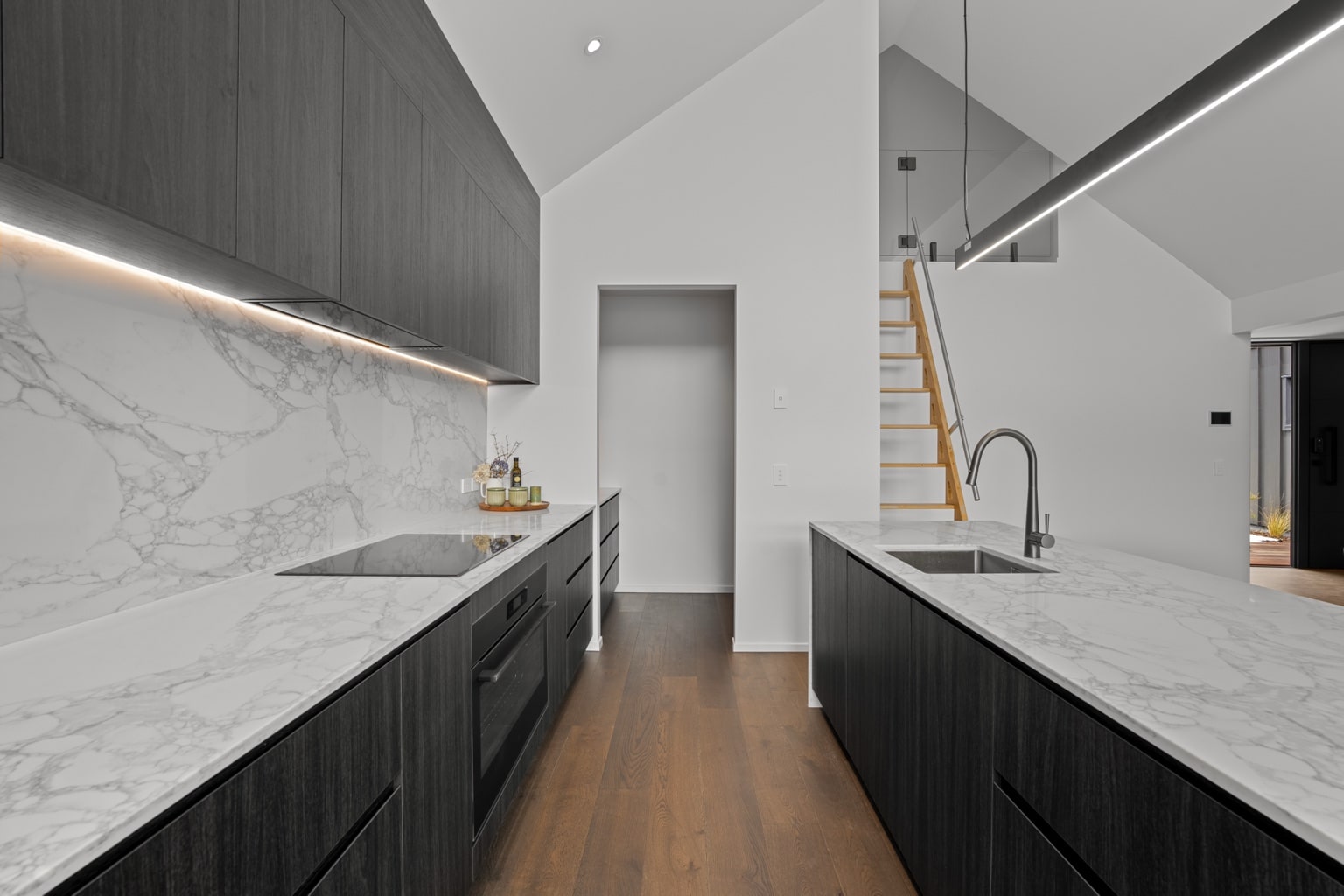
Sustainability and Commercial Specification
Engineered timber wins on raw material efficiency. A solid 19 mm board uses every millimetre of wood from a felled tree as visible flooring; the rest goes to other products or waste. An engineered board uses European oak as the wear layer, 4 mm on most of our ranges and 6 mm on the Distilled 20 mm board, with the bulk of the board made from plantation-grade ply. That means considerably more floor area per cubic metre of European oak, meaningful when the wear layer is the only part anyone ever sees.
For commercial and architecturally specified projects, the documentation matters more than the raw material story:
- FSC-certified mills. Selected ranges are made by mills holding current FSC certification.
- MasterSpec listing. Vienna Woods is listed in NZ’s standard architectural specification library, which means an architect can drop our products into a spec without rewriting the relevant sections.
- Apartment acoustics: between apartments, NZBC clause G6 sets the sound targets and any hard floor goes in as an Alternative Solution designed by an acoustic engineer. Engineered board glued over an acoustic underlay is the build-up those designs are usually written around. See what NZBC G6 actually requires.
Case study: The CAB Residences, Auckland CBD
The CAB (former Auckland City Council Building, the city’s first skyscraper, 1966) was redeveloped into apartments by Love and Co with interior design by Josephine Design. Over 700 m² of wide long-plank European oak with subtle bevels and multiple colour archetypes ran across the staged installation. Consistency across a large staged installation was non-negotiable for the project, the developer needed the batch-to-batch consistency and dimensional stability that engineered European oak delivers, and the slab subfloor and apartment acoustic requirements ruled solid timber out structurally before any aesthetic conversation started. See the full CAB Residences case study.
More project examples
Engineered wide-plank specifications carry well across NZ residential and design-led projects. See our Sojo Design coastal residential case study for a designer-led wide-plank fit-out, the Point Chevalier residential case study for an engineered oak floor running through a renovated Auckland home, and the Westmere House case study for an architect-led modern build.
Why Vienna Woods Stopped Supplying Solid Timber in 2009
This guide weighs engineered against solid on the merits, but the honest declaration is that we made our own call on this question 16 years ago, and the call shapes what we recommend today.
When Vienna Woods opened in 2009 we carried both. By the end of that first year we had pulled solid from our range and have not stocked it since. The reasons were practical, not ideological:
- NZ humidity moves wood more than overseas reference sources suggest. Solid boards installed in humid Auckland homes and then asked to sit in a dehumidified winter living room would open joints noticeably enough that customers called us about it within a year. Engineered’s cross-layered core takes the same humidity swing without the visible movement.
- Concrete subfloors became the dominant new-build substrate. By 2009 most new Auckland builds and a growing share of renovations were going over concrete slabs. Solid timber over concrete requires a battened or plywood overlay subfloor, adding $40–$90/m² and 25mm of floor height. Engineered glues straight to the slab. The math stopped working for solid in the contexts where customers actually wanted timber.
- Underfloor heating arrived. Specifically in commercial fit-outs and high-end residential. Solid timber over UFH is technically possible but the surface-temperature ceiling (see our underfloor heating guide) and slow commissioning protocol made it commercially unworkable. Engineered handles UFH cleanly.
- We were spending more time on remediation than on new installs. The solid floors we had supplied were generating disproportionate service calls for cupping, gapping, and finish issues. The engineered floors were not. By the end of 2009 it was clear which product we should sell as our recommendation, not just as one option among many.
The next section is where solid timber still genuinely makes sense, because it does, in specific NZ contexts. We just don’t sell it ourselves anymore.
When Solid Timber Still Makes Sense
This page is direct about engineered being the better fit for most NZ projects. That doesn’t mean solid timber is wrong everywhere. Solid is the right call when:
- You’re restoring a heritage floor. If the existing floor is solid rimu, kauri, or matai and you want to extend it, the like-for-like material is the right answer for both visual and structural reasons.
- The room is dry and climate-controlled. A solid floor in a centrally heated, dehumidified Christchurch home behaves very differently from the same floor in an uninsulated Auckland villa. The further from NZ’s coastal humidity range, the better solid performs.
- You want a floor you refinish rather than replace. If you genuinely intend to sand the floor back five times over the next century, the extra usable wood in a solid 19 mm board is real.
- The subfloor is timber and well above grade. A traditional joisted subfloor in a hill-suburb villa with a ventilated underfloor cavity is a far more solid-friendly base than a slab.
Vienna Woods supplies engineered European oak, solid timber isn’t part of our range. We mention solid here because the comparison matters for the decision, not because we’re trying to sell against it.
The Bottom Line for NZ Homes
Engineered European oak is the default for NZ residential and commercial timber flooring in 2026 because it solves the four problems most NZ projects actually have: humidity-driven movement, slab subfloors, underfloor heating, and the desire for wide planks or parquet patterns. None of those four can be cleanly solved with solid timber.
The supply cost difference is smaller than people expect, premium engineered ($220–$320+/m² supply) lands well below premium solid where solid is even available locally, and a 4 mm or 6 mm wear layer is deep enough to sand and recoat rather than replace.
The right way to choose is to look at the spec, the subfloor, and the way you live in the room. If you’re not sure where your project falls, our showroom in Newmarket carries the full range across grades and finishes, the sample-in-hand decision is always better than the spreadsheet one.
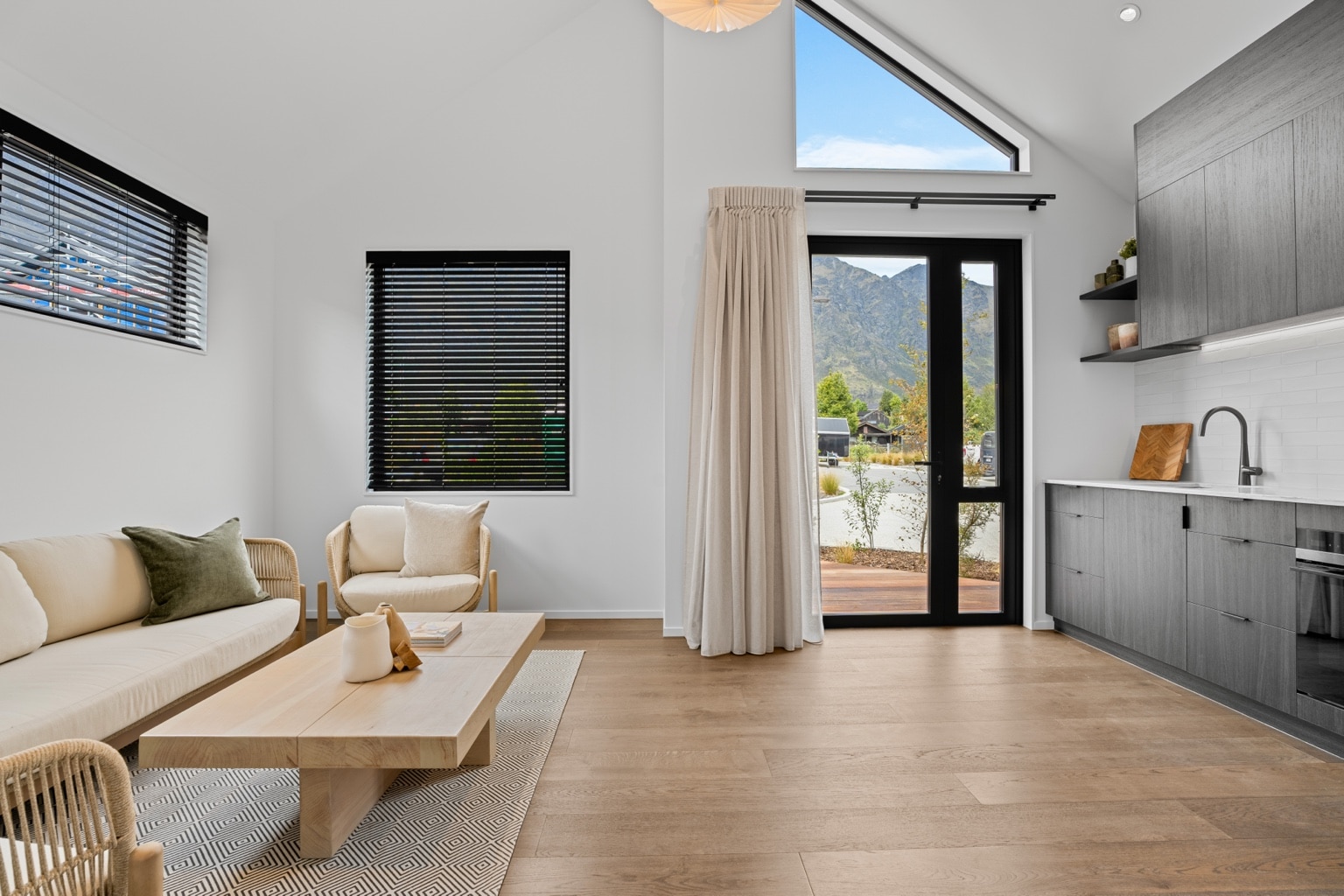
FAQ: Engineered vs Solid Timber Flooring NZ
Is engineered timber flooring as good as solid?
For NZ conditions, engineered is generally the better-performing floor. The visible surface is the same European oak; the engineered core simply moves less with humidity, handles concrete slabs without overlay, and runs over underfloor heating cleanly. Solid timber is still the right call for heritage restoration and for dry, climate-controlled rooms, but for most modern NZ homes and commercial fit-outs, engineered is the more reliable specification.
How long does engineered oak flooring last in NZ?
It is governed by wear-layer depth, not by a number of years, and we do not publish a lifespan in years. The Australasian Timber Flooring Association’s position is that an engineered floor can be re-sanded at least twice where it has been installed properly, with one exception: a 0.6mm lamella generally cannot be sanded back to raw. Our ranges run a 4 mm European oak wear layer, and the Distilled Collection runs a 6 mm wear layer on the 20 mm board.
Can engineered timber be sanded and refinished?
Yes. The Australasian Timber Flooring Association’s position is that an engineered floor can be re-sanded at least twice where it has been installed properly, with one exception: a 0.6mm lamella generally cannot be sanded back to raw. A thicker wear layer gives more; it is a minimum, not a cap. Oiled finishes can be spot-repaired without sanding the whole floor; lacquered finishes need a full sand-back for a major refinish but are harder against day-to-day scratches in the meantime.
Which is better for underfloor heating?
Engineered European oak. ATFA allows solid boards over hydronic underfloor heating only within narrow limits (19mm boards, cover width no more than 130mm (80 to 85mm preferred) and 8 to 9% moisture content), because the moisture gradient between the heated underside and the room-air top drives the board to cup. Engineered constructions are designed for this, maximum floor surface temperature is set by your range’s own specification, 27°C for the Distilled Collection, which lines up with how most NZ hydronic systems are run.
Does engineered oak warp in NZ humidity?
Properly acclimatised and installed engineered European oak handles NZ’s seasonal humidity swings well, though it still moves a little: fine gaps in dry months that close again when it’s humid. Net dimensional change is substantially less than an equivalent solid board would do in the same conditions. The most common cause of movement issues in any timber floor, engineered or solid, is poor acclimatisation before install or moisture in the subfloor, not the timber itself.
What's the cost difference between engineered and solid?
Engineered European oak runs roughly $99–$320+/m² supply across entry, mid and premium tiers. Solid hardwood, where available in NZ, typically sits at a step up on like-for-like supply ($200–$400+/m²) and adds installation cost over concrete subfloors. Note these are supply-only figures, installation, underlay and wastage (10% straight-lay, 15% herringbone, 20% chevron) are additional. A typical engineered oak project lands at roughly $250–$415/m² installed all-up. For full project totals, see our timber flooring cost guide.
Is engineered timber suitable for commercial fit-out?
Yes, and for most NZ commercial projects it is the practical specification. Slab subfloors, apartment acoustic targets and MasterSpec-compatible documentation all point the same way. On acoustics, note that no floor carries a rating on its own: between apartments NZBC clause G6 sets the target and a timber floor goes in as an Alternative Solution designed by an acoustic engineer. Vienna Woods supplies ranges made by FSC-certified mills and is MasterSpec-listed; our commercial timber flooring page covers the documentation in detail. The CAB Residences project (700 m²+ of engineered European oak across an Auckland CBD apartment redevelopment) is a representative example.
Is solid timber flooring better for resale value?
Buyers in NZ value the look and feel of real timber, regardless of construction. A premium engineered European oak floor with a 4 mm+ wear layer reads as real timber to anyone walking through the home, because it is. Real-estate appraisals and architectural firms increasingly specify engineered as the modern equivalent. The “solid is worth more” perception is largely a holdover from the laminate era, when the alternative to solid was a printed plastic top layer.
Related Vienna Woods guides
See the floor in your space before you decide
Engineered European oak in person is a different conversation than engineered oak on a screen. Order free samples, book a Newmarket showroom visit, or request a quote, we’ll match the right specification to your project, subfloor, and budget.