
Hardwood Flooring NZ
Quick answer: Most New Zealand “hardwood flooring” projects in 2026 use engineered European oak — an oak hardwood wear layer over a multi-ply core — priced from $99–$320/m² supplied. Vienna Woods supplies and installs this category specifically, with FSC Chain of Custody traceability, MasterSpec listing, and NZBC-compliant acoustic documentation. See our engineered flooring guide for full technical detail.
What “hardwood flooring” actually means in NZ
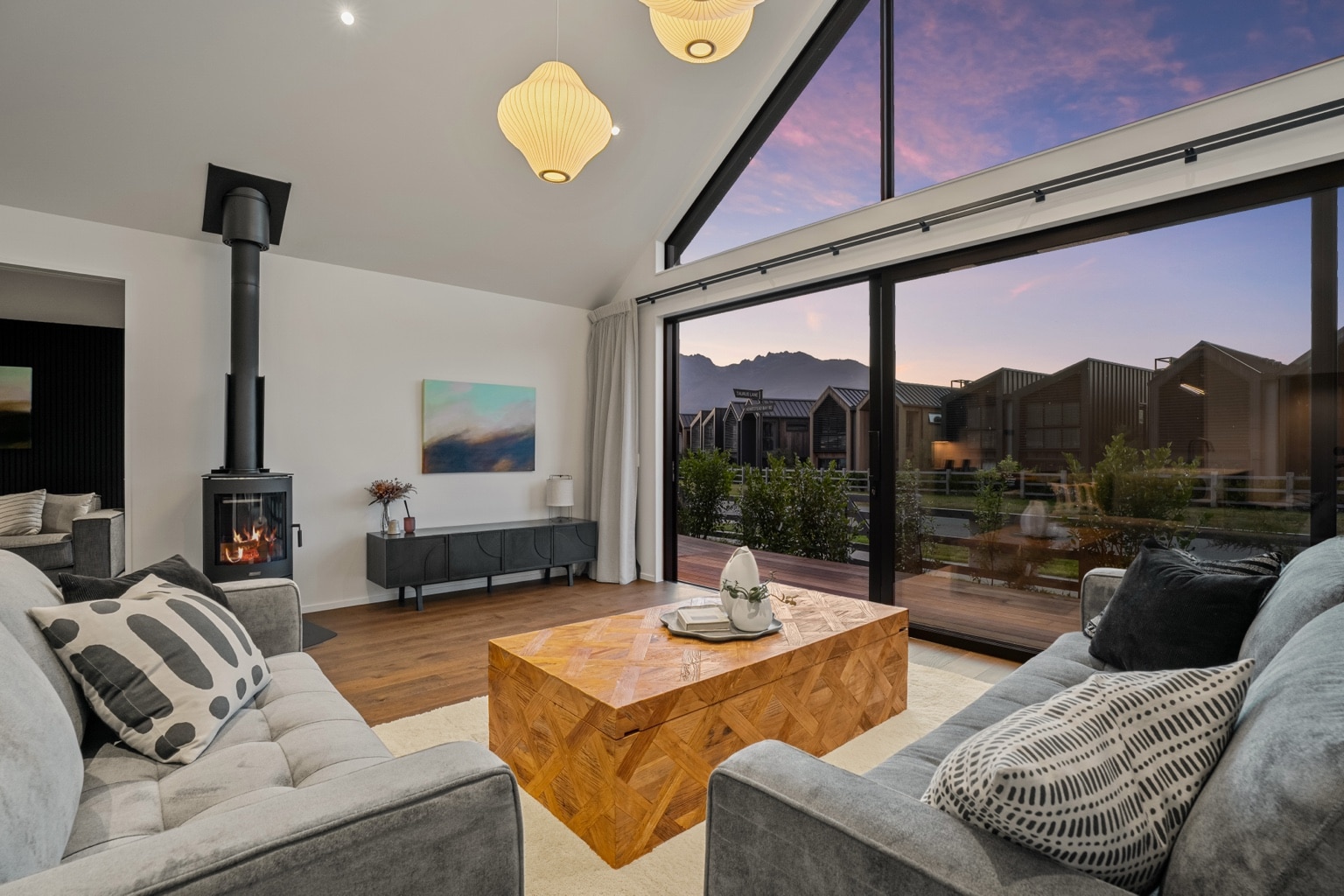
“Hardwood” is a botanical classification — it means timber from a broadleaf, deciduous tree (oak, walnut, maple, beech, ash) as distinct from softwood (pine, fir, spruce). In NZ residential flooring, the term gets used loosely to describe almost any wooden floor that isn’t pine or bamboo, so it’s worth being precise about what you’re buying.
Two practical definitions matter:
- Solid hardwood flooring — a single piece of hardwood timber, typically 19–22 mm thick, milled and finished as one solid plank. Rare in NZ residential supply because of cost, lead times, and dimensional instability in our climate.
- Engineered hardwood flooring — a 3–6 mm hardwood wear layer (real solid oak, walnut, ash etc.) bonded to a multi-ply or HDF core, total board thickness 14–21 mm. The visible surface is genuine hardwood; the structural core resists movement. This is what most NZ projects use in 2026.
Both are “real wood” floors. The distinction is structural, not cosmetic — an engineered oak board and a solid oak board look identical underfoot once installed and finished.
Solid hardwood vs engineered hardwood in NZ — the practical comparison
The choice is rarely about preference. NZ’s humidity swings, prevalence of concrete subfloors, and the now-standard inclusion of underfloor heating push most projects toward engineered construction. Here’s the side-by-side:
| Factor | Solid hardwood | Engineered hardwood |
|---|---|---|
| Board thickness | 19–22 mm solid plank | 14–21 mm total, 3–6 mm hardwood wear layer |
| Dimensional stability (NZ humidity 30–90% RH) | High movement — joint gapping and cupping risk | ~1/3 the movement — stable across NZ seasonal swings |
| Underfloor heating compatibility | Generally not recommended above 21°C surface temp | Compatible up to 27°C surface temp (glue-down preferred) |
| Refinishability | 3–5 sandings over lifespan | 1–3 sandings depending on wear layer thickness |
| Realistic lifespan in residential | 50–100+ years | 25–50+ years, longer with care |
| Supply cost (NZ, 2026) | $200–$400+/m² where available | $99–$320+/m² |
| Lead time | Often 12+ weeks (custom mill) | 2–8 weeks (stock or import) |
| NZ supply availability | Limited — specialist mills only | Widely available, multiple tiers |
Supply prices incl GST. Installation, underlay, and wastage are additional — see our timber flooring cost guide for full project pricing.
For most NZ residential and commercial projects in 2026, engineered hardwood is the answer — not because it’s a compromise, but because it solves problems solid hardwood doesn’t. Read the engineered vs solid pillar for the technical detail.
How hardwood hardness is measured — the Janka rating
The Janka hardness test measures the force required to embed an 11.28 mm steel ball halfway into a piece of timber, expressed in newtons (N) or pound-force (lbf). It’s the industry-standard way to compare how dent-resistant a floor will be under day-to-day load — chair legs, pet claws, heeled shoes, dropped pans.
| Species | Janka (lbf) | Janka (kN) | NZ flooring availability |
|---|---|---|---|
| European oak (Quercus robur) | ~1,360 | ~6.0 | Mainstream — Vienna Woods specialty |
| American white oak | ~1,360 | ~6.0 | Available |
| American walnut | ~1,010 | ~4.5 | Premium — Vienna Woods stocks engineered walnut |
| European beech | ~1,300 | ~5.8 | Less common in current supply |
| Hickory | ~1,820 | ~8.1 | Limited NZ supply |
| Hard maple | ~1,450 | ~6.4 | Limited |
| NZ matai (native) | ~1,460 | ~6.5 | Reclaimed only — no new supply |
| NZ rimu (native, softwood) | ~710 | ~3.2 | Reclaimed only — no new supply |
A few things worth knowing about Janka:
- The differences matter less than the brackets. Anything in the 1,200–1,500 lbf range (oak, beech, maple) wears similarly in residential conditions. Below ~1,000 lbf you’ll see more denting; above ~1,800 lbf the floor becomes brittle and harder to refinish.
- Janka tests the species, not the construction. An engineered oak board has the same surface hardness as a solid oak board — the wear layer is real oak.
- Finish matters as much as hardness. A UV-cured lacquered oak floor with an AC4 surface rating will resist scratches and stains better than a soft-oiled walnut floor with a higher Janka number.
European oak sits in the sweet spot for NZ residential and commercial use — hard enough to take real-world wear, soft enough to refinish multiple times, widely available in stable engineered construction.
What hardwood flooring costs in NZ
2026 supply pricing for engineered hardwood (the dominant category) sits in three tiers. These are supply-only — installation, underlay and wastage are additional.
| Tier (supply only) | Engineered European oak | Engineered walnut | Solid hardwood (where available) |
|---|---|---|---|
| Entry-level | $99–$150/m² | Not typical at this tier | $200–$260/m² |
| Mid-range | $150–$220/m² | $280–$320/m² | $260–$340/m² |
| Premium European | $220–$320+/m² | $320–$400+/m² | $340–$500+/m² |
Supply prices incl GST. Installation, underlay, and wastage additional.
Installation rates in NZ for 2026:
- Floating install: ~$45/m² +GST
- Glue-down install: $85–$110/m² +GST
- Herringbone or chevron pattern install: $120–$150/m² +GST
- Acoustic underlay (glue-down system): ~$50/m² +GST
A typical NZ engineered hardwood project lands between $250–$415/m² installed all-up, depending on tier, format, subfloor preparation, and acoustic spec. For the full breakdown including real project examples, see our timber flooring cost NZ guide.
Wastage allowances to factor into supply ordering: 10% straight lay, 15% herringbone, 20% chevron.
How hardwood flooring performs in NZ conditions
NZ throws three specific stressors at a hardwood floor: humidity swing, underfloor heating, and concrete subfloors. Engineered hardwood handles all three. Solid hardwood handles none of them well.
Humidity (30–90% RH seasonal swing)
Auckland’s indoor humidity ranges from ~30% RH in mid-winter with heating to ~80–90% RH in summer with open windows. Solid hardwood expands and contracts with this swing — about 0.25–0.4% per 1% moisture content change — which translates to noticeable joint gapping in winter and cupping in summer on wide planks. Engineered hardwood moves roughly one-third as much because the cross-banded multi-ply core constrains the surface layer.
Underfloor heating (UFH)
Both hydronic and electric UFH have become standard in NZ new builds. Engineered hardwood is suitable up to a 27°C surface temperature when installed glue-down on a screeded subfloor. Solid hardwood is generally not recommended over UFH — most manufacturers void the warranty above 21°C surface temp because the moisture gradient through a thick solid plank causes cupping.
Concrete subfloors
The majority of NZ new builds use a concrete slab on grade. Engineered hardwood glues directly to a moisture-tested slab using a dual-purpose adhesive (bonding + vapour barrier). Solid hardwood typically requires either a floated plywood sub-deck or a battened sub-deck on top of the slab — adding 18–40 mm of buildup and significantly more labour cost.
Kitchens and wet areas
Engineered hardwood with a UV-cured lacquered finish (AC4-rated surface) handles NZ kitchens well. Standing water still needs to be wiped within a few minutes, but day-to-day splash, dropped utensils and trolley traffic don’t damage the surface. Bathrooms remain off-spec for any timber floor — laundries with adequate ventilation are borderline.
How to specify hardwood flooring for an NZ project
For architects, designers and specifiers, hardwood flooring specification in NZ typically lands on six decisions. Vienna Woods provides documentation for each, MasterSpec-formatted on request.
- Species and grade. European oak (most common), American walnut, or a specific colour-archetype within oak (e.g. smoked, fumed, bleached). Grade affects knot content and pricing — Vienna Woods stocks Prime, Natur, and Rustic grades.
- Construction. Engineered with multi-ply or HDF core; 14 mm, 18 mm or 21 mm total thickness; 3 mm, 4 mm, or 6 mm wear layer. Wear-layer thickness drives refinishability.
- Format. Straight plank (most common), herringbone parquet, chevron, or wide plank (180–220 mm+). Each format has different wastage allowances and install rates.
- Finish. Lacquered (UV-cured, hardwearing, low-maintenance) or oiled (natural matte, spot-repairable). Choice depends on use case.
- Acoustic performance. NZBC Clause G6 acoustic performance for multi-unit buildings requires documented impact insulation (IIC) and airborne (STC) test data. Vienna Woods supplies test certificates for full glue-down systems with acoustic underlay (typically achieving IIC 50+).
- Sustainability credentials. FSC Chain of Custody is increasingly required for Green Star and NABERSNZ rated projects. Vienna Woods is FSC certified — every plank traceable to a managed European forest.
For commercial fit-outs, hospitality, and Green Star projects, see our commercial timber flooring guide. CPD presentations for design firms available on request via the contact form.
Maintenance and lifespan of hardwood flooring in NZ
A well-installed engineered hardwood floor on the correct underlay should last 25–50+ years in NZ residential use, with most maintenance limited to dusting, occasional wet-mopping with a manufacturer-approved cleaner, and a recoat or refinish every 10–20 years depending on traffic.
Care differs by finish:
- Lacquered floors need a damp mop with neutral pH cleaner. Surface scratches that don’t penetrate the lacquer are cosmetic only. Deep damage requires full-plank replacement or a sand-and-refinish across the affected zone.
- Oiled floors need a slightly different routine — a maintenance oil applied annually in high-traffic zones keeps the surface refreshed. The advantage is spot-repair: an oiled floor can be sanded and re-oiled in a single board or small zone without redoing the whole room.
Refinishability depends on wear-layer thickness. A 6 mm wear layer takes 2–3 full sandings over its lifetime. A 3 mm wear layer takes 1, maybe 2. Wider boards and thicker wear layers extend the floor’s serviceable life by decades.
What Vienna Woods supplies in the hardwood category
Vienna Woods is an Auckland-based engineered European oak specialist, operating since 2009 with a showroom at 2 Roxburgh Street, Newmarket. We supply nationwide and install across Auckland.
In the hardwood category specifically:
- Engineered European oak — multiple tiers from entry-level to premium slow-grown Austrian/European oak. Distilled Collection (FSC-certified slow-grown European oak) and Admonter (Austrian engineered oak) are the lead ranges.
- Engineered walnut — as a premium alternative to oak, $280–$400+/m² supply.
- Plank widths from 180 mm to 220 mm+ in wide plank, plus herringbone and chevron parquet.
- Lacquered and oiled finishes across the range.
What we don’t supply: solid hardwood, NZ native species (rimu, kauri, matai — these are reclaimed-only categories anyway), bamboo, laminate. If your project specifically requires solid hardwood, we’ll tell you and recommend the appropriate path. Most NZ projects don’t.
The flagship reference for the engineered European oak category is CAB Residences in Auckland CBD — 700 m² of wide-plank Admonter European oak across a Category A heritage redevelopment, where FSC traceability and European-made specification were non-negotiable.
Hardwood flooring NZ — frequently asked questions
Is engineered oak considered real hardwood flooring?
What does hardwood flooring cost in New Zealand?
Which hardwood species are best for NZ conditions?
Can hardwood flooring be installed over underfloor heating in NZ?
How long does hardwood flooring last in an NZ home?
Is FSC certification important for hardwood flooring in NZ?
What's the difference between hardwood flooring and timber flooring?
Can hardwood flooring be used in a kitchen?
Related Vienna Woods guides
- Engineered Timber Flooring NZ — full technical detail on engineered construction, wear layers, and what to specify.
- Engineered vs Solid Timber Flooring NZ — direct comparison with NZ-specific stability and UFH data.
- Timber Flooring Cost NZ — full pricing breakdown including real project budgets.
- Commercial Timber Flooring NZ — for architects, designers, and specifiers.
- Sustainable Timber Flooring — FSC chain of custody and Green Star eligibility.
- Timber Flooring Auckland — showroom and supply-and-install service detail.
- Oiled vs Lacquered Timber Flooring NZ — decision matrix by use case, scratch repair, NZ kitchen suitability.
- Timber Flooring with Underfloor Heating NZ — engineered oak compatibility, install methods, surface temperature limits.
- European Oak Flooring NZ — what makes European oak different: grades, colours, formats and prices.
- Timber Floor Maintenance Guide NZ — cleaning routines, re-oiling timelines and the products we use.
See engineered hardwood flooring in your space
Order free samples to see European oak in your light, or book a Newmarket showroom visit to walk on the full range — wide plank, herringbone, chevron, lacquered and oiled, every tier from entry-level to premium slow-grown European oak.