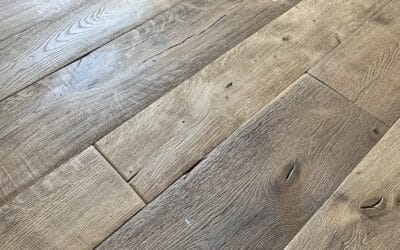
How hard-wearing are NZ native timber floors?
The Janka hardness scale, NZ natives, and where engineered European oak fits.
New Zealand native timber floors are moderately hard-wearing, but it varies a lot by species. The Janka scale rates hardness by pressing a steel ball into the timber and measuring the dent. Totara and jarrah rate high on published figures; rimu, kauri and matai are softer and tend to show wear sooner.
What the Janka hardness scale measures
Janka is the standard way to compare a timber’s resistance to denting and wear. A small steel ball is pressed into the wood with a set force, and the depth of the indentation gives a rating in pounds-force (lbf). A higher number generally means a harder, more dent-resistant surface.
It is a useful guide, not a guarantee. Real-world wear also depends on the finish, the wear layer, the traffic a floor sees and how the floor is cleaned and cared for. Two floors with a similar Janka number can wear very differently in a busy family home.
Janka hardness: NZ natives and common species
The figures below are widely published reference values, shown as an indicative guide only. They are not measured by Vienna Woods and are not a performance guarantee for any specific floor.
| Species | Janka rating (lbf, indicative) |
|---|---|
| Brazilian cherry | 2,820 |
| Totara (NZ native) | 2,040 |
| Jarrah | 2,020 |
| Maple | 1,450 |
| European oak | 1,350 |
| Teak | 1,155 |
| Rimu (NZ native) | 1,010 |
| Matai (NZ native) | 940 |
| Kauri (NZ native) | 890 |
Totara rates high among NZ natives. Rimu, matai and kauri sit lower on published figures and tend to dent and mark more readily under everyday traffic.
So how hard-wearing are they, really?
It comes down to the species. Totara sits near the top of the scale, so a sound totara floor is generally hard-wearing. Rimu, matai and kauri are softer, and going by their published Janka figures they will tend to dent and mark more readily under day-to-day traffic.
Many older native floors also carry decades of wear. Sanding them back, matching boards and extending a floor into a new space can be involved, and the cost is sometimes hard to justify, especially where the original timber is difficult to source. If you are weighing that up, our guide to timber flooring cost in NZ is a good place to start.
Where engineered European oak fits
If you are replacing or overlaying a tired native floor, engineered European oak is the option we are asked about most. On published Janka figures it sits mid-range, around 1,350 lbf: harder than rimu, matai and kauri, in a similar band to maple, and softer than totara or jarrah. Hardness is only part of the story, though.
Native timber
Solid, characterful, variable
- Genuine character and history in the grain
- Species and hardness vary widely, so wear does too
- Can be restored a limited number of times
- Matching and refinishing older boards can be costly
Engineered European oak
A real oak wear layer, engineered for stability
- A genuine European oak top layer on an engineered core designed for stability
- Consistent grade and colour across a large open-plan area
- The oak surface can generally be recoated or refreshed over time
- Designed to suit New Zealand homes and modern subfloors
Vienna Woods’ oak is European oak, engineered overseas to our specification. Browse the full range of engineered oak collections, or read our engineered vs solid timber flooring guide to see which suits your renovation.

Keep the native floor, or overlay in oak?
Keep and restore
If your native boards are sound and you love the character, restoring can be the right call. Budget for sanding, matching and refinishing, and expect some visible history to stay in the timber.
Overlay in engineered oak
If the floor is worn beyond an easy fix, or you want a consistent look across a large open-plan area, an engineered oak overlay gives you a fresh, uniform floor over the existing subfloor.
Common questions
What is the Janka scale?
The Janka scale measures a timber's resistance to denting and wear. A steel ball is pressed into the wood with a set force and the depth of the dent is recorded as a rating in pounds-force (lbf). A higher number generally indicates a harder, more dent-resistant surface. It is an indicative guide, not a guarantee, and does not account for finish, wear layer or how a floor is cared for.
Is European oak harder than NZ native timber?
Not always. On published Janka figures European oak is around 1,350 lbf, which is harder than rimu, matai and kauri, but softer than totara and jarrah. These figures are indicative reference values, not a Vienna Woods performance guarantee. Hardness is only one factor: for a whole-home floor, a consistent grade, a stable engineered core and a refinishable oak wear layer often matter more than a single Janka number.
How hard-wearing is rimu or kauri flooring?
Rimu and kauri sit lower on published Janka figures than totara or oak, so they are relatively soft and, going by those figures, tend to dent and mark more readily under everyday traffic. They can still make a beautiful floor, but they usually need a little more care and are more prone to showing wear over time.
Can I lay new engineered oak over my existing floor?
Often, yes. An engineered oak overlay is frequently used to give a tired native floor a fresh, uniform surface, subject to a check of the existing subfloor and floor height. The best next step is to order a few samples and request a quote so we can advise on your specific floor.
Order free samples
See and feel the oak in your own light before you decide. Compare tones and grades side by side, at home.
What it costs
An honest guide to what engineered oak flooring costs per square metre in New Zealand, by tier.
Browse the range
Explore the full set of Vienna Woods engineered European oak collections, from pale to smoked.
Compare oak against your native floor at home
Order a few free samples, see them in your own light, and talk to us about overlaying or replacing a tired native floor with engineered European oak.