
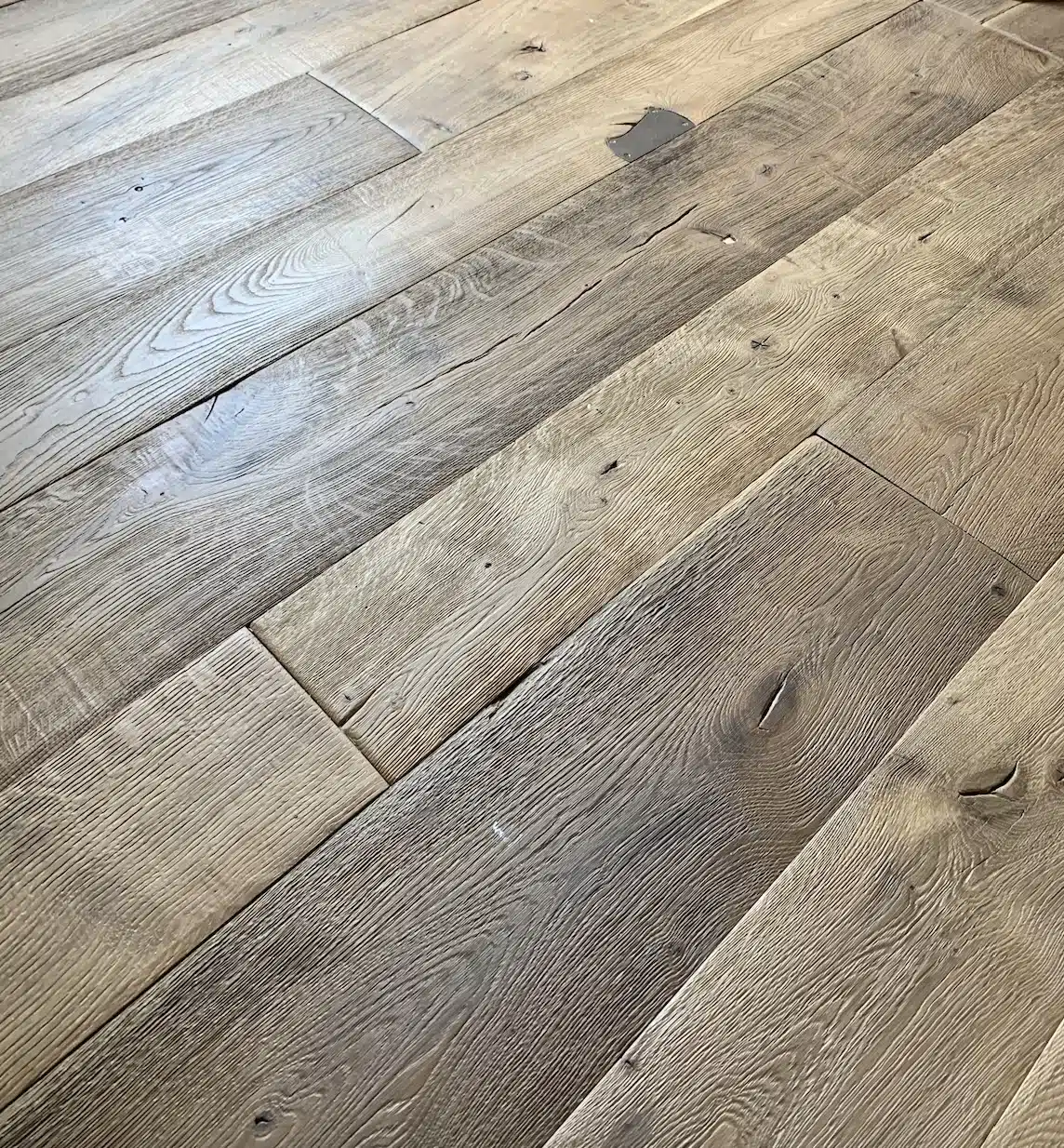
How to Identify High-Quality Timber Flooring
Read a spec sheet like a buyer, not a brochure.
How thick should a timber floorboard be? For engineered timber, look for a 14mm to 15mm board over a solid multi-ply or birch core, with a real hardwood wear layer of 3mm or more on top. Board thickness, wear-layer thickness, timber grade and finish are the four things that separate a quality floor from a cheap one.
Floorboard thickness: the two numbers that matter
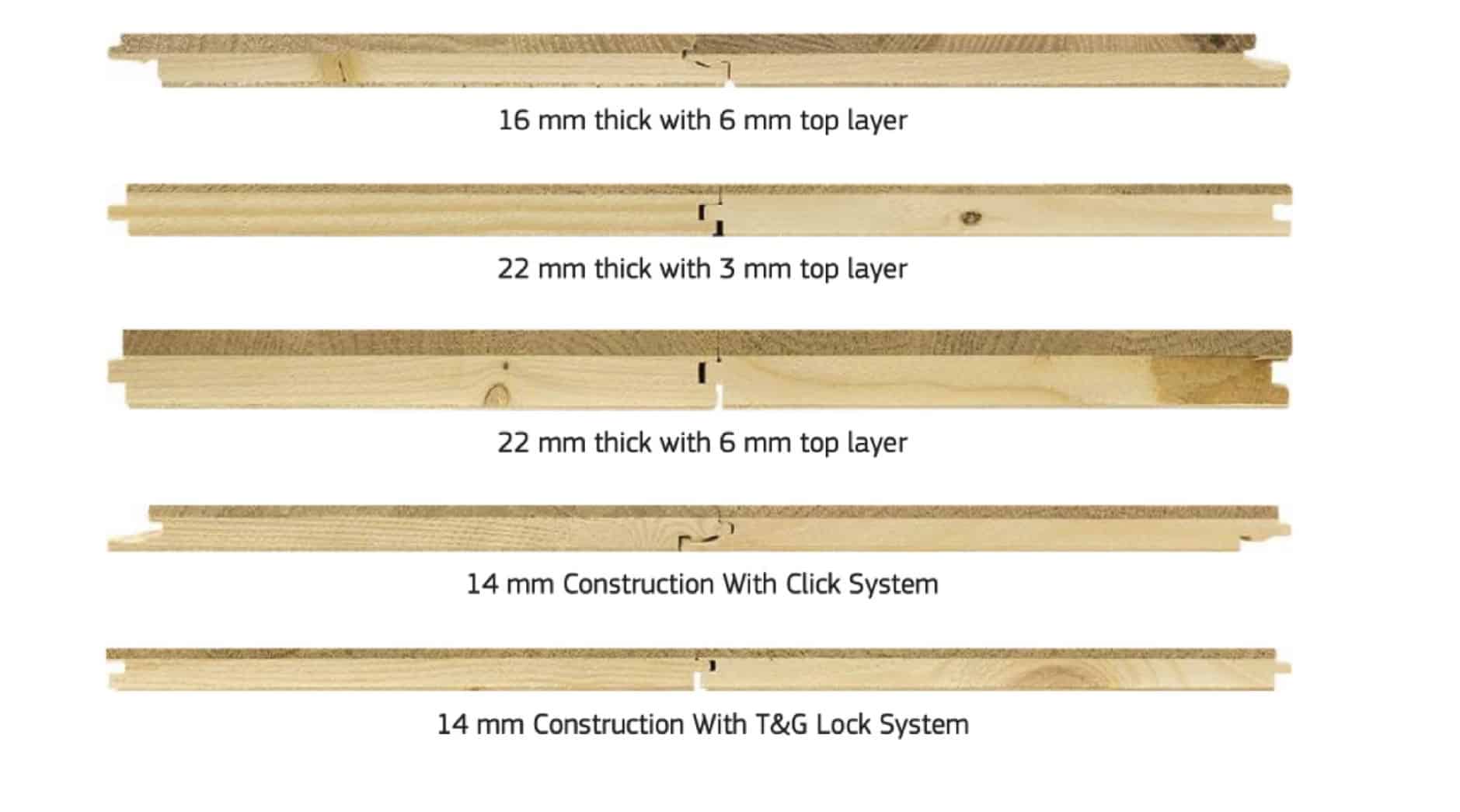
Engineered timber flooring has two thickness figures, and they are not the same thing. The overall board thickness is the whole plank, core included. The wear layer (the lamella) is the solid hardwood on top, the part you actually see, walk on and sand. A cheap floor can look identical on day one and give itself away on both numbers.
As a general benchmark for a residential floor, a total board thickness of 14mm to 15mm with a wear layer of 3mm or more is a solid quality mark. Thin-lamella boards can start around 0.6mm to 2mm, which limits what you can do with the floor later. If a supplier quotes one thickness only, ask which number it is: the overall board, or the hardwood wear layer on top.
For the full construction picture, see our guide to engineered timber flooring.
What to check on any timber floor
Run any floor you are shortlisting past these five checks. Ask for each figure in writing so you can compare like for like across suppliers.
| What to check | What good looks like | Why it matters |
|---|---|---|
| Board thickness | 14mm to 15mm total for engineered timber | A thicker board is generally regarded as more solid underfoot and more forgiving over a subfloor. Indicative, not a performance guarantee. |
| Wear layer (lamella) | 3mm or more of real hardwood, not a printed or paper-thin veneer | More hardwood on top gives more material to sand back and refinish later in the floor’s life. How many sandings you get depends on wear, finish and the installer. |
| Construction | A stable multi-ply or birch core under the hardwood | The core is what holds the plank flat across temperature and humidity change. A quality core is generally more dimensionally stable than a cheap one. |
| Grade | A named grade (prime, feature, character) with a clear definition | Grade sets how much knot, sap and colour variation to expect. It is about look, not right or wrong. Match it to the room you want. |
| Finish | A defined finish: UV-cured lacquer or a hardwax oil, applied in controlled conditions | The finish decides day-to-day wear resistance and how you maintain and repair the floor. Oil spot-repairs in place, lacquer resists marks harder. |
| Provenance | A named species (for example European oak) and a supplier who builds to a written specification | Knowing the species and the spec means you know what you are buying and can compare it honestly against the next quote. |
Vienna Woods has not put its boards through independent durability testing yet, so treat any comment above about longevity, stability or wear as general industry guidance, not a tested or guaranteed claim.
Where quality shows up, and where it hides
The wear layer is the price
Two boards at the same overall thickness can carry very different wear layers. The one with more hardwood on top usually costs more, and gives you more floor to work with down the track.
Wider and longer costs more
Wider planks (180mm to 300mm) and longer lengths read as calmer and more premium, but need better milling to stay flat. Expect to pay for it.
Grade is taste, not tier
Prime is not automatically better than character. It is a different look. Choose the amount of movement and knot you actually want to live with.
Finish sets the upkeep
Oiled floors are easy to spot-repair and re-oil in place. Lacquered floors tend to resist surface knocks and scuffs better. Our guide to maintaining and cleaning a timber floor covers both.
Once you have the specs lined up, weigh them against what timber flooring costs in New Zealand so you are comparing value, not just headline price.
How Vienna Woods engineered oak is built
Our floors are European oak, engineered overseas to Vienna Woods’ specification. That means a named species and a written build, not a mystery board. Across the ranges, boards run 15mm total thickness with a 4mm European oak wear layer over a multi-ply core on Petit Château, Icons, Château, Patina and Excess, and 14mm with a 3mm wear layer over a solid birch core on Foundation, finished in UV-cured oil or lacquer.
The Icons collection carries a 4mm oak wear layer on a 15mm board in wide, long formats. The Foundation collection runs a 3mm oak wear layer on a 14mm board with a solid birch core. Both put real hardwood where it counts, on top.
European oak is chosen for its tight, even grain and the way it takes colour, which is why it sits behind so many premium floors. As a general guide, a thicker hardwood wear layer gives more material to sand back and refinish over a floor’s life, though the number of sandings depends on the finish, the wear and the installer, and Vienna Woods does not guarantee a specific figure.
Common questions
How thick should a timber floorboard be?
For engineered timber flooring, a total board thickness of 14mm to 15mm is a common quality benchmark and suits most New Zealand homes. Vienna Woods boards run 14mm or 15mm engineered European oak over a multi-ply or birch core.
How thick should the wear layer be?
Look for a real hardwood wear layer of 3mm or more, not a thin printed or paper veneer. Vienna Woods boards carry a 4mm European oak wear layer on Petit Château, Icons, Château, Patina and Excess, and 3mm on Foundation.
Does a thicker wear layer mean the floor lasts longer?
As a general guide, a thicker wear layer gives more hardwood to sand back and refinish, which can extend a floor’s usable life. This is indicative, not a guarantee, and depends on wear, the finish and the installer. We have not independently tested lifespan.
What board thickness is best for the New Zealand climate?
A 14mm to 15mm engineered board over a stable core is generally regarded as a good fit for New Zealand conditions, because the core helps the plank hold flat through temperature and humidity change. Treat this as general guidance rather than a guarantee for any specific home.
Is engineered timber flooring as good as solid?
A quality engineered European oak board with a thick hardwood wear layer gives you a real timber floor, and the multi-ply core is generally regarded as more dimensionally stable than solid timber. See our comparison of engineered versus solid timber flooring to weigh it up for your project.
See and feel the wear layer
Order free timber samples and check the board thickness, grade and finish in your own light before you commit.
What it costs
Understand how thickness, wear layer, width and finish move the price of a timber floor in New Zealand.
The engineered range
See how our European oak boards are built, from the wear layer down to the core.
Check the spec in your own hands
Order free European oak samples and see the wear layer, grade and finish for yourself. Or send us your plans and we will spec a floor to suit.