What Does It Cost to Maintain a Timber Floor in NZ?
Oiled vs lacquered, over the life of the floor
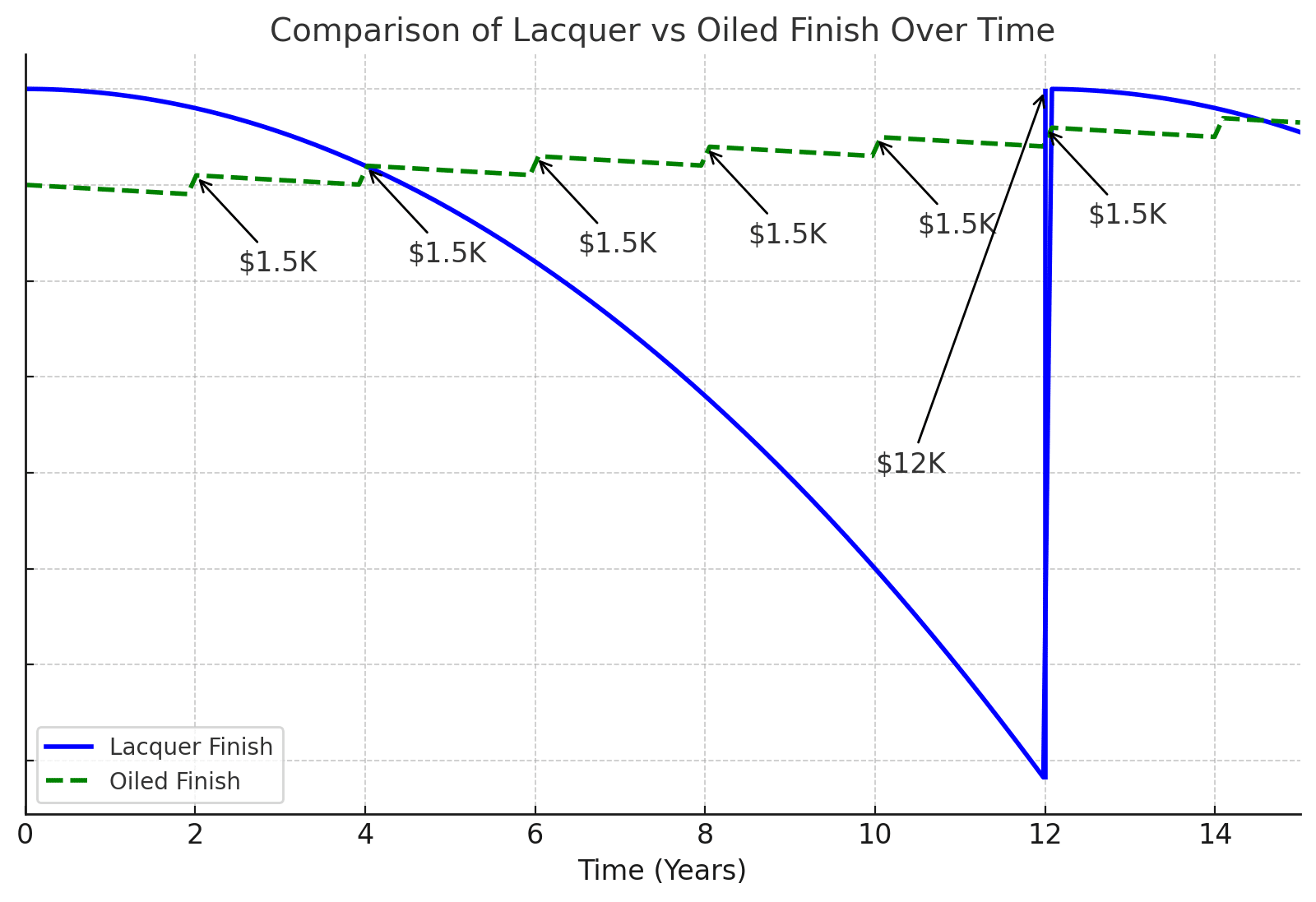
Day to day, a timber floor costs very little to keep: the right cleaner and a microfibre mop. The real cost is periodic. Oiled floors take a low-cost refresh when the finish tests worn and can be spot-fixed; lacquered floors take a refresher coat while the surface is intact, and a full sand and re-coat once it has worn through. Here is the indicative NZ picture.
Routine cleaning costs very little
The biggest saving is that timber asks for very little day to day. Sweep or vacuum, then a lightly damp microfibre mop with a pH-neutral timber cleaner. Skip steam mops, wet mopping and generic supermarket sprays, which can damage a finish and bring a refinish forward. A bottle of the right cleaner costs roughly $25 to $75. Our timber floor maintenance and cleaning guide covers the routine.
Where the two finishes differ: re-oil vs re-coat
This is where lifetime cost is really decided. The finish on the floor sets how you restore it, and how much that costs. For the full performance and appearance picture, read our oiled vs lacquered timber flooring comparison.
Oiled floors
Refresh, generally without sanding
Oil soaks into the timber rather than forming a lacquer’s sealed film, so upkeep is a top-up, not a strip-back.
- Topped up with a maintenance oil
- Wear and dry patches can generally be spot-treated
- Often done room by room, with less disruption
- Lower cost per event, done more often
Lacquered floors
One bigger cost, later
Lacquer is a surface coating that wears as a single layer across the whole floor.
- A protective film that wears as one layer
- Once it wears through, a worn spot is hard to blend in
- A refresher coat before it wears through; a full sand and re-coat after
- Minimal early cost, one larger cost down the track
Indicative NZ maintenance costs
Every floor and every quote is different, so treat these as general market ranges, not Vienna Woods prices. Actual cost varies by floor area, foot traffic, finish, region and contractor. Always get a written quote for your own floor.
| Task | How often (indicative) | Indicative NZ cost |
|---|---|---|
| Routine cleaning (both finishes) | Weekly, plus as needed | Cleaner from roughly $25 to $75 a bottle |
| Re-oil refresh (oiled floors) | Periodic; high-traffic areas sooner | DIY from the cost of the oil; professional roughly $25 to $35 per m² |
| Full sand and refinish (worn lacquer, or a full oiled reset) | Once every many years | Roughly $80 to $110 per m², depending on spec and coats |
Indicative market ranges only. GST, floor condition and site access all move the figure. Get a quote for a firm price.
What a full sand and refinish costs
When a lacquered floor wears through, or an oiled floor needs a complete reset, the job is a full sand and refinish: sand back, then two or three coats of finish. As a guide only, NZ contractors often work to roughly $80 to $110 per square metre, so a typical living area tends to land in the low to mid thousands, more for larger floors, premium finishes or staining. It is disruptive too, furniture out and a few days off the floor, which is exactly why the finish you pick at purchase matters. Weigh it against the cost of the floor itself when you buy.
Which works out cheaper over time?
There is no single winner. Oiled floors spread cost into smaller, more frequent refreshes you can stage and often do yourself. Lacquered floors cost little for years, plus a refresher coat when they look tired; left to wear through, they land one larger refinishing bill. Which works out cheaper depends on the floor and how it is used.
Two things cut lifetime cost more than the oiled-versus-lacquered debate itself: a sound install and matching the finish to how you live. A floor that is acclimatised, laid flat and sealed at the edges tends to wear more evenly and refinish cleanly. And match the finish to the wear: an oiled floor if you’ll keep up top-ups in the busy areas, a lacquered one if you’d rather do less routine care and recoat before it wears through. Order free timber flooring samples to see the finishes in your own light, or request a quote and we will talk through the finish that keeps your upkeep low.
Oiled vs lacquered
Performance, appearance and upkeep, side by side, so you can pick the finish that suits your home.
Care and cleaning
The simple routine that keeps a timber floor looking new and delays any refinishing.
What a floor costs to buy
Indicative supply and install pricing for engineered timber flooring in NZ.
Common questions
How much does it cost to sand and refinish a timber floor in NZ?
As an indicative market guide, sanding and refinishing often runs around $80 to $110 per square metre, depending on the floor, the finish and the number of coats. That is a general range, not a Vienna Woods price, so get a written quote for your own floor.
Is it cheaper to have an oiled or a lacquered floor?
It depends on how you use the floor. Oiled floors cost less per refresh but need refreshing more often; lacquered floors cost little for years, take a refresher coat when tired, and need a full sand and re-coat only once worn through. Which works out cheaper depends on the floor and how it is used.
Can you re-oil a floor without sanding it?
In most cases, yes. Oiled floors are generally topped up with a maintenance oil and can be spot-treated in worn areas, so a full sand is usually only needed for a complete restoration.
How much does routine cleaning cost?
Very little. Upkeep is mostly a pH-neutral timber cleaner and a microfibre mop, and a bottle of cleaner costs roughly $25 to $75. How long it lasts depends on the floor and how often you clean. Avoiding steam, excess water and harsh sprays is what prevents the far larger cost of early refinishing.
Still weighing it up? Read the full Vienna Woods FAQ, or order samples to compare finishes in person.
Choose the finish that keeps upkeep low
See how our engineered timber flooring looks and feels in your own light, then let us help you match the finish to how you live.