Timber Floor Maintenance Cost NZ — What to Expect Over Time
The long-term cost of timber flooring is influenced less by the initial installation and more by how the floor is maintained over time. Different finishing systems require different maintenance approaches, which can significantly affect both cost and disruption across the lifespan of the floor.
This guide outlines the typical maintenance requirements and costs associated with engineered timber flooring in New Zealand, including how oil and lacquer finishes differ in terms of upkeep.
What Affects Timber Floor Maintenance Cost?
The cost of maintaining a timber floor depends on several factors, including the size of the area, level of foot traffic, type of finish, and whether maintenance is carried out professionally or by the homeowner.
- Floor area (e.g. 80m² typical NZ home)
- Foot traffic and wear patterns
- Type of finish (oil vs lacquer)
- Maintenance frequency
- Professional vs DIY maintenance
Maintenance Cost — Oiled Timber Floors
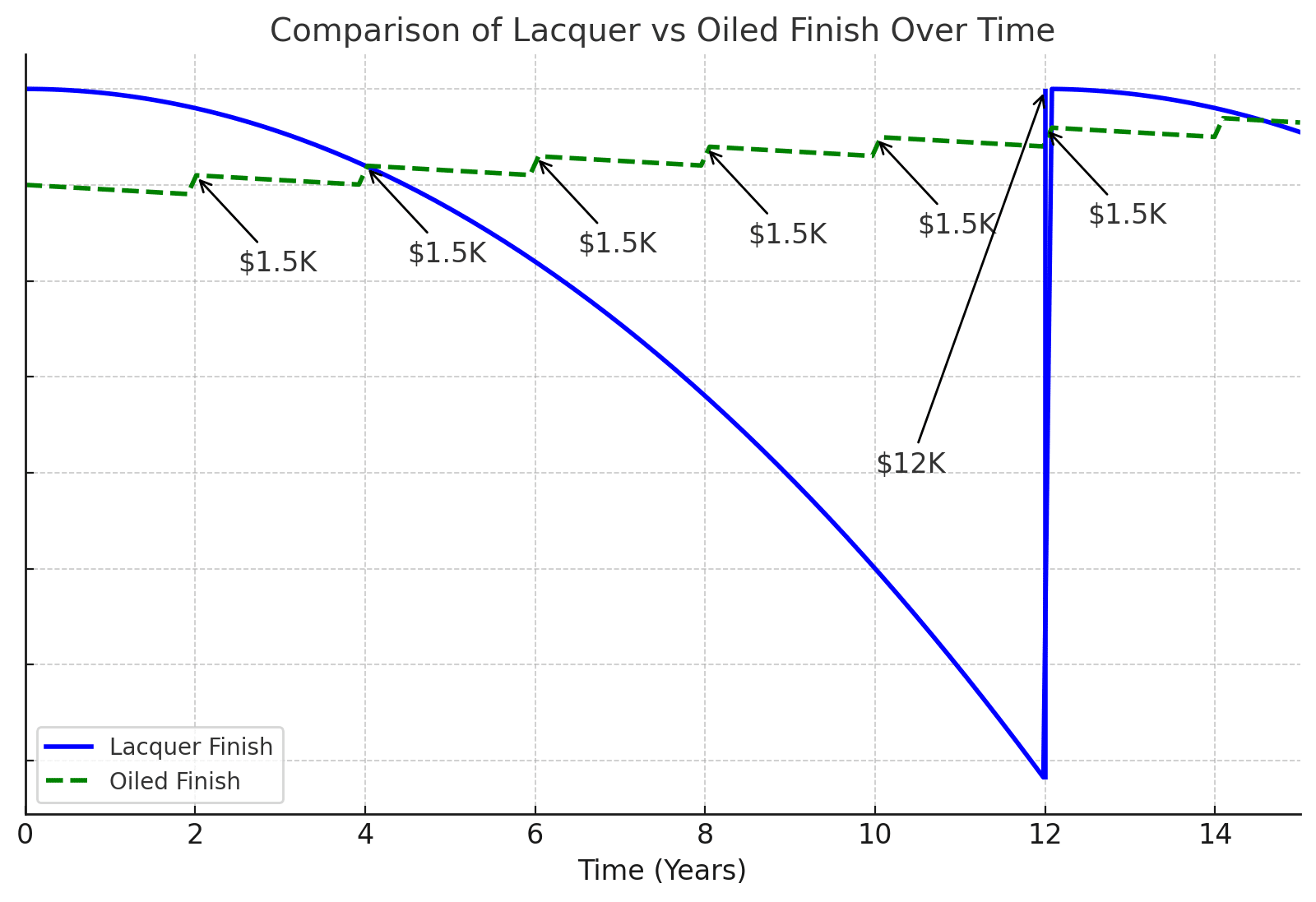
Oiled timber floors require periodic re-oiling to maintain their protective qualities and appearance. This is typically carried out every 1 to 3 years depending on use.
For a typical 80m² floor area in New Zealand:
- Professional maintenance oil: approximately $1,500 – $2,500 per application
- DIY maintenance: significantly lower cost using appropriate products
Maintenance products for oiled floors are widely available and allow ongoing upkeep without full refinishing. Suitable options can be found in our timber floor care range.
The advantage of oiled flooring is that maintenance can be carried out in sections and does not require full sanding of the floor.
Maintenance Cost — Lacquered Timber Floors
Lacquered floors generally require minimal maintenance in the early years, but once the surface coating wears down, restoration typically involves sanding and refinishing the entire floor.
For a typical 80m² floor area:
- Full sand and recoat: approximately $8,000 – $15,000 depending on specification
This process is more disruptive and typically requires furniture removal and temporary relocation during the work.
Short-Term vs Long-Term Cost
Oiled and lacquered floors differ in how maintenance costs are distributed over time.
- Oiled floors: lower-cost, more frequent maintenance
- Lacquered floors: minimal early maintenance, higher long-term refinishing cost
Which Option is More Cost Effective?
There is no single answer, as the most cost-effective option depends on how the floor is used and maintained over time.
- Oiled floors allow for ongoing, lower-cost maintenance that can be carried out in stages, reducing disruption.
- Lacquered floors typically require minimal maintenance initially, but involve higher-cost refinishing when the coating wears down.
Understanding this difference is important when selecting a flooring system, particularly for long-term residential use.
For a full comparison of performance, appearance, and maintenance considerations, refer to our
Oiled vs Lacquered Timber Flooring guide.
Summary — Understanding Long-Term Timber Flooring Costs
The cost of maintaining a timber floor is not a single event, but a series of decisions made over time. Oiled and lacquered finishes distribute cost differently, and understanding this helps avoid unexpected expenses later.
- Oiled floors involve lower-cost, ongoing maintenance that can be carried out in stages.
- Lacquered floors require minimal early maintenance, but higher-cost refinishing when the coating wears down.
Both systems are widely used in engineered timber flooring, and the most suitable option depends on how the floor will be used and maintained over its lifespan.
Further Timber Flooring Guidance
- Oiled vs Lacquered Timber Flooring — performance, appearance and maintenance comparison
- Timber Flooring Styles, Finishes & Textures — formats, finishes and surface options
- Engineered Timber Flooring Options — available ranges and specifications