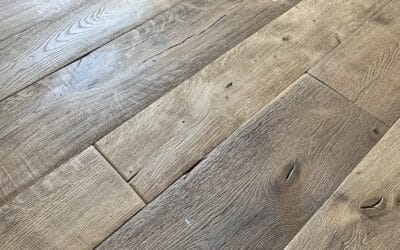
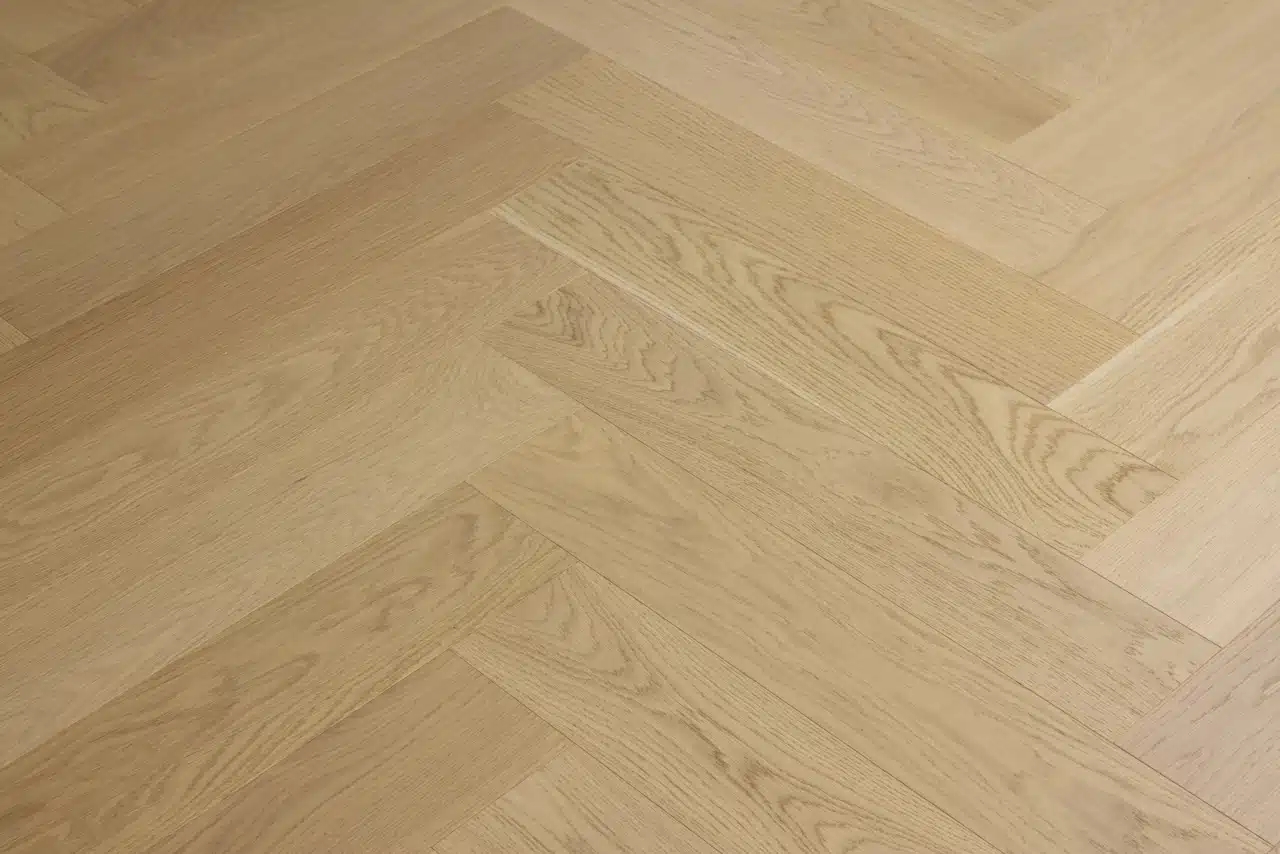
Oiled vs lacquered timber floors: the honest comparison
Two finishes, one real trade-off: feel and repairs versus low-fuss care.
Oiled floors are penetrating: the oil soaks into the timber, so you touch real wood and worn patches can usually be spot-repaired in place. Lacquered floors sit under a surface coat that is generally harder-wearing and more spill-resistant, but harder to patch invisibly. Neither is better. It is a feel-and-maintenance choice.
What is the difference between oiled and lacquered flooring?
The difference between oiled and lacquered flooring is where the finish sits. An oil penetrates into the timber and leaves a matt, open surface, so your bare foot meets the wood itself. A lacquer is a clear coat that cures on top of the boards, giving a slightly harder, more sealed surface. That single difference drives everything else: how the floor looks and feels, how you clean it, how you repair a scratch, and what upkeep costs over the years.
Both are excellent finishes on quality engineered European oak. Vienna Woods carries floors in both across its ranges, so the right pick comes down to your rooms, your household and how hands-on you want to be. Compare the tones in person by ordering a set of free timber samples.
Oiled and lacquered at a glance
Oiled
Natural feel, repair in place
- Matt, natural look that brings out grain and depth
- Softer, warmer feel underfoot, you touch the timber
- Worn or scratched patches can usually be spot-repaired without sanding the whole floor
- Needs a specific oiled-floor cleaner and a periodic re-oil
- Best where you want the most natural finish and will keep up light care
Lacquered
Low-fuss, harder surface
- Matt to satin, modern matt lacquers look very natural
- Firmer feel, you touch the coating rather than the wood
- Generally more resistant to everyday scuffs and spills
- Simple day-to-day care: sweep and damp-mop with a suitable cleaner, no re-oiling
- Best for busy households, hallways and rentals where low upkeep matters
Oiled vs lacquered: the full comparison
| What matters | Oiled finish | Lacquered finish |
|---|---|---|
| Look | Matt and natural, emphasises grain and colour depth | Matt to satin, very natural on modern matt lacquers, a touch more uniform |
| Feel underfoot | Softer and warmer, you are in direct contact with the timber | Firmer, you touch the surface coat rather than the wood |
| Everyday wear | Wears gradually, small marks tend to blend into the matt surface | Generally more scratch and scuff resistant (indicative, varies by traffic) |
| Spills and water | Wipe spills promptly, more sensitive to standing water | Generally more spill and water resistant thanks to the surface film (indicative) |
| Spot repair | Usually repairable in place, re-oil the affected area, no full sand | Harder to patch a single scratch invisibly |
| Routine care | Sweep, then clean with a specific oiled-floor product, re-oil periodically | Sweep, then damp-mop with a suitable timber cleaner, no re-oiling |
| Re-coat / refinish | Top up the oil when the water-drop test says the finish is worn | A full sand and recoat eventually, when the surface wears through |
| Cost over time | Cheaper, more frequent top-ups you can often do yourself | Less frequent care, but refinishing is a larger one-off job |
These durability, water-resistance and maintenance points are indicative guidance from typical experience, not performance guarantees. Vienna Woods does not currently hold independent testing comparing these finishes, and real results vary by product, traffic, subfloor conditions and how the floor is cared for. For a specific product, check its own care guide or ask us for a quote and advice.
When to choose each finish
Choose oiled if
You want the most natural, tactile finish, you like that grain and colour read strongly, and you are happy to use the right cleaner and re-oil the floor now and then. Oil also appeals if you value that a worn patch can usually be repaired in place rather than refinishing the whole room.
Choose lacquered if
You want lower-fuss day-to-day care and a harder surface for a busy home, hallway, holiday house or rental. Modern matt lacquers still look natural, and everyday cleaning is a quick sweep and damp mop. It is a common pick where the floor sees heavy foot traffic (indicative).
Think about the room
Kitchens, entries and living areas take the most punishment, so weigh how quickly spills get wiped and how house-proud the household is. Bedrooms and formal spaces are gentler, which widens your options. Our floor finishes guide walks through every finish we offer.
Feel both, then decide
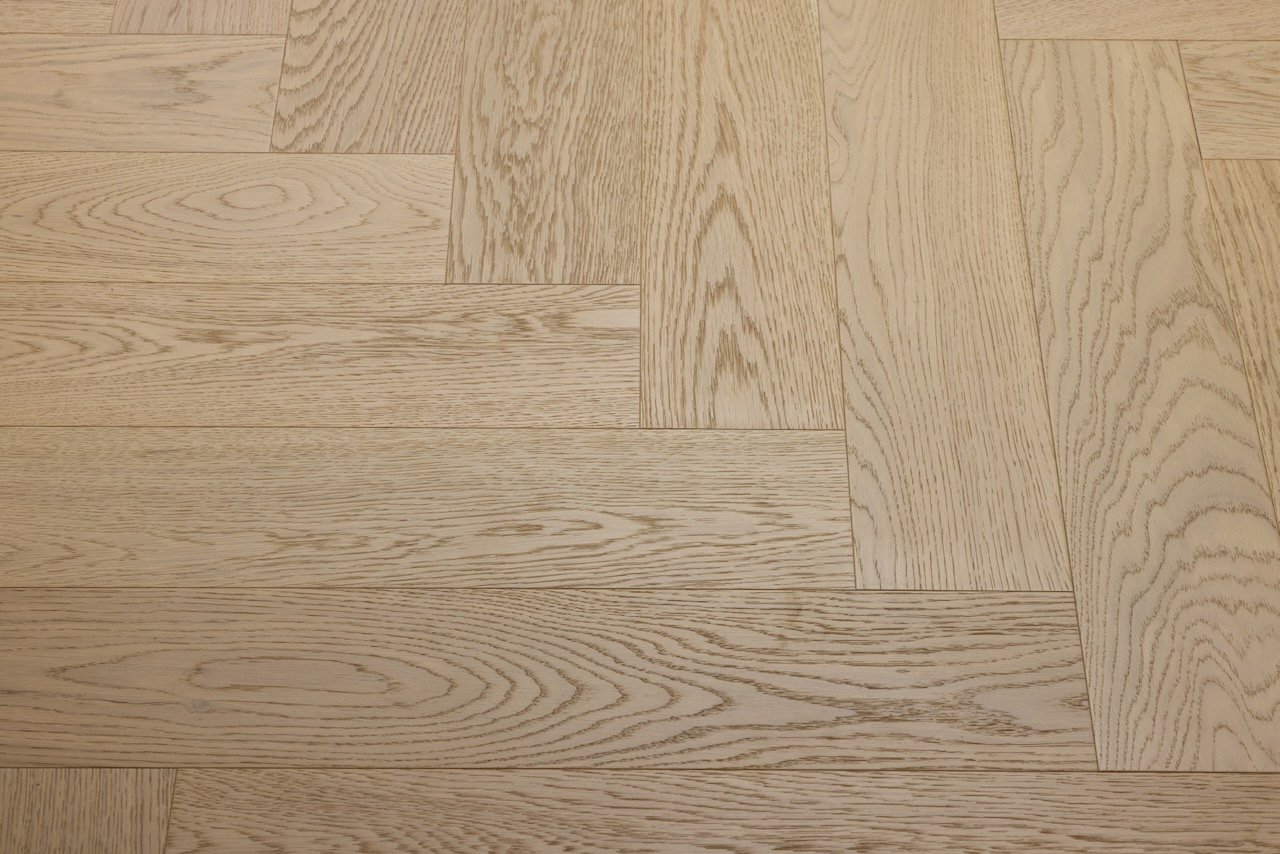
A photo cannot show sheen or texture. Order free samples of the colours you like in both finishes, put them down in the actual light of your room, and see which one you keep coming back to. Then request a quote for supply or supply and install.
We carry both finishes across our oak ranges
All of our timber is European oak, engineered overseas to our specification for New Zealand homes, and we offer both oiled and lacquered floors so you are not forced to compromise the look you want for the upkeep you prefer. As a guide, our Patina Collection is finished in an extra-matt UV lacquer, cleaned with a lacquer-floor cleaner rather than re-oiled, while our Flamingo range carries an oil finish that is topped up in place.
Browse everything grouped by finish on our oiled floors and lacquered floors pages, then read the wider floor finishes explained guide for how oil, lacquer and ultra-matt finishes differ. When you have a shortlist, order free samples to compare them at home.
Common questions
Can you wax wood floors?
You can, but on a modern engineered oak floor it is usually the wrong product. An oiled floor is best maintained with a purpose-made maintenance oil or an oiled-floor soap, not paste wax, and a lacquered floor is cleaned with a damp mop and a suitable timber cleaner. Traditional wax can build up, get slippery, attract dirt and interfere with any future re-oiling or recoating, so we do not recommend waxing our floors. Follow the care guide for your finish instead.
Which lasts longer, oiled or lacquered?
It is less about a fixed lifespan and more about how you maintain the floor. An oiled floor is topped up little and often, so it is renewed in place over the years. A lacquered floor is recoated far less frequently, but when it is due it is a bigger sand-and-refinish job. Both figures are indicative and depend heavily on traffic and care.
Is oiled or lacquered better for a busy household?
Lacquered is a common choice for high-traffic homes because it offers a harder surface and lower day-to-day fuss (indicative). That said, an oiled floor also stands up well if you keep on top of the maintenance, and it has the advantage that worn areas can usually be repaired in place. Order samples in both and decide from your own rooms.
Can you clean an oiled floor the same way as a lacquered one?
No. Standard or general-purpose cleaners can strip the oil from an oiled floor, so it needs a specific oiled-floor product. A lacquered floor is more forgiving and takes a damp mop with a suitable timber cleaner. Our maintenance and cleaning guide sets out the right routine for each finish.
Can you change a floor from lacquered to oiled, or oiled to lacquered?
In most cases yes, at the point of a full refinish. An installer can sand the boards back to raw timber and apply the finish you prefer, provided there is enough wear layer left to sand. It is a bigger, more disruptive job than routine care, so talk to us before you commit.
More answers on our full timber flooring FAQ.
Next steps
Free timber samples
Feel oiled and lacquered oak side by side in your own light before you commit to a floor.
Order samples →Caring for your floor
The right cleaning routine for each finish, so your oak keeps looking its best.
Maintenance & cleaning →What a floor costs
Understand the supply and install numbers, plus the upkeep cost of each finish over time.
Timber flooring cost →Not sure which finish is right for your home?
Order free samples in the finishes you like, or talk to our team about supply and installation across Auckland and beyond. We will help you weigh feel, upkeep and cost against how you actually live.