
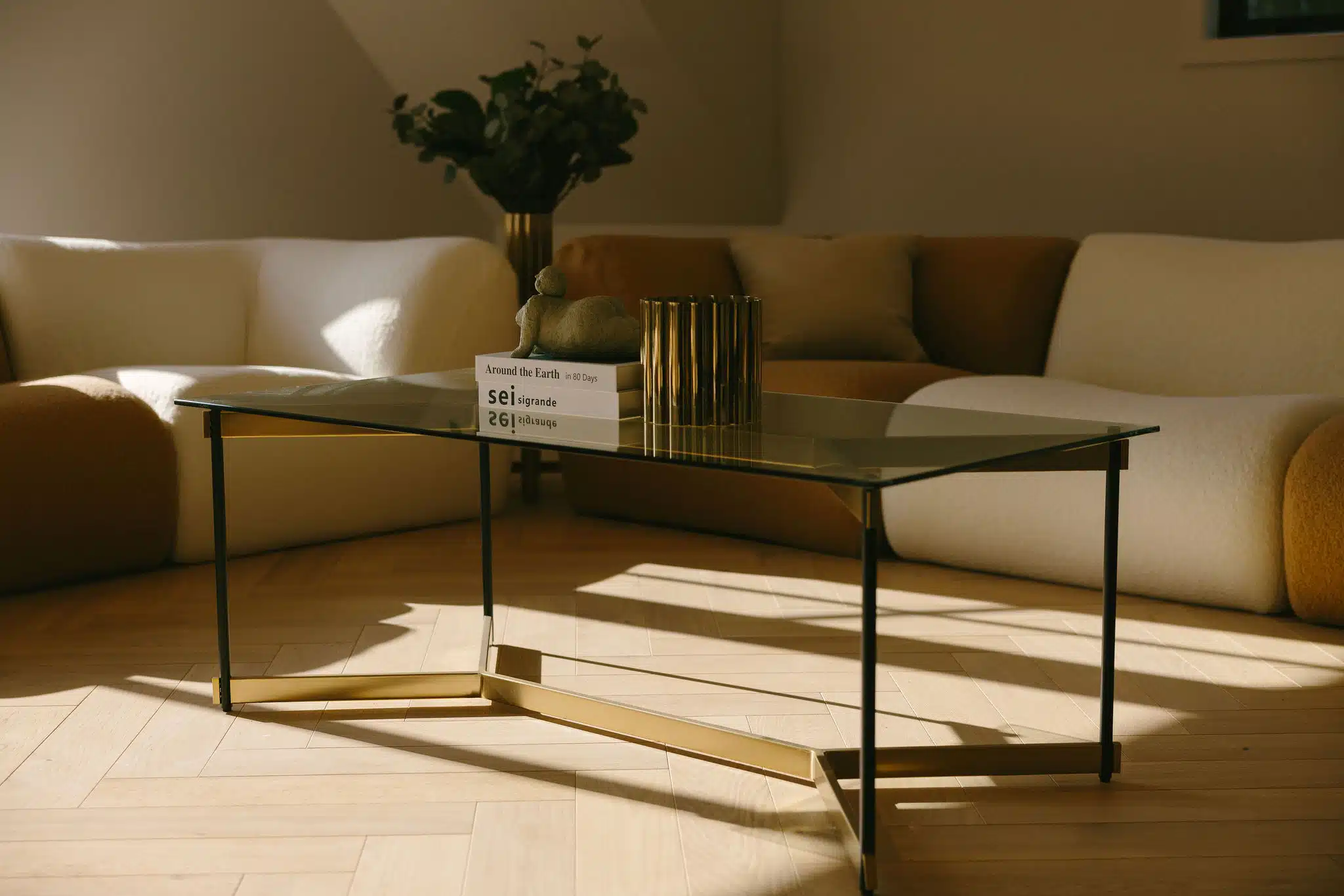
Herringbone Flooring NZ
Premium European oak herringbone flooring for architectural and residential projects across New Zealand.
What Is Herringbone Flooring?
Herringbone flooring introduces a classic zigzag pattern that adds movement and sophistication to any interior. Its interlocking ‘V’ shapes create a timeless parquet design, ideal for feature areas, hallways and modern spaces.
European Oak Herringbone, Built for New Zealand Projects
Our herringbone is European oak, engineered to our specification overseas, then precision-milled so every block aligns cleanly and the zigzag reads true across a room. Several ranges are made in Europe from start to finish (Distilled, Flamingo and our Antique Floors herringbone) and we tell you which is which before you order.
Vienna Woods offers herringbone patterns within selected collections, including Icons and Flamingo, with a range of tones and surface textures, from clean Scandinavian-inspired looks to richly textured character finishes.
See the herringbone range |
Request a Sample
Why Herringbone Flooring is Popular in NZ
Herringbone floors are a top choice for New Zealand homeowners, architects and designers due to:
- Elegant Pattern: The distinctive zigzag layout enhances both traditional and contemporary interiors.
- Versatility: Ideal for living rooms, dining spaces, hallways, entranceways and commercial environments.
- European Oak: Engineered European oak over a multi-ply core, the construction that holds a herringbone pattern flat through an NZ winter.
- Sourcing: Forest certification is held at the mill, and several of our ranges are made by mills holding a current FSC or PEFC certificate. Ask us which certificate covers the range you are looking at and we will supply it for your project file.
Explore Herringbone Flooring in Our Auckland Showroom
See herringbone at scale in our Newmarket showroom: large-format samples, tones and textures side by side, and a specialist to talk the project through.
Renovation or commercial fitout, we will help you land the right tone, grade and finish.
Herringbone Flooring Installation in Auckland
In Auckland we install herringbone ourselves, glue-down, using installers who lay it regularly. Subfloor preparation, layout planning and board alignment are what make the zigzag read true.
We can recommend professional installers for residential and commercial work, ensuring your herringbone flooring is fitted to the highest standard.
Book a Showroom Visit |
Order Samples
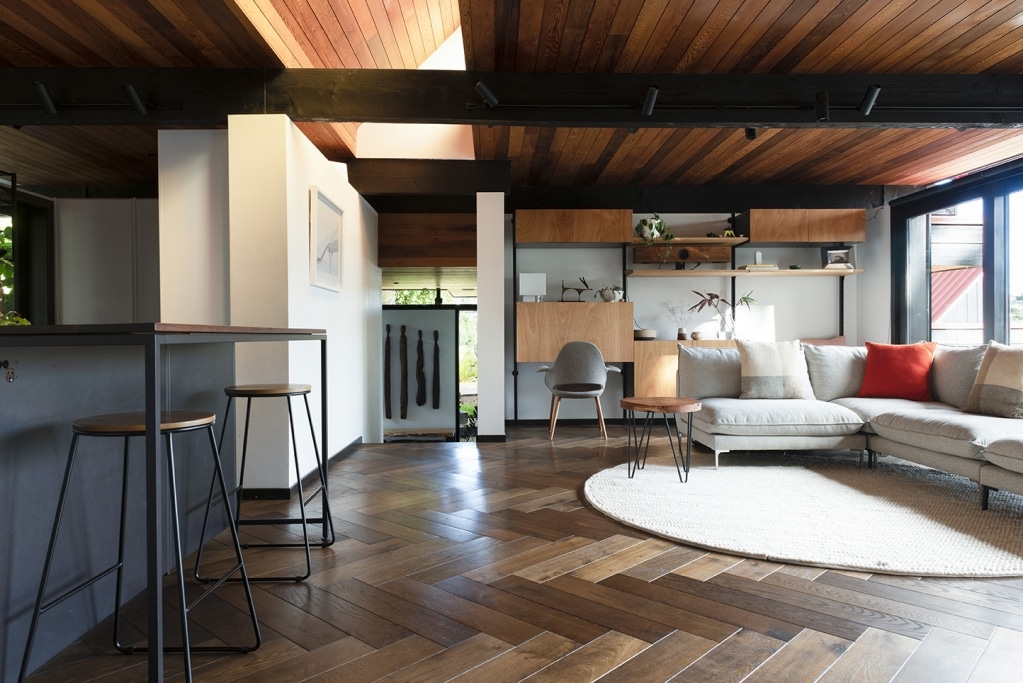
Nationwide Herringbone Flooring Delivery in NZ
We supply herringbone nationwide, from Auckland and Wellington to Christchurch and Queenstown. Every order ships moisture-protected and tracked.
Herringbone and chevron are both parquet patterns, and the difference is the cut: chevron blocks are mitred at 45 degrees so the ends meet in a point, herringbone blocks are square-ended so the joins step. If you are still deciding between them, we set the geometry out in full on parquet flooring: herringbone vs chevron.
Order a Herringbone Flooring Sample Pack
Order a herringbone sample pack and compare the colour range, surface treatments and board detail at home or in the studio.
It is the only reliable way to judge a floor against your own light, cabinetry and wall colours.
Popular Herringbone Colours
Herringbone flooring works beautifully in a wide range of tones. At Vienna Woods, our most popular options include:
- Light Scandinavian tones – bright, airy and ideal for modern interiors.
- Neutral natural oaks – timeless and versatile for both contemporary and classic spaces.
- Warm mid-tones – add depth and character without overpowering a room.
- Smoked and darker finishes – perfect for dramatic or heritage-inspired interiors.
Explore these tones in our showroom or request a herringbone sample pack to compare them in your own space.
Proud to Support



Herringbone vs Chevron vs Brick Bond: How the Parquet Patterns Compare
The three parquet patterns we install most often look similar at a glance but differ in cost, installation complexity, and the visual effect they produce. Use the table below to narrow down which pattern fits your space and budget before ordering samples.
| Pattern | Visual effect | Plank cut | Wastage allowance | Installation cost (NZ) | Best for |
|---|---|---|---|---|---|
| Herringbone | Classic zig-zag at 90°. Reads as detailed and craft-led. | Standard rectangular planks (typ. 90 x 600mm or 120 x 600mm) | 15% | $120–$140/m² +GST | Heritage homes, formal living rooms, hospitality interiors. |
| Chevron | Continuous V-shape with mitred ends. Reads as European and architectural. | Pre-cut at 45° or 60° angles, specialised mill order | 20% | $130–$150/m² +GST | Modern statement spaces, designer-led residential, premium retail fit-out. |
| Brick Bond | Offset rows like masonry brickwork. Reads as understated and contemporary. | Standard planks laid with a 1/3 or 1/2 offset | 10–12% | $95–$110/m² +GST | Open-plan living, large commercial floors, where pattern subtlety matters. |
Supply costs sit on top of installation: typical mid-range engineered European oak in herringbone or chevron format runs $180–$280/m² supplied. Chevron carries roughly a 25% premium over herringbone in supply cost because of the angled mill cuts.
For most NZ residential projects we'd recommend herringbone as the entry point into parquet. It carries the visual weight at a more accessible installed price than chevron, and the wider availability of pre-cut herringbone means shorter lead times.
Herringbone flooring NZ: what to specify and how it differs from chevron
Herringbone parquet is one of the most enduring patterns in timber flooring. Originating in 16th-century European architecture and revived continuously since, it remains the default specification for designers wanting a floor that reads as both classic and considered. Vienna Woods supplies engineered European oak herringbone across a full range of plank widths, finishes, and colour archetypes, from accessible entry-level ranges engineered to our specification overseas, through to Distilled and Flamingo, made in Europe.
Engineered herringbone vs solid herringbone
For NZ residential and commercial projects we exclusively supply engineered European oak herringbone. The visible top surface is a 4mm real oak wear layer, identical in look and feel to solid timber. Underneath, the multi-layer plywood core gives the dimensional stability that herringbone in particular needs, the cross-grain joins in a herringbone pattern are more sensitive to humidity movement than straight-plank, so engineered construction is the more reliable choice in NZ’s climate variation.
Pattern variations: single, double, French herringbone
Standard (single) herringbone is the most common, single blocks alternating direction. Double herringbone uses paired blocks for a slightly bolder pattern. French herringbone is a hybrid where the blocks are mitre-cut to meet at a 45° point, similar to chevron but retaining the herringbone weave. We can supply all three configurations on request, with the standard single herringbone the most cost-effective and widely available option.
Plank sizes and proportions
Herringbone block sizes are typically given as length × width. Our herringbone range is supplied in a 600 × 120 mm block, a proportion that reads cleanly across both compact rooms and larger open-plan spaces. Confirm the exact block dimensions on the individual product page.
Installation: glue-down only
Herringbone parquet should always be glued directly to the subfloor. Floating-floor herringbone is not a recommended specification, the cross-pattern joins move differently to the field, and a floating system can’t accommodate that movement reliably. Subfloor must meet the manufacturer’s tolerance (typically within 3mm over a 3m straightedge), moisture content tested before installation. See our timber flooring cost guide for full installation pricing.
Where herringbone works best
Entry halls, dining rooms, formal living areas, hospitality fit-outs, retail spaces, and any room where the floor is intended as a design statement. Herringbone also visually expands smaller rooms by drawing the eye outward to the corners. For large open-plan kitchen-living rooms, wide-plank straight-lay often suits better, but herringbone in a defined zone (a dining alcove, a kitchen island under-foot) can be a striking feature.
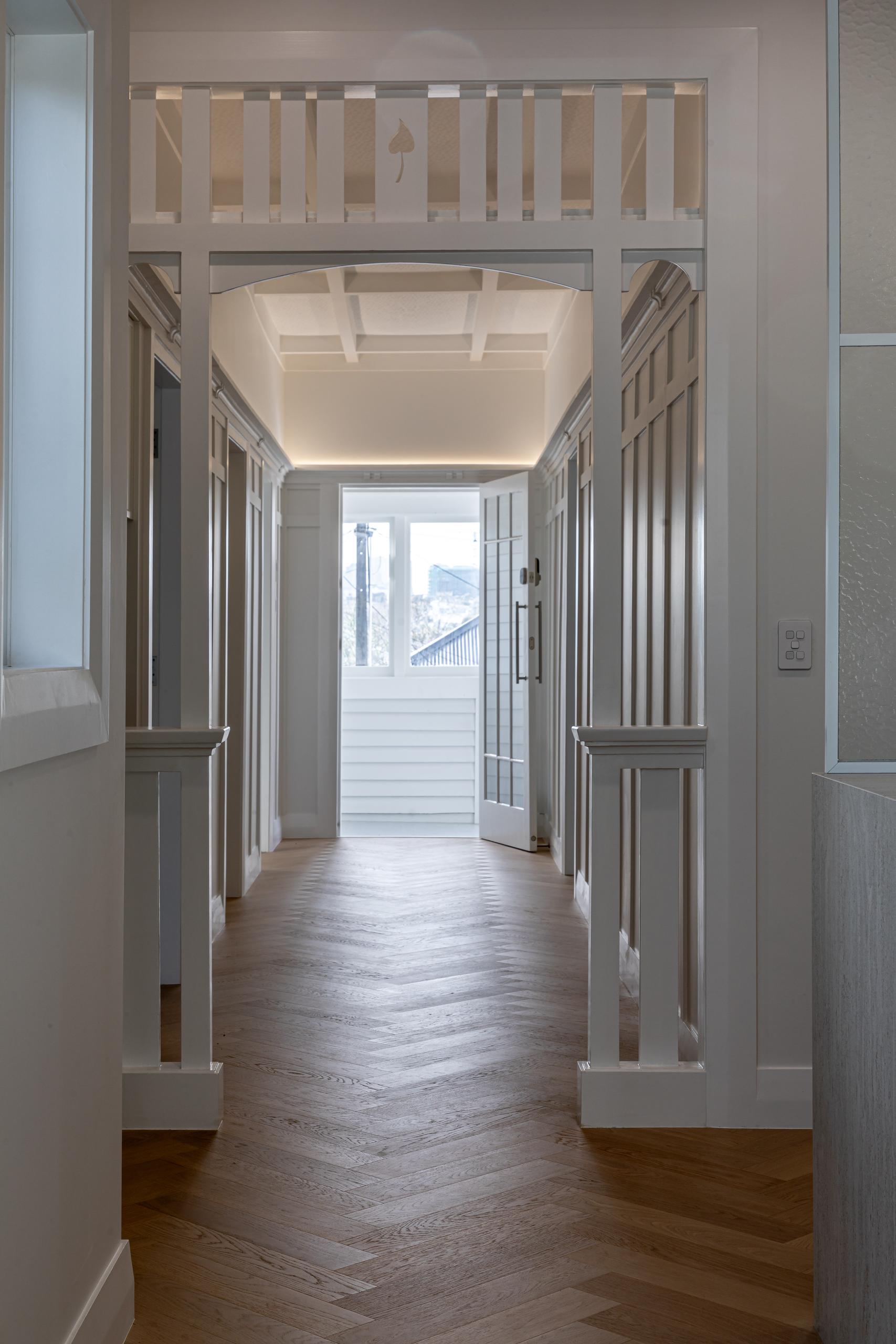
Project · Ponsonby
Herringbone in a restored Ponsonby villa
See Bordeaux Herringbone run from a panelled heritage hallway through to a modern kitchen in a restored Ponsonby villa, with interiors by Sticks + Stones Design.
Caring for a Herringbone Floor: FAQ
Herringbone floors aren't more demanding than straight-lay floors day-to-day, but the pattern means scratches and stains read more visibly because your eye follows the geometry. The questions below cover the things our clients ask most often after handover.
How do I clean a herringbone oak floor day-to-day?
Sweep or vacuum with a soft brush head 2–3 times a week to lift grit before it scratches the finish. Damp-mop fortnightly with a barely-damp microfibre and a pH-neutral wood floor cleaner. We recommend Bona Wood Floor Cleaner. Never wet-mop or use steam cleaners; standing water at the joint lines will work into the boards over time.
What's the difference between caring for an oiled vs lacquered herringbone floor?
Oiled floors need a maintenance oil refresh when the finish tests worn, not on a set number of years. You apply it with a microfibre pad in the direction of each plank, not across the herringbone pattern. Lacquered floors don't need re-oiling but can't be spot-repaired; if a section wears through, the whole floor has to be sanded and re-coated. For high-traffic herringbone (entries, kitchens), we typically recommend lacquered. For living and bedroom herringbone, oiled gives you the easier long-term repair path.
A chair leg has scratched the surface: what do I do?
For an oiled floor, lightly buff the scratch with a fine grade nylon pad, wipe with a slightly damp microfibre, then apply maintenance oil to the plank. Allow 24 hours to cure. For a lacquered floor, a surface scratch can be disguised with a colour-matched touch-up pen; deeper scratches into the wood need a professional spot repair or, if the area is large, a full sand and re-coat. Felt pads under chair feet prevent 90% of these incidents. We hand them out at handover.
Will a herringbone oak floor handle underfloor heating?
Yes, our engineered herringbone is rated for underfloor heating up to a surface temperature of 27°C. The lay method must be glue-down (not floating) for proper heat transfer and to control plank movement. Bring the system up slowly (no more than 2°C per day, over about ten days) then hold it there for about two weeks so the boards settle.
Can I sand and refinish a herringbone floor like a straight-lay floor?
Yes. Engineered herringbone with a 4mm wear layer can be sanded and refinished 2–3 times across a 30–40 year lifespan. The technique is different from straight-lay: a sander has to work diagonally to the planks rather than with the grain, and the corners require hand-detail work. Allow roughly 25–35% more time and labour cost than refinishing the same area in straight-lay.
My herringbone floor has gaps appearing in winter. Is something wrong?
Small seasonal gaps at the joint lines are normal, oak loses moisture in winter dry heating and contracts slightly. They typically close back up in spring. Engineered herringbone moves about a third as much as solid would. If gaps stay open year-round, or are wider than ~1mm, that suggests an installation moisture issue or a substrate problem; book a site inspection rather than living with it.
What does a typical herringbone installation cost in NZ?
Installation alone runs $120–$140/m² +GST for herringbone (about 30–40% above standard straight-lay). Add supply at $180–$280/m² for mid-range engineered European oak, plus a 15% wastage allowance, plus acoustic underlay if required (~$50/m² +GST). All-up, a typical residential herringbone project lands at $350–$470/m² installed. Detailed pricing is on our timber flooring cost guide.
How long is a herringbone floor going to last?
A well-installed engineered European oak herringbone floor with a 4mm wear layer should last 30–40 years before any substantial refinishing decision is needed. The heritage herringbone floors still in service in European apartment buildings demonstrate the pattern itself outlives most other interior finishes, the wear is on the surface coating, not the structural board.
What is herringbone parquet flooring?
Herringbone parquet is a classic floor pattern made from rectangular timber blocks laid in a staggered zig-zag, where each block is rotated 90° to its neighbours. The result is a continuous V-shaped weave across the floor. Vienna Woods supplies engineered European oak herringbone in a range of plank sizes, finishes, and colour archetypes, the same wear layer and core construction as straight-plank flooring, simply pre-cut to herringbone-format blocks.
What rooms suit herringbone parquet flooring?
Herringbone reads as a more formal, design-led pattern than straight-lay. It suits entry halls, formal living rooms, dining rooms, and feature spaces where the floor is part of the design statement. It also works well in smaller rooms where the diagonal lines visually expand the space. For open-plan kitchen-living areas, wide-plank straight-lay is often a better choice, but herringbone in a defined kitchen alcove can work beautifully.
How long does herringbone flooring take to install?
Herringbone takes roughly 50% longer to install than straight-plank because each block is hand-laid and aligned individually. A typical 30m² living room takes 3–4 days for an experienced installer, vs 1.5–2 days for the same area in straight-lay. Subfloor preparation and acclimatisation timeframes are the same. Plan the project programme accordingly, the install premium reflects this slower work rate.
Does herringbone flooring make a room look smaller or larger?
Larger, in most cases. The diagonal lines of the herringbone pattern draw the eye outward to the corners of the room, expanding the perceived space, which is why it’s often specified in smaller formal rooms (entries, dining rooms) where space visual cues matter. The pattern also works in larger rooms but loses some of its visual-expansion effect; in those settings the choice is more about style than spatial trick.
Related Vienna Woods guides
- Timber Flooring Cost NZ, full pricing breakdown across formats and finishes.
- Engineered Timber Flooring NZ. What makes engineered different from solid.
- Wide Plank Flooring NZ, the format pairing for open-plan modern interiors.
- Sustainability at Vienna Woods. What we can certify, range by range.
Ready to see herringbone in your space?
Order free samples to see the European oak herringbone in your own light, or book a Newmarket showroom consultation to see the patterns laid out at scale before you commit.
Customer Reviews
What homeowners, architects and designers say about working with us.


Every herringbone oak we sell
Arranged lightest to darkest. Tone is the thing photographs get wrong, so order samples and look at them in your own light before you decide.
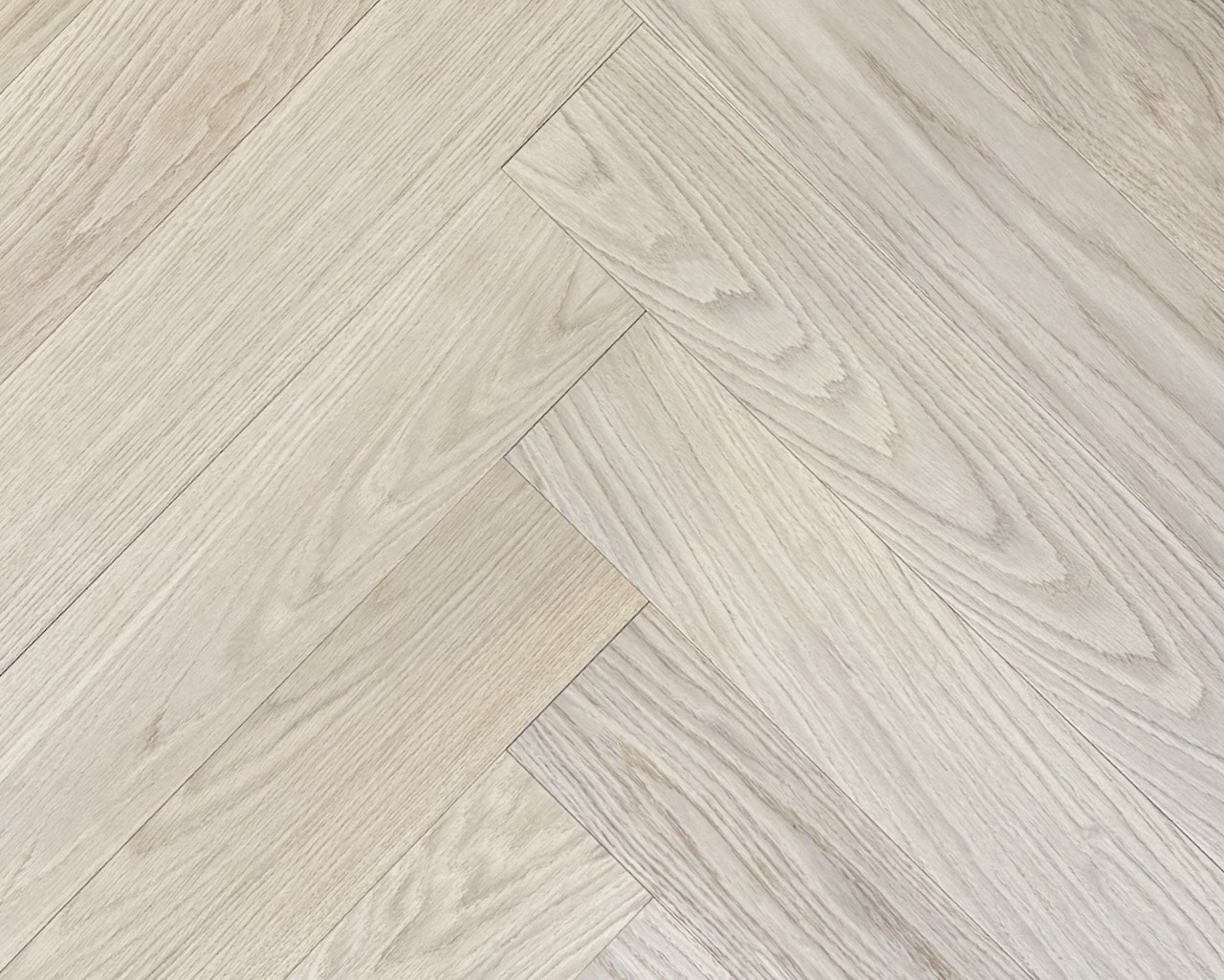
Noble Grade Unfinished 600 × 120
Raw prime-grade blocks with minimal knots and controlled grain, finished on site to whatever you choose.
View floor →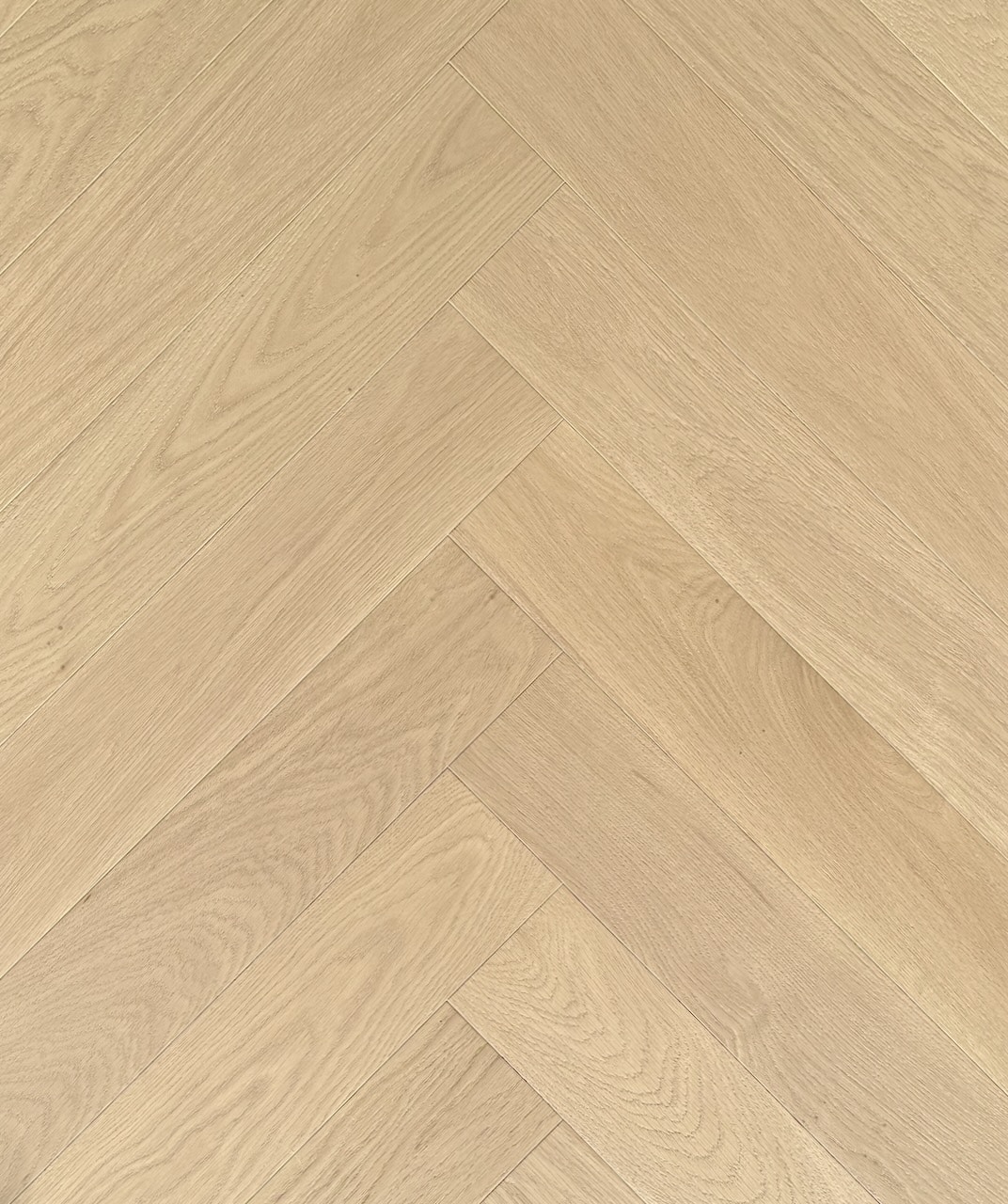
Bordeaux
Pale, clean and even. The most specified herringbone we sell, and the easiest to live with.
View floor →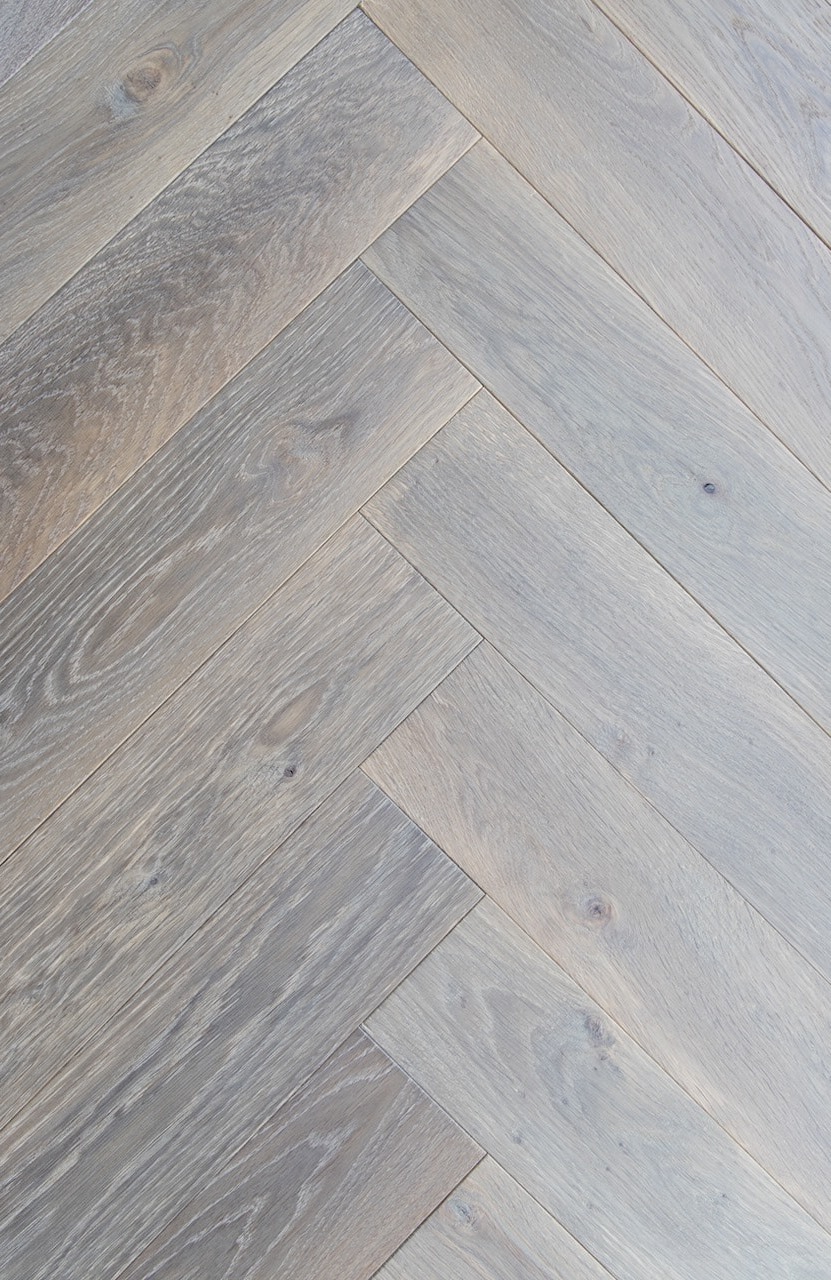
Antique Farm
Aged, with a softened patina and grey movement through it. Reads lived-in from day one.
View floor →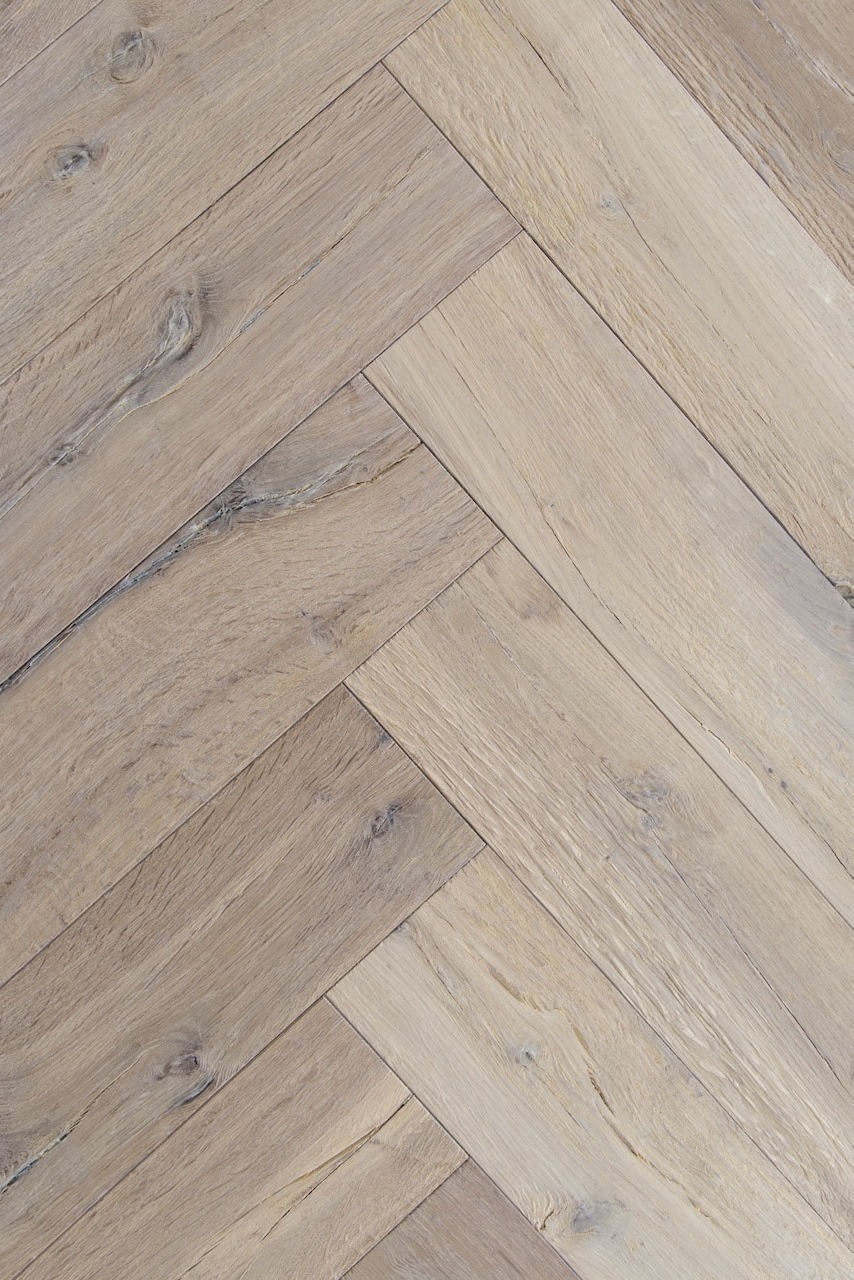
Raftwood Amazone
Rustic and heavily textured, with knots, splits and real tonal variation block to block.
View floor →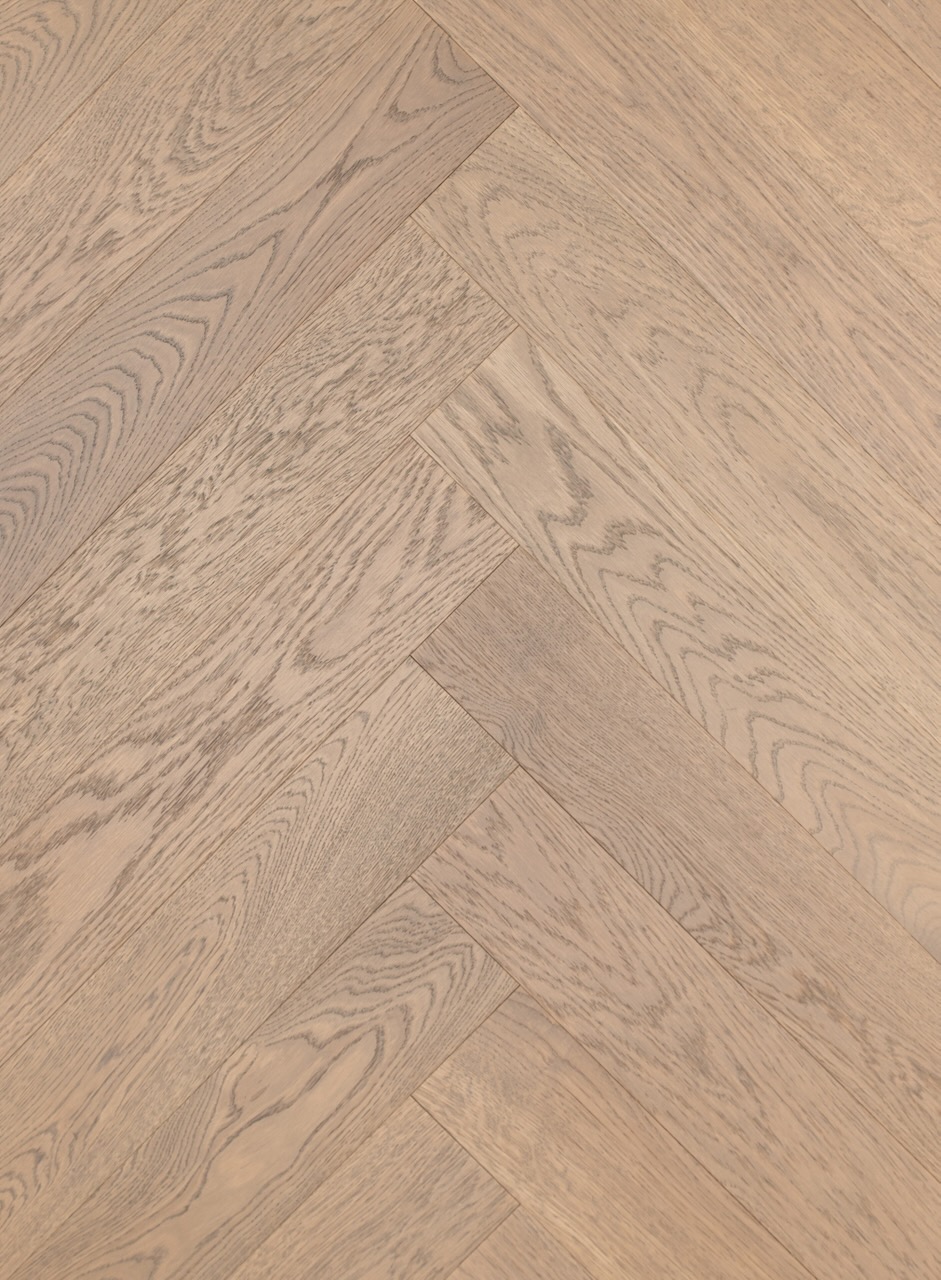
Westwood
Warm mid-light brown with a smoky undertone. Brushed, so the grain sits open underfoot.
View floor →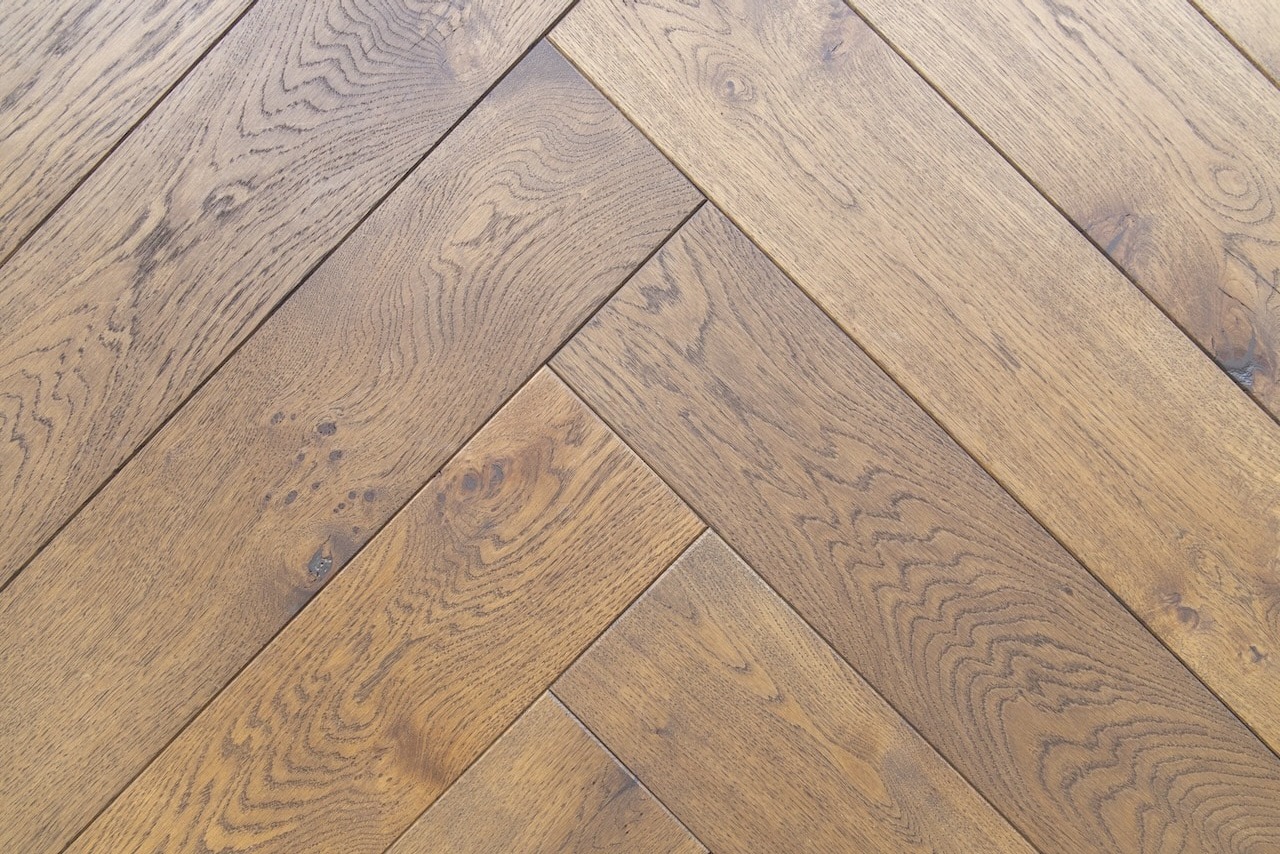
Himalaya
Warm mid-brown, planed rather than brushed, with the grain left clearly on show.
View floor →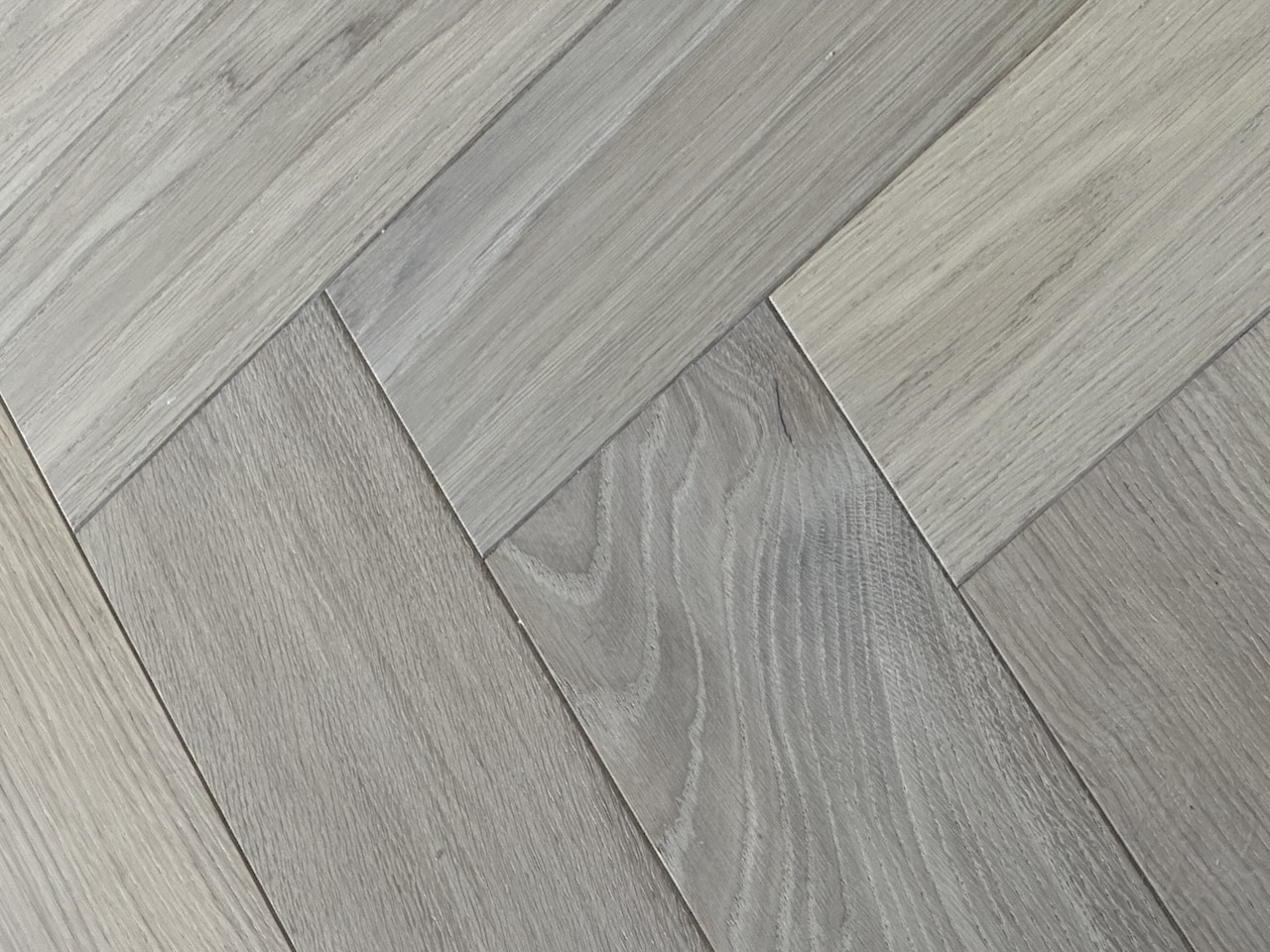
Sazerac
Cool grey with the grain kept quiet. Sits well against white walls and stone.
View floor →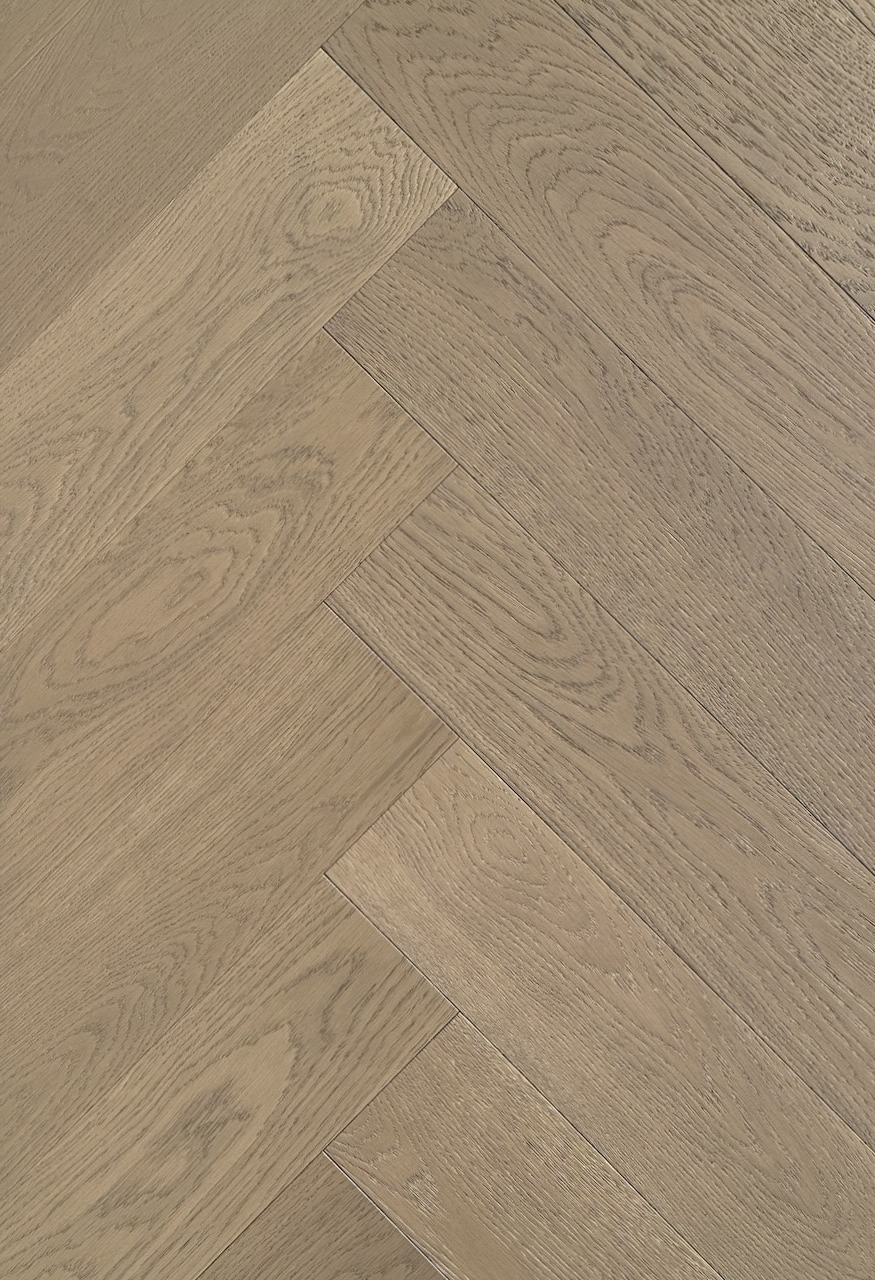
Monaco
Greige and even-toned, with gentle texture. The quiet one in the range.
View floor →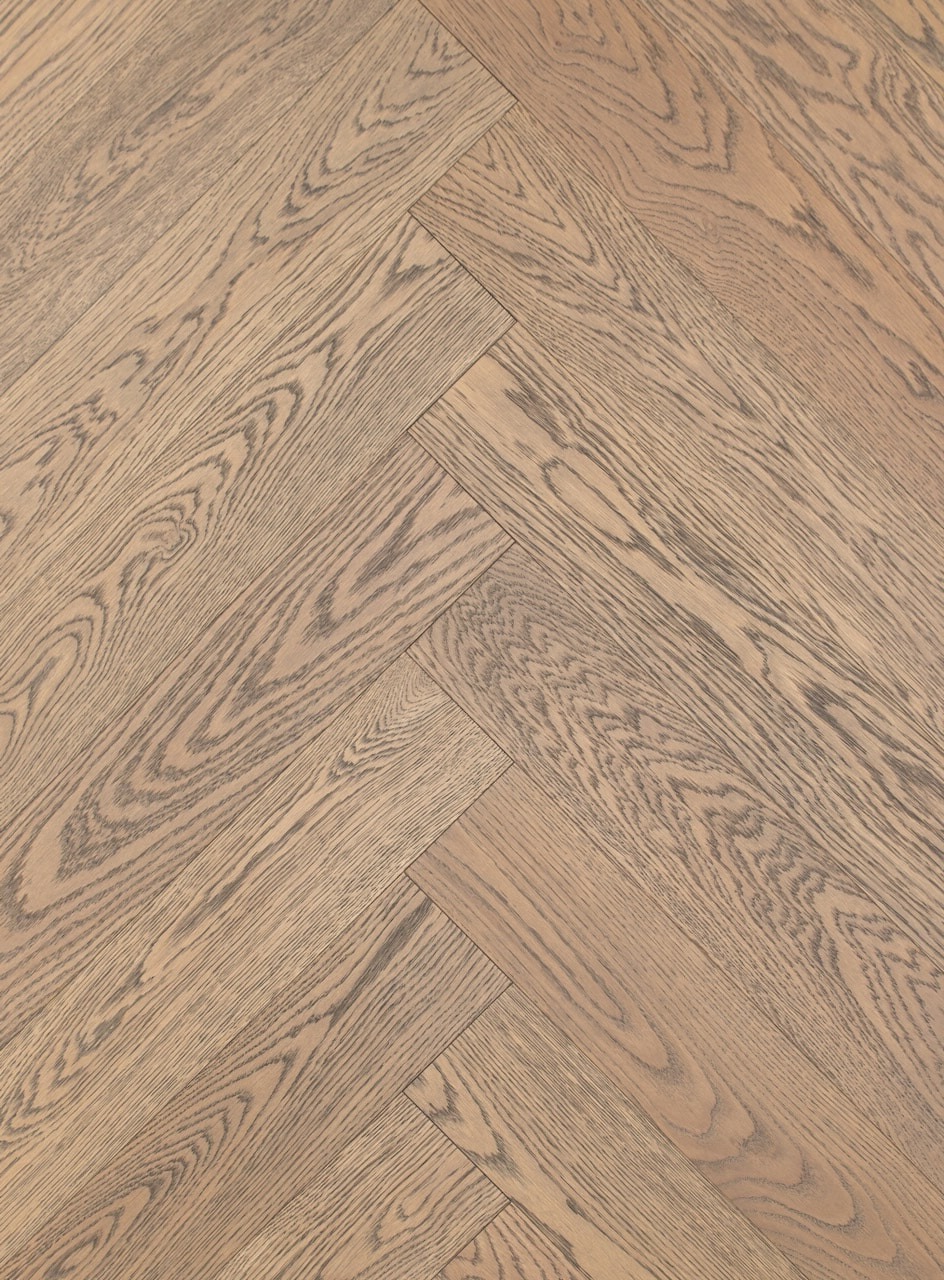
Coco
Balanced mid-brown with smoky-grey undertones, and enough movement to stay warm.
View floor →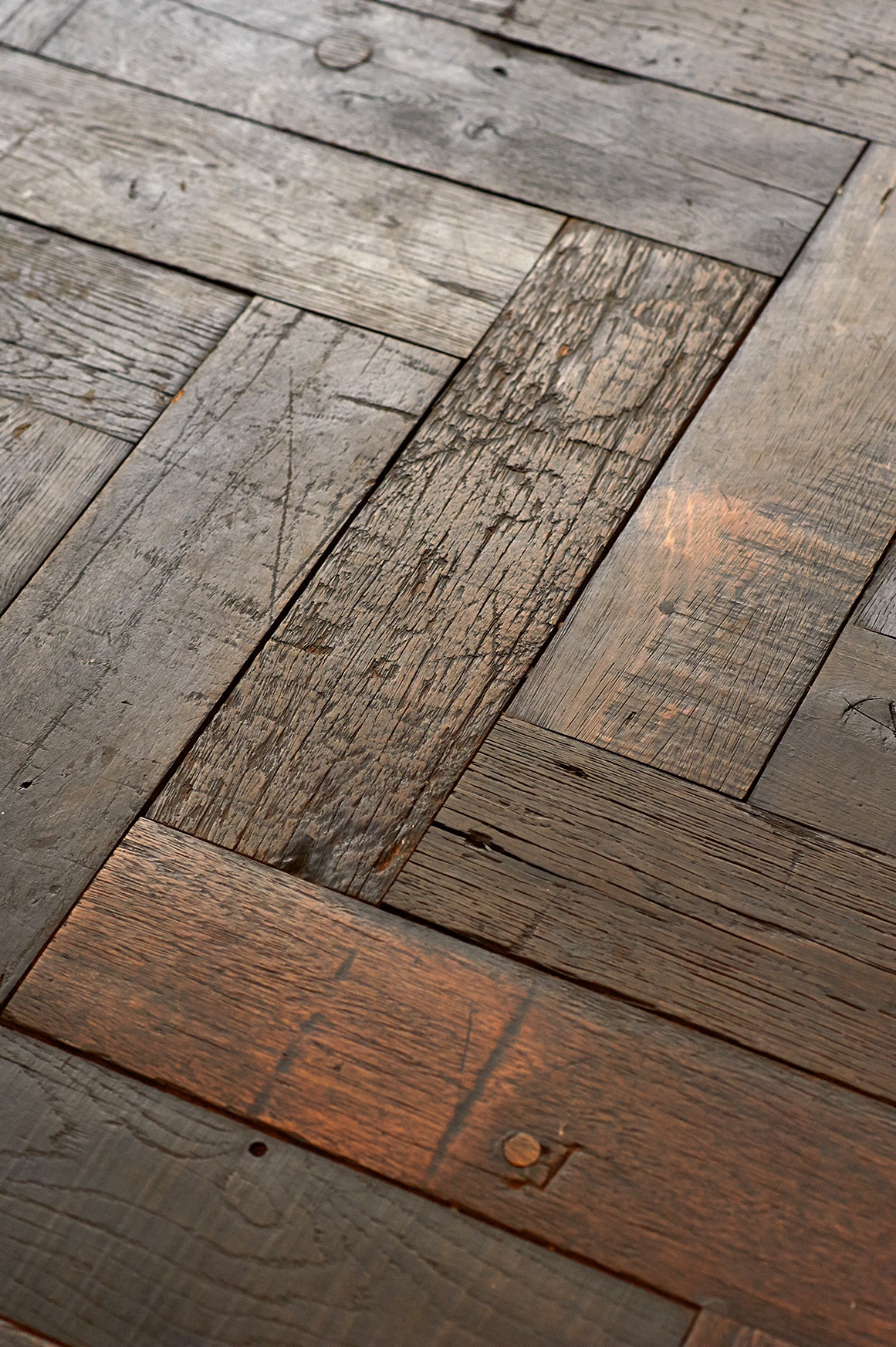
Wagon
Reclaimed French oak, dark and heavily textured. Made to order, and no two blocks match.
View floor →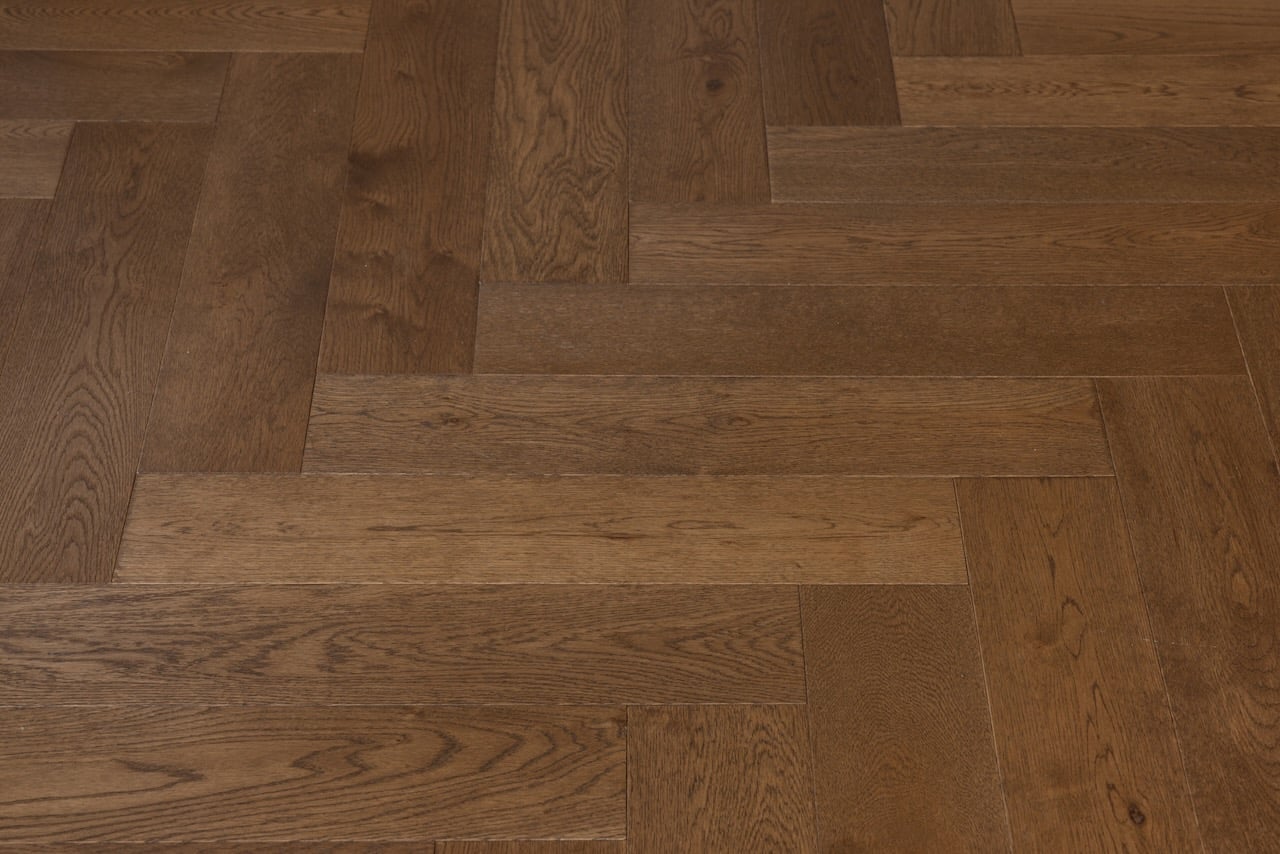
Whiskey Sour
The darkest in the range. Deep golden brown, clear grain, at home in a villa or a new build.
View floor →Order samples
Tone shifts with the light in your own room. Get a few side by side before you commit.
Request samples →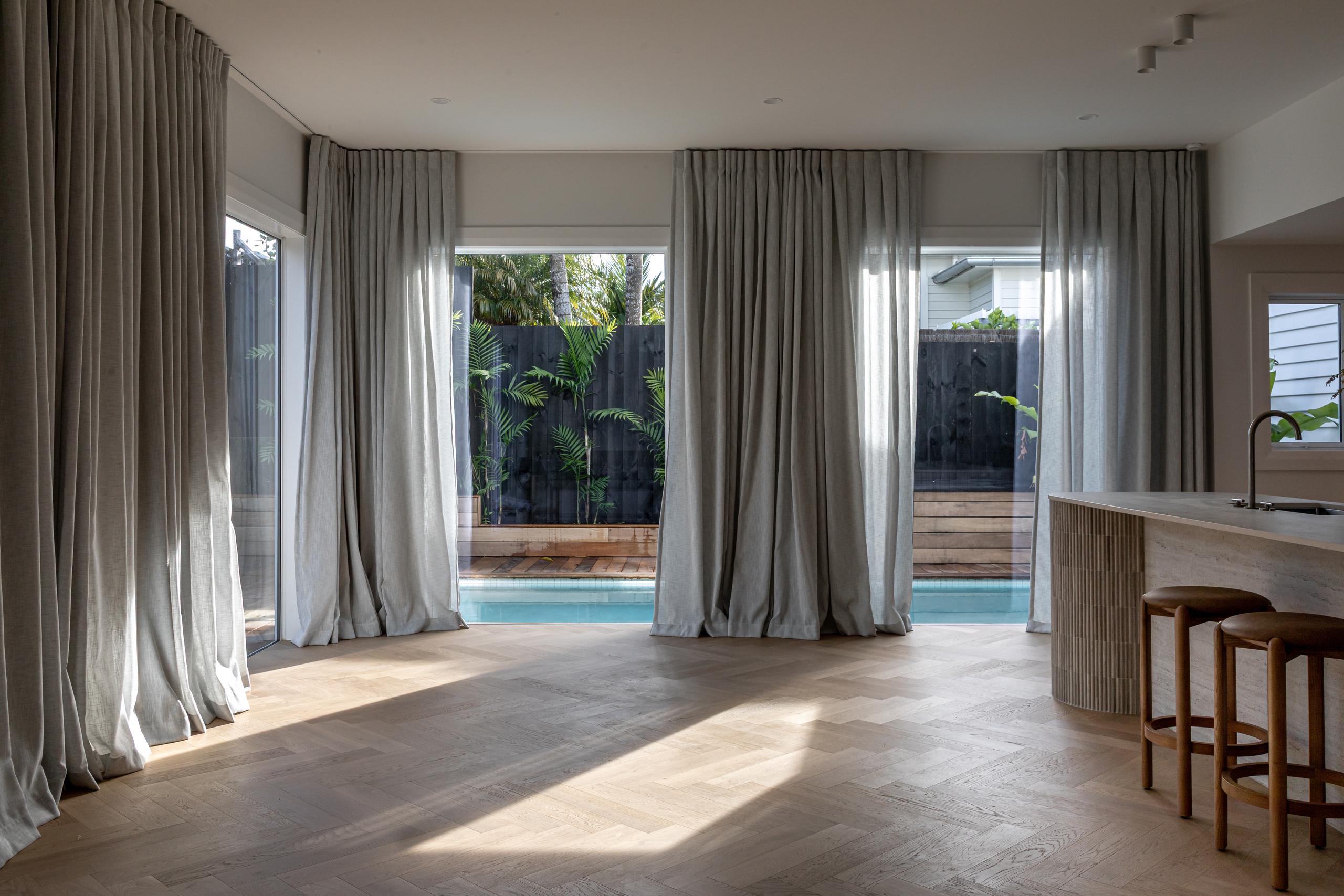
Chevron, which is not herringbone
Chevron blocks are cut on an angle so the ends meet in one continuous point. Herringbone blocks are square-cut and sit at a right angle to each other. Same oak, different geometry, and a noticeably different room.
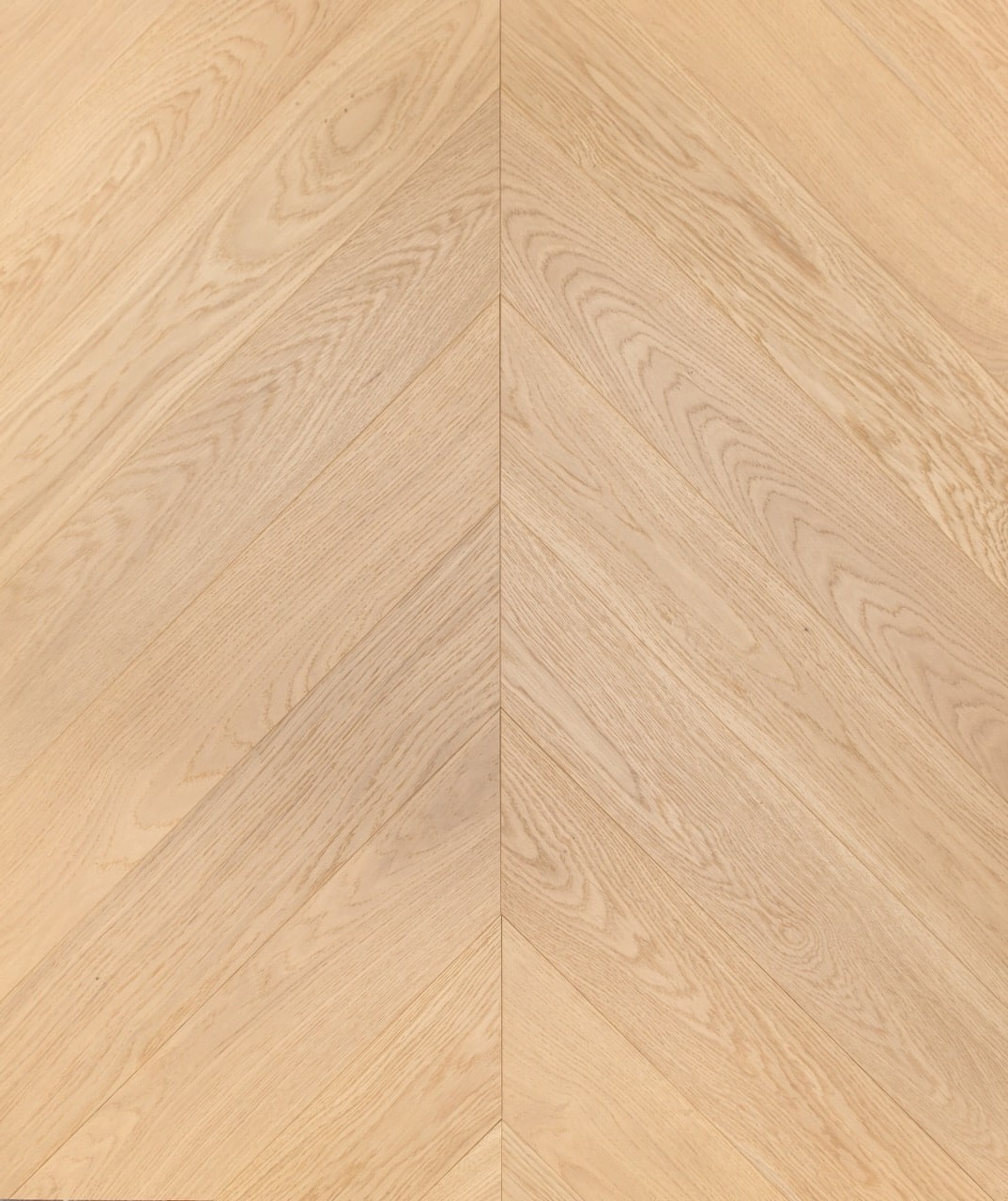
Bordeaux
The same pale Bordeaux oak, cut on the angle. Made to order.
View floor →Wagon
Reclaimed French oak laid as a chevron, heavily textured and natural-oiled. Made to order, and we are reshooting it, so ask for a sample.
View floor →Laying either pattern takes longer than a straight plank floor. Ask us for a quote and we will price the floor and the install together.